


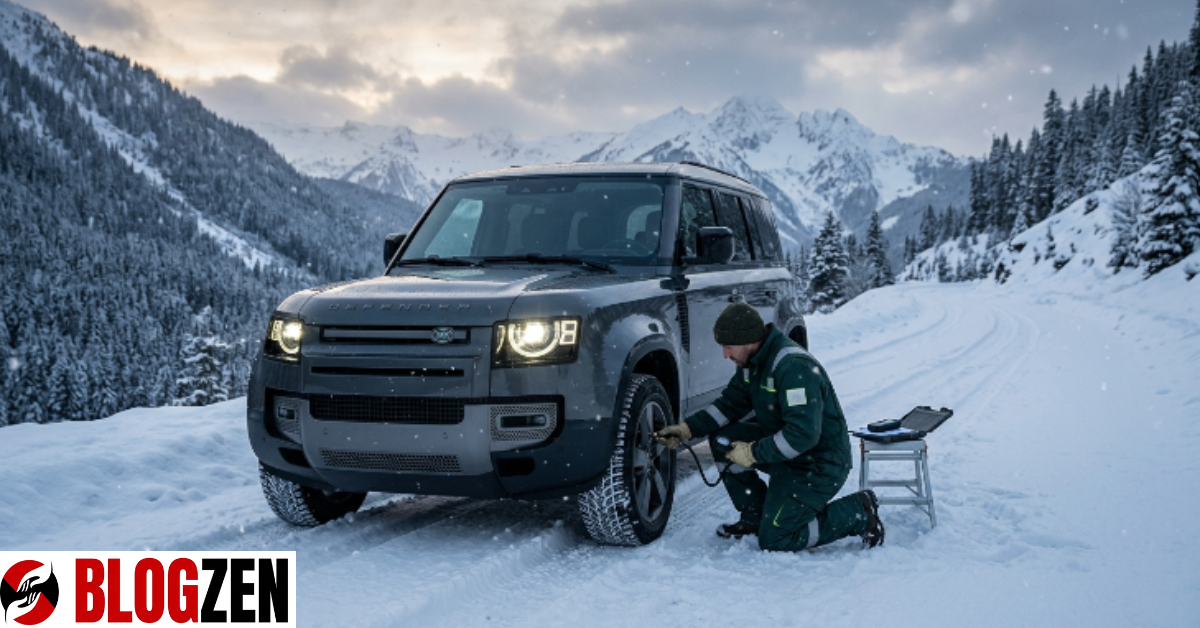
Quick Answer
Winter car care means preparing your vehicle for cold temperatures by checking battery health, tire tread and pressure, fluid levels (especially coolant), windshield wipers, and brakes before temperatures drop. These five steps prevent 80% of winter-related breakdowns.
INTRODUCTION
Your car’s worst enemy isn’t the road—it’s the cold. When temperatures drop below freezing, your vehicle’s fluids thicken, tire pressure plummets, and metal parts become brittle. Yet most drivers wait until they’re stuck on a frozen highway to think about winter preparation.
The difference between a car that survives winter and one that strands you in a blizzard comes down to one thing: winter car care tips that actually work. Not vague advice from your neighbor. Real, actionable maintenance that mechanics have been recommending for decades.
In this guide, you’ll discover exactly what needs checking, why it matters, and how to do it yourself in under two hours. You’ll learn which parts fail first in cold weather, what warning signs to ignore (spoiler: there are none), and the single most expensive mistake drivers make when winter hits. By the time you finish reading, you’ll have a complete winter maintenance checklist—one that’ll save you anywhere from $500 to $3,000 in emergency repairs.
Why Winter Car Care Matters More Than You Think
Winter transforms your vehicle into a mechanical stress test. Ambient temperatures directly affect everything from engine oil viscosity to tire rubber flexibility. Here’s what changes: your battery’s output drops by 50% in freezing conditions, tire pressure decreases approximately 1 PSI for every 10-degree Fahrenheit drop, and engine oil thickens dramatically, forcing your starter motor to work three times harder just to turn the engine over.
Most drivers think winter damage happens suddenly—the engine won’t start one morning, and they panic. The truth is uglier. Damage accumulates silently over weeks. A slightly weak battery loses charge capacity with each cold start. Tires lose pressure incrementally, which increases rolling resistance and kills fuel economy. Neglected windshield washer fluid freezes mid-spray, leaving you blind in a snowstorm. By the time something fails completely, you’ve already suffered dozens of small failures.
The financial stakes are real. AAA reports that winter-related breakdowns cost American drivers an average of $1,214 per incident. Some people pay more—a battery replacement ($200-$400), new tires ($600-$1,200), or engine damage from running on low coolant ($1,500-$5,000). These aren’t small numbers for most households. Yet every single one is preventable with basic winter car care tips that take an afternoon.
This matters now more than ever because cold snaps hit faster. Climate patterns mean sudden temperature drops without warning. You can’t afford to be unprepared.
The Battery Problem Nobody Talks About
Your car’s battery is a temperature hostage. In freezing conditions, the chemical reaction that creates electrical current slows dramatically. A battery rated at 600 cold-cranking amps at 32°F delivers only 300 amps at 0°F. That’s not enough to turn an engine with thick, cold oil.
Here’s what actually happens: when you turn the key in subzero weather, your starter motor struggles to rotate the engine. It draws more current than normal. Your battery, already weakened by cold, strains harder. This repeated stress damages the battery plates internally, even if the battery still seems to work. Within weeks, it fails completely.
The preventive winter car care tip here is simple but critical: test your battery before winter arrives. Most auto parts stores offer free battery testing. You’re looking for a reading between 12.6 and 13.2 volts at rest, and at least 10 volts while cranking. If your battery is more than three years old and reads below these numbers, replace it now—not in January when you need it.
Pro Tip: Clean any white or blue corrosion off battery terminals with a mixture of baking soda and water. Corrosion acts as an insulator, reducing current flow by up to 30%. Take a photo of your cleaned terminals and save it—you’ll know whether corrosion returned if your car won’t start.
Tire Pressure and Tread: The Numbers You Must Know
Winter tires are better than all-season tires—that much is obvious. But what confuses drivers is pressure. Most people assume tire pressure stays the same. It doesn’t. For every 10 degrees Fahrenheit drop, tire pressure decreases by 1 PSI.
Think about this: if you set your tires to 35 PSI in October when it’s 65°F outside, and December arrives with 20°F temperatures, your tires are now at approximately 32 PSI without you touching them. This matters because underinflated tires increase rolling resistance, reduce grip, and accelerate wear on the outer edges of the tire.
Winter car care tips for tires include checking pressure when the temperature is coldest—early morning before driving is perfect. Check the manufacturer’s recommended PSI on the sticker inside your driver’s door (not the number on the tire itself), and add 2-3 PSI above that recommendation for winter driving.
Tread depth is equally critical. Most people know the penny test—stick a penny into the tread with Lincoln’s head upside down, and if you can see the top of his head, replace the tires. Winter requires deeper tread. At 4/32-inch tread depth (measured with a dime), traction drops significantly on snow and ice. Serious winter drivers replace tires when they hit 6/32-inch depth—that’s when winter-specific treads start losing their advantage.
Your tire choice matters more than most drivers realize. Winter tires have softer rubber compounds that grip in cold temperatures, plus deeper tread patterns designed specifically for snow and slush. All-season tires harden in freezing weather, like plastic instead of rubber. In direct testing at 45°F, winter tires stop from 60 MPH in 130 feet, while all-season tires need 145 feet. That’s 15 feet of difference—often the difference between stopping and hitting something.
Fluids: The Invisible Problem
Your car’s fluids are designed for specific temperature ranges. Winter creates a different battlefield. Engine oil thickens when cold, making it harder for your engine to start and slower to protect moving parts. Coolant with the wrong freeze protection turns to ice crystals inside your block, cracking metal castings. Windshield washer fluid freezes. Power steering fluid becomes sluggish. Brake fluid absorbs moisture that freezes and expands, damaging brake components from the inside.
Here’s the winter car care sequence: first, drain and replace your engine oil with the winter-appropriate weight your manual specifies. If you live where temperatures regularly drop below 0°F, use a thinner weight oil (like 0W-30 instead of 10W-30) to ensure proper oil circulation during cold starts.
Second, check your coolant concentration. Your coolant is a mixture of antifreeze and water. Proper mixture protects down to approximately -34°F. If your coolant has never been changed, it’s already oxidized and losing protection. Buy a coolant hydrometer from any auto parts store for $8-12, test your coolant, and change it if the freeze protection drops below your area’s minimum winter temperature. This single check prevents the most expensive winter failure: a frozen engine block.
Third, fill your windshield washer fluid with winter-formula fluid that stays liquid at your local minimum temperature. Regular washer fluid freezes at 32°F. Winter formula freezes around -20°F. This seems small until you’re driving on a salted highway, your windshield is covered in grime, and your wipers just smear frozen fluid across the glass while oncoming traffic approaches.
Pro Tip: Keep a one-gallon jug of winter washer fluid in your trunk. On cold mornings, top off your reservoir before long drives. Cold washer fluid heats up in the reservoir over the first 15 minutes of driving, but it stays liquid in the bottle until then.
Brakes and Wipers: Your Safety Margin
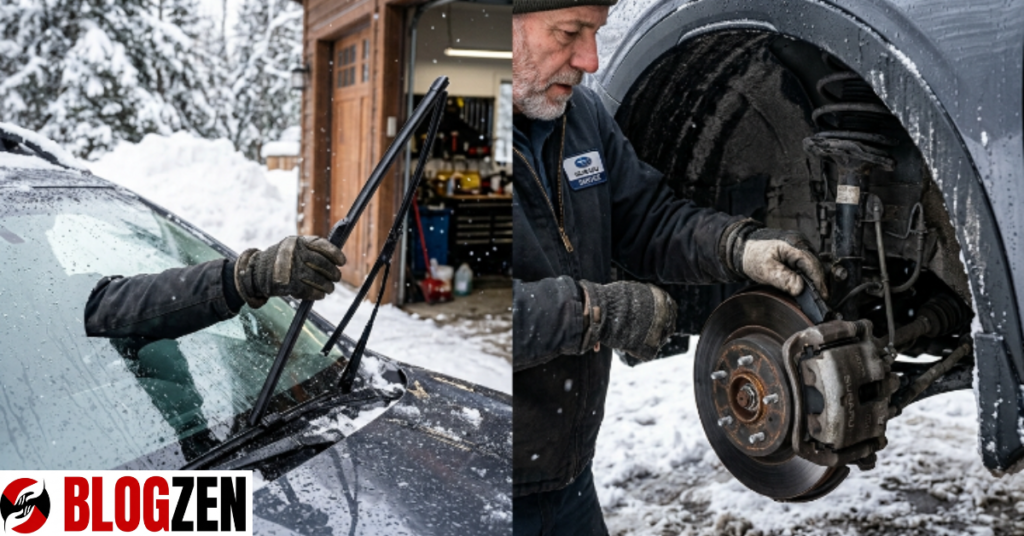
Winter magnifies brake problems into crashes. Cold temperatures increase stopping distance by approximately 10% even with healthy brakes. Add brake wear, and your stopping distance can increase 30-50%. This happens because brake fluid becomes thicker in cold, and pad compounds don’t grip as aggressively until they warm up.
Winter car care tips for brakes start with a visual inspection: look through your wheel spokes at the brake rotor. If you see extreme scoring (deep circular grooves), or if the rotor appears worn to a thin edge, have brakes inspected professionally. Thickness matters—rotors that have been resurfaced multiple times become prone to warping and noise.
Listen for sounds. Squealing noise that appears only in the first minute of driving (then goes away as brakes warm up) usually means you need new pads. Grinding noise—metal scraping metal—means brake pads have worn through the friction material and you’re running on bare metal. This requires immediate brake service. A grinding noise could turn into brake failure within days.
Your windshield wipers fail silently during winter. Cold temperatures make rubber brittle, and salt residue gums up the blade edges. Replace wiper blades before winter starts, not during the first blizzard when visibility matters most. Winter-specific wiper blades have boot covers that prevent ice accumulation on the blade mechanism—they cost $5-10 more than regular blades but prevent the frozen-blade problem entirely.
The Real Danger: How Cold Starts Damage Engines
Here’s what mechanics know that most car owners don’t: cold starts are where winter damage happens. When you turn the ignition key on a freezing morning, your engine oil is like thick paste. Your starter motor has to turn the engine over without adequate oil flow to lubricate cylinder walls, piston rings, and bearings. For those first 10 seconds, metal-on-metal contact creates wear that would normally take hundreds of highway miles to accumulate.
This happens incrementally. One cold start causes minimal wear. But repeated cold starts throughout winter—starting the car every morning for three months—cause significant damage. Engine parts wear at rates 5-10 times faster during the first minute of cold operation than during normal driving.
Winter car care tips to minimize this problem require three actions: first, use the correct oil weight (thinner oil flows faster when cold). Second, let your engine run idle for 10-15 seconds after starting—this allows oil pressure to build and reach critical engine parts before combustion begins. Modern engines don’t need the full warm-up of older cars, but 15 seconds of idle time is insurance.
Third, avoid revving the engine immediately after starting. Cold oil can’t properly cushion moving parts against impact forces. High RPMs on a cold engine accelerate wear exponentially. Drive gently for the first minute until you see the temperature gauge begin rising.
Expert Step-by-Step Winter Car Maintenance Checklist
Step 1: Battery Inspection (Week 1 of preparation)
Visit an auto parts store and request a free battery load test. Write down the voltage reading. If below 12.6 volts at rest or below 10 volts during cranking, replace the battery. Clean corrosion from terminals using baking soda and water. Dry completely and apply dielectric grease to prevent future corrosion.
Step 2: Fluid Level and Quality Check (Week 1)
Pop the hood and check coolant level (always when the engine is cold—opening a hot radiator cap can cause serious burns). Check engine oil level on the dipstick—it should be between the minimum and maximum marks. Purchase a coolant hydrometer and test your coolant’s freeze protection. If it shows protection below your area’s winter minimum, plan a coolant change.
Step 3: Tire Inspection and Pressure Adjustment (Week 2)
Measure tire tread depth at three points on each tire using a dime—all three measurements should be deeper than 4/32-inch (6/32-inch is better for winter). Check tire pressure with an accurate gauge when tires are cold. Add 2-3 PSI above the manufacturer’s recommended pressure. Mark your calendar to recheck pressure every 30 days—as temperature drops, pressure will drop further.
Step 4: Brake System Assessment (Week 2)
Look at brake pads through the wheel spokes. Pad thickness should be visible—if less than 1/4-inch thick, schedule brake pad replacement. Listen during test driving for squealing (bad pads) or grinding (dangerous—brake failure risk). Feel brake pedal responsiveness—should be firm without excessive travel. If pedal feels soft or spongy, have brake fluid inspected for moisture and contamination.
Step 5: Wiper Blade Replacement (Week 3)
Remove old wiper blades by lifting the arm away from the windshield until it clicks. Release the blade by pushing in the release tab. Install new winter-specific wiper blades rated for freezing temperatures. Test them on the windshield—they should clear glass completely without streaking or chattering.
Step 6: Lighting and Visibility Check (Week 3)
Turn on headlights and walk around the car, checking that both high and low beams work. Check all turn signals, brake lights, and backup lights. Clean any road salt residue from headlight covers (cloudy covers reduce light output by 50%). If lights are significantly dimmed, have the charging system tested—it might not be charging the battery properly, which becomes critical in winter.
Common Winter Car Care Mistakes (And Why They’ll Cost You)
Mistake 1: Ignoring tire pressure changes. Most drivers check tires once and assume pressure stays constant. It doesn’t. Pressure changes with temperature. Every 30 days of winter driving, pressure drops further. Drivers who don’t recheck end up running on dangerously underinflated tires by February, which accelerates wear and increases accident risk.
Mistake 2: Keeping old windshield washer fluid. Regular washer fluid freezes at 32°F. In January, when temperatures drop to 15°F at night, your fluid is solid. You wake up and drive to work thinking your wipers will work in an emergency. They won’t—there’s no fluid. Winter formula costs an extra dollar per gallon and prevents this problem entirely.
Mistake 3: Replacing brake pads with non-winter pads. All-season brake pads don’t grip as aggressively in cold temperatures. They’re designed for moderate climates. If you live somewhere with real winters, winter brake pads have compounds that grip better in cold. Replacement cost is $100-150 more than budget pads, but saves accident risk.
Mistake 4: Waiting for bad weather to prepare the car. The worst time to discover your battery is weak, your tires are underinflated, or your coolant is unprotected is during a blizzard. Preparation happens in fall when you have time and conditions are safe. Drivers who prepare in winter’s first emergency are already at risk.
Mistake 5: Not checking coolant protection. Drivers often assume their coolant is fine because the car started last winter. Coolant oxidizes over time, losing freeze protection. A $5 hydrometer test reveals the truth. If protection is insufficient, a $150 coolant flush prevents a $3,000+ engine block crack.
Seasonal Storage: Extended Protection for Winter
If you’re storing your vehicle for extended winter periods, additional winter car care tips apply. First, fill the fuel tank completely—an empty tank allows condensation to collect inside, which can corrode the fuel tank from inside and introduce water into the fuel system. A full tank displaces air and prevents this problem.
Second, change the oil before storage. Used oil contains contaminants and acids that corrode engine components during months of sitting. Fresh oil protects the engine while dormant. An oil change costs $30-60 and prevents rust formation inside the engine.
Third, disconnect the negative battery terminal. A connected battery slowly discharges over weeks of non-use, particularly if you have any electronic devices drawing power (alarms, GPS, modules). Disconnecting the terminal prevents complete battery discharge, which can permanently damage the battery.
Fourth, inflate tires to the maximum tire pressure listed on the sidewall—not the door recommendation, but the tire manufacturer’s maximum. As the car sits, tires naturally lose pressure. Starting from the maximum means pressure drops to normal levels gradually, preventing the flat-spot wear that occurs when vehicles sit for months.
Conclusion
Winter car care tips boil down to this: cold temperatures magnify every mechanical weakness. A battery that seems fine in October becomes unreliable in December. Tires that have adequate tread in fall become dangerous in snow by February. Fluids that provide protection at 60°F offer none at 20°F. The key is addressing these problems before winter arrives, not during the first blizzard when conditions are dangerous and repair shops are swamped.
Your action right now: pick one thing from this guide and do it this week. Test your battery. Check your tire pressure. Grab a coolant hydrometer and test your freeze protection. One task prevents one major winter problem. Complete all six steps, and you’ve eliminated the top reasons winter strands drivers on roadsides.
The math is simple—spend two hours and $200 preparing your car, or spend $1,214 and three days in the repair shop when something fails. Winter has a deadline: it arrives whether you’re ready or not. The difference between a smooth winter and a disaster is preparation.
FAQs
What’s the best time to prepare my car for winter?
The ideal preparation window is mid-to-late fall, before the first hard freeze. Starting in September or October gives you time to order parts (if needed) without rush shipping fees, and allows scheduling appointments when repair shops aren’t overwhelmed. Don’t wait until November—as temperatures drop, mechanics get swamped with winter car care appointments, and you’ll wait weeks for service. Prepare when weather is still mild enough to work comfortably, not when you’re desperate in a blizzard.
How often should I check tire pressure during winter?
Check tire pressure every 30 days throughout winter, always when the tires are cold (morning before driving is perfect). As temperatures continue dropping, pressure drops further—checking monthly ensures you catch these changes before pressure becomes dangerously low. Underinflated tires reduce fuel economy by up to 8%, increase stopping distance by 10-15%, and accelerate tread wear on the outer edges, reducing tire lifespan by thousands of miles.
Can I use all-season tires instead of winter-specific tires?
Technically yes, but you’re accepting significantly higher risk. Winter-specific tires are engineered to grip at temperatures below 45°F because the rubber compound stays flexible. All-season tires harden in cold weather, similar to plastic. In direct side-by-side testing, winter tires stop from 60 MPH in 130 feet on ice, while all-season tires need 164 feet—that 34-foot difference often means hitting something instead of stopping. Winter tires aren’t optional if your region experiences regular freezing temperatures; they’re a safety choice.
What’s the correct engine oil viscosity for winter driving?
Check your vehicle’s manual for the winter-grade recommendation. Generally, thinner oils (0W or 5W) flow better when cold and ensure faster oil circulation during cold starts. The first number (0W, 5W, etc.) indicates cold-start performance; the second number (like -30 in 0W-30) indicates high-temperature thickness. For most climates with occasional freezing, 5W-30 or 10W-30 works fine. For regions with sustained subzero temperatures, go with 0W-30 or 0W-20.
How can I tell if my battery is dying before winter arrives?
Three warning signs appear before complete failure: first, the engine cranks more slowly than normal (takes longer to start, sounds labored). Second, electronic devices like power windows or headlights flicker or dim when starting the engine. Third, the check engine light turns on, sometimes triggered by low voltage affecting sensors. If you notice any of these, have a load test done immediately. Don’t wait until the car won’t start in December; the problem compounds as temperatures drop.
What should I keep in my car during winter for emergencies?
Essential winter car emergency supplies include: jumper cables or a portable jump starter (jump starters are safer, costing $50-100), an ice scraper with snow brush, winter washer fluid (keep an extra gallon in the trunk), blanket or emergency kit for shelter, flashlight with extra batteries, jumper cables or jump starter, tire chains or emergency traction aids, and hand tools (screwdriver, pliers). Include phone charger or portable battery pack. Store these items permanently in your trunk from November through March—you won’t remember to grab them during the first emergency.
