


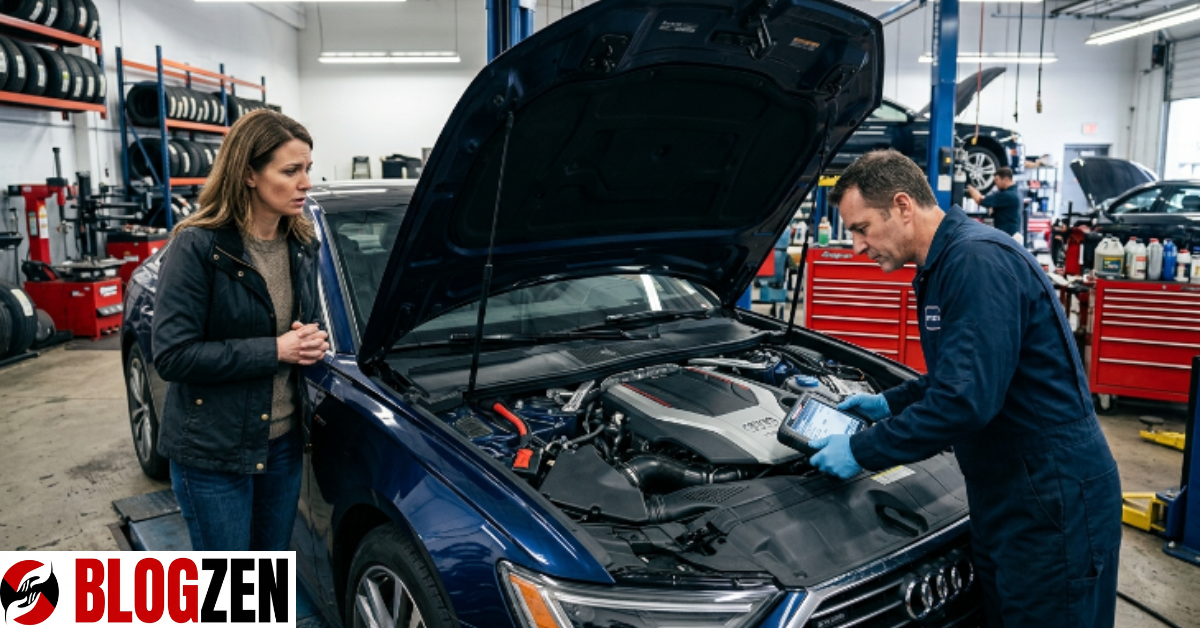
QUICK ANSWER
Your car needs repair if: you notice dashboard warning lights, hear unusual noises (grinding, squealing, knocking), see fluid leaks, experience reduced performance, observe steering or brake problems, or smell burning. Ignoring these signs leads to expensive damage—act within days, not weeks.
INTRODUCTION
Your car just made a noise you’ve never heard before. Your dashboard lit up. You felt something slightly off when you turned the wheel. And now you’re thinking: “Do I need to take this to a mechanic, or am I just paranoid?”
Here’s what most car owners don’t realize: your vehicle literally tells you when it’s dying. The problem isn’t spotting the signs—it’s understanding what they actually mean.
Signs your car needs repair aren’t mysterious. They’re not hidden. You’ve been trained your whole life to ignore them. That strange burning smell? Probably normal, right? That grinding sound when you brake? It’ll go away. That puddle under your car? Just water from the air conditioner.
Wrong. Wrong. Wrong.
This article will teach you exactly which warning signs demand immediate attention, which ones you can monitor, and which ones mean you’re one week away from a $3,000 repair bill. You’ll learn the secret language your car uses to communicate. And most importantly, you’ll stop second-guessing yourself when something feels off.
By the end of this guide, you’ll know precisely when to call a mechanic and when you’re safe to drive another week. Let me explain why this matters.
What Dashboard Warning Lights Actually Mean (And Why You Can’t Ignore Them)
Your dashboard is your car’s way of screaming for help.
Most drivers see a yellow or red light and freeze. They think it’s a scam by mechanics to get money. Others think it’ll disappear if they restart the engine. The truth is: dashboard warning lights are your earliest warning system. They appear before damage gets catastrophic.
Here’s what happens inside your vehicle: dozens of sensors monitor your engine, transmission, brakes, and electrical systems constantly. When something drifts outside normal parameters, these sensors alert the onboard computer. The computer decides whether this needs your immediate attention (red light = stop driving now) or mild concern (yellow light = schedule service soon).
The check engine light is the most common and the most misunderstood. It doesn’t mean your engine is about to explode. It means an emissions sensor, oxygen sensor, or catalytic converter isn’t performing correctly. Ignoring it? That $150 fix becomes a $1,200 problem in six months.
The ABS light (anti-lock braking system) means your brakes are compromised. This isn’t a “continue driving” situation. Pull over and call for a tow if the brake warning light is on simultaneously.
Red warning lights are non-negotiable: engine oil pressure, coolant temperature, and brake system failures demand immediate attention. Pull over. Call a mechanic. Don’t risk it.
Yellow/orange lights are urgent but less catastrophic. Schedule an appointment within the week. This includes battery light, tire pressure monitoring, and transmission warnings.
[Internal Link Suggestion: “How to diagnose check engine light codes yourself”]
Pro Tip: Write down the exact time the warning light appeared, what you were doing when it showed up, and whether you’ve noticed any performance changes. This information saves mechanics hours of diagnostic time and could save you $200+ in labor costs.
The Sounds Your Car Makes That Signal Trouble
Sound is the second language your car speaks. And it’s screaming a lot more than you realize.
Most people experience car trouble through their ears before they see it on a dashboard. A grinding sound when you brake. A knock from under the hood. A squeal when you turn the steering wheel. These aren’t random noises—they’re your car’s distress signals.
Grinding noises during braking mean your brake pads have worn through completely, and metal is now touching metal. This is dangerous. Your braking distance increases. Your rotors (the metal discs behind your wheels) are being permanently damaged. A brake pad replacement costs $150-400. Ignoring it until rotors fail? That’s $400-800 per axle. Stop braking gently and get to a mechanic within 48 hours.
A metallic knock from the engine during acceleration is your engine “pinging” due to low-quality fuel or engine carbon buildup. More serious: it could be bearing wear (catastrophic failure incoming). Don’t ignore engine knock. Switch to premium fuel first—if the noise continues, get it diagnosed immediately.
Squealing from the serpentine belt (usually when you start the car or accelerate) signals belt wear. Your belt powers your alternator, power steering, and air conditioning. A failing belt means you’ll lose power steering and battery charging. Replace it before it snaps. Typical cost: $200-400. Cost of being stranded on a highway? Priceless.
A grinding or clunking sound from the transmission when shifting gears means internal transmission damage. This is your five-figure warning. Get it to a transmission specialist immediately. Continuing to drive causes progressive damage.
Clicking sounds from wheels often mean a CV joint (in front-wheel-drive cars) is failing. This makes the car unsafe to drive, especially in turns. Schedule immediate service.
Pro Tip: Record the sound on your phone and play it for the mechanic. You won’t hear it clearly while sitting in the service desk, but a mechanic who hears it while test-driving will diagnose it 70% faster than trying to replicate the sound.
Fluid Leaks and What They Tell You About Your Car’s Health
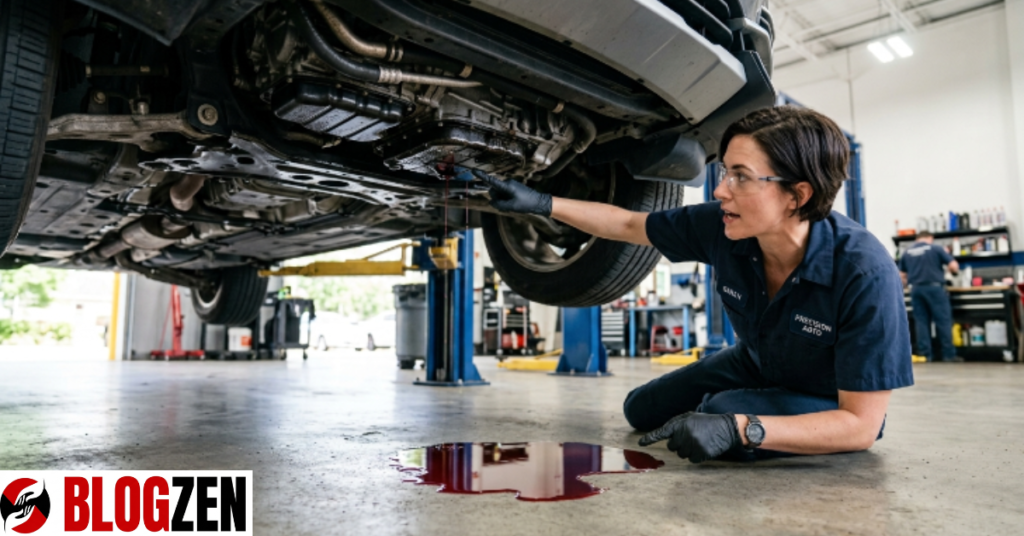
Your car is slowly dying if it’s leaking fluids. And yes, it’s leaking something right now.
Not all fluid leaks are equally serious. But all of them mean something is wrong. Here’s how to know what you’re looking at.
Red or pink fluid is transmission fluid or power steering fluid. These are critical systems. A small leak today becomes a major malfunction in two weeks. If you see this under your car, get to a mechanic within three days.
Dark brown or black fluid is usually engine oil. A small slow leak (a few drops) happens to older cars and might be cosmetic. But a puddle that appears overnight? Your engine is losing lubrication. Driving without oil causes catastrophic engine damage in hours. Check your oil level immediately. If it’s low, top it up and drive to a mechanic—don’t ignore it.
Green, orange, or pink fluid is coolant. This is your engine’s temperature regulator. A leak means your engine will overheat. You’ll see the temperature gauge climbing or the coolant warning light. Stop driving immediately. An overheating engine can be permanently damaged in minutes.
Clear fluid under your car is usually just condensation from your air conditioning system. This is normal and not a sign your car needs repair. But if it’s dripping while parked, that’s fine. If it’s dripping while driving, mention it at your next oil change.
The location of the leak matters. Leaks near the front-center usually mean engine, transmission, or power steering. Leaks at the wheels suggest brake fluid. Leaks under the rear axle point to differential problems.
Don’t wait for leaks. They exponentially worsen. A small puddle becomes a significant drip. A drip becomes a rapid loss of fluid. Loss of fluid becomes damage to critical systems.
Performance Changes That Demand Immediate Diagnosis
Your car’s behavior changed. It’s subtle, but you felt it. That’s not paranoia—that’s your car sending a message.
Reduced acceleration or power (your car feels sluggish) often points to a clogged air filter, fuel filter, or spark plugs that need replacement. Alternatively, it could be early engine knock or transmission problems. This isn’t catastrophic today, but it worsens daily. Schedule service within the week.
Difficulty starting or delayed starts (the engine cranks but takes longer to turn over) usually means a weak battery, failing starter motor, or fuel system issue. If this happens occasionally, it’s probably battery-related. If it happens every morning or after the car sits for a day, you need diagnostic testing. A dead battery costs $100-200 to replace. A failing starter costs $400-600. Get it checked.
Decreased fuel economy (you’re filling up more frequently for the same driving) signals several possibilities: dirty fuel injectors, failing oxygen sensors, low tire pressure, or transmission problems. Your car is working harder to do the same job. Fuel economy drops about 3% per sensor problem. Over a year, this costs you $300+ in wasted gas. Fix it.
Shaking or vibration while driving at certain speeds could be wheel alignment issues, unbalanced tires, worn suspension components, or brake problems. Vibration that gets worse as you accelerate suggests something rotating (wheels, tires, drivetrain). Vibration while braking suggests uneven brake wear or warped rotors. Both need professional diagnosis—don’t drive it hard until you’ve had it checked.
Soft or spongey brakes (you have to press harder than usual to stop) mean brake fluid is low, there’s air in the brake lines, or brake pads are nearly gone. This is a safety issue. Brakes failing at a traffic light isn’t a fun learning experience. Check your brake fluid level—it’s usually in a translucent reservoir under the hood. If it’s low, top it off. If it’s full, you have air in the lines or internal brake failure. Get to a mechanic today.
The Steering, Suspension, and Brake Warning Signs You Absolutely Cannot Miss
Three systems keep you alive while driving: steering, suspension, and brakes. When they fail, you lose control.
Steering wheel pulling to one side means misalignment or uneven tire wear. This isn’t just a handling problem—it indicates your car is being pulled toward traffic or a cliff depending on your road. Misaligned wheels wear out in weeks instead of years, costing you tire replacements. Get alignment checked within 48 hours.
Steering wheel vibration or shimmy at certain speeds (usually 40-60 mph) points to wheel imbalance, bent wheels, or uneven tire wear. This feels terrifying and is easy to fix. A tire rotation or wheel balance costs $50-100. Continuing to drive will destroy your suspension and tires.
Soft, bouncy, or unresponsive steering when turning means your power steering pump is failing or fluid is low. Check the power steering fluid level under the hood (it’s usually labeled on the cap). If it’s low, top it off and monitor it. If it stays low, you have a leak. If it’s full and steering still feels wrong, the pump is likely failing.
Clunking or squeaking sounds when turning signal worn suspension components (ball joints, tie rods, control arm bushings). This makes your car unstable during turns. Don’t delay this repair. Suspension failure can cause wheels to literally lock up or collapse while driving.
Spongy brake pedal or one that sinks to the floor is a brake emergency. Your brakes are not working properly. Pull over immediately and call for a tow. Do not drive this car, even to the mechanic.
Brake warning light with reduced stopping power means brake system failure. This is life-threatening. Stop driving. Get towed to a mechanic.
Soft suspension (car bounces excessively after bumps) indicates worn shock absorbers or struts. This reduces stability and increases braking distance. While not immediately catastrophic, it’s a safety problem. Replace shocks/struts within two weeks.
Strange Smells That Predict Car Failure (Mechanic’s Early Warning System)
Your nose is a diagnostic tool. Humans can smell problems before any light illuminates.
Burning rubber smell while accelerating or turning hard suggests your tires are being overheated due to excessive friction (hard driving, misalignment, or bad suspension). This is normal occasionally but shouldn’t be constant. If it happens during normal driving, have your alignment checked.
Burning oil or burnt plastic smell from under the hood means oil is leaking onto hot engine components. This is dangerous—oil leaks can cause engine fires. Smell this again? Get to a mechanic today. Don’t ignore it.
Sweet smell (like maple syrup or candy) is a coolant leak. Your engine is overheating internally. Check your coolant level—if it’s low, top it off and monitor it closely. If it keeps getting low, you have a leak. Overheating engines get damaged quickly. Address this within days.
Rotten egg smell while driving means your catalytic converter is failing and sulfur compounds aren’t being processed correctly. This is primarily an emissions problem, but it indicates the converter needs replacement ($400-800). Get it diagnosed, but it’s not an immediate safety issue.
Gasoline smell inside the car suggests a fuel leak. While fuel itself is relatively safe in small amounts, a strong smell indicates fuel is leaking where it shouldn’t be. This is a fire hazard. Don’t ignore gasoline smells. Get it checked immediately.
Burning brakes smell (acrid, chemical smell) after heavy braking or mountain driving is normal—brakes get hot. But if it happens during light braking on flat roads, your brakes are sticking. This means you’re dragging brake pads constantly, creating friction. You’re destroying your brakes. Have the braking system inspected.
Pro Tip: Your sense of smell is more reliable than your eyes for early diagnosis. If something smells wrong, trust your instinct. Cars are designed to hide visual problems but can’t hide smells.
The Complete Diagnostic Checklist—How to Know If You Need Repair Today, Tomorrow, or This Week
Not every car problem requires an emergency visit to the mechanic. But you need to know which ones do.
STOP DRIVING IMMEDIATELY (within the hour):
- Brake warning light + reduced braking power
- Steering wheel becomes unresponsive
- Engine overheating (temperature gauge in red zone)
- Transmission slipping or grinding severely
- Smoke from under the hood
- Complete loss of power steering
- Grinding noise from brakes + brake pedal goes to floor
URGENT (within 24 hours):
- Brake grinding with normal pedal feel
- Dashboard check engine light
- Coolant leak (sweet smell, low coolant level)
- Power steering fluid leaking
- Transmission fluid leak
- Suspension clunking when turning
- Engine knock that doesn’t stop
SCHEDULE WITHIN A WEEK:
- Reduced acceleration or fuel economy
- Difficulty starting
- Steering wheel pulling to one side
- Dashboard ABS light
- Serpentine belt squealing
- Soft brakes that don’t fail
- Tire pressure warning light
CAN WAIT (but schedule within a month):
- Soft suspension (bouncy ride)
- Minor squeaks (not grinding)
- Rust or surface corrosion
- Cosmetic damage
- Worn wiper blades
This framework saves thousands because it prevents small problems from becoming big ones. A $200 repair today prevents a $2,000 repair in three weeks.
CONCLUSION
Your car doesn’t break down suddenly. It sends warnings constantly. The difference between a $300 repair and a $3,000 repair is whether you listen to those warnings.
The three critical things to remember: First, dashboard warning lights—especially red ones—demand attention. They’re not errors; they’re your vehicle’s built-in diagnostic system. Second, sounds and smells matter more than you realize. Your senses catch problems faster than you’ll see them. Third, performance changes accumulate. A sluggish car today becomes a non-starting car next month.
The best part? You don’t need to be a mechanic to spot these problems. You need to pay attention. The moment something feels wrong, sounds unusual, or smells strange, you’ve caught your car’s cry for help.
Don’t ignore it. Don’t rationalize it. Don’t wait for the problem to disappear. Schedule an appointment. Describe exactly what you heard, saw, or smelled. Let a professional confirm your instinct. Catching repairs early doesn’t cost money—it saves money.
What warning signs has your car shown lately? Share in the comments below, and let’s identify what your vehicle is trying to tell you.
FAQs
What are the most critical warning signs your car needs repair?
The most dangerous signs are brake failure (spongy pedal, warning light with reduced stopping power), loss of steering control, transmission grinding with inability to shift, engine overheating (temperature gauge in red), or smoke from under the hood. Any of these require immediate stopping and professional help. Don’t drive a car with these problems—you risk losing control completely. A disabled vehicle on the highway is dangerous for you and everyone around you.
How do I know if my car is making a dangerous noise versus a normal sound?
Dangerous noises worsen over time and sound mechanical (grinding, knocking, clunking). They’re often rhythmic or connected to driving actions (happens when you brake, turn, or accelerate). Normal sounds stay consistent (wind noise, tire noise on certain road surfaces). The key difference: If you feel uneasy hearing the sound—like something is genuinely wrong—that instinct is usually correct. Mechanics hear these distinctions immediately. Record the noise and play it for a professional.
Can I drive my car with the check engine light on?
Usually yes, but you shouldn’t delay getting it diagnosed. A check engine light means your emissions system, fuel system, or ignition system isn’t functioning optimally. It’s not like a brake failure—you probably won’t lose control. However, continuing to drive can worsen the underlying problem. Some check engine codes indicate serious issues (catalytic converter failure, transmission problems) while others are minor. Schedule an appointment within a week. If the light is flashing (not solid), stop driving—this indicates severe engine misfires.
What should I do if I notice a fluid leak under my car?
Identify the color and location of the leak first. Take a photo. Check your fluid levels under the hood (oil, coolant, transmission fluid, power steering fluid). If any are significantly low, top them off immediately and monitor them daily. If they stay low, you have an active leak. Get it diagnosed within days—don’t wait weeks. The longer a leak persists, the more damage happens to seals, gaskets, and components. Fluid leaks always worsen; they never improve on their own.
How often should I have my car inspected for potential problems before they become serious?
Schedule a full vehicle inspection every six months or before long road trips. Get an oil change every 5,000-7,500 miles (depending on your vehicle and oil type). Listen to your car constantly—pay attention to new sounds, changes in handling, or performance differences. Tire rotations and pressure checks every month add years to tire life. Most importantly, don’t wait for warning lights. A preventive inspection costs $50-150 and catches problems early. An emergency repair after neglect costs thousands.
What’s the difference between sounds I can ignore and sounds that demand immediate mechanic attention?
Ignore: wind noise, tire noise on rough roads, minor squeaks that don’t change, normal engine sounds. Investigate immediately: grinding (especially from brakes), knocking from the engine (rhythmic or under acceleration), clunking from suspension (during turns), squealing that worsens (serpentine belt), and any sound that feels mechanical or metal-on-metal. When in doubt, describe the sound to a mechanic over the phone. They’ll tell you whether to drive directly to the shop or continue monitoring it.
