



Quick Answer
A travel warning is an official government advisory that alerts citizens about safety risks in a specific country or region. It covers threats like political instability, crime, terrorism, natural disasters, or health crises. Travelers should check these warnings before booking any international trip.
Introduction
Most people only check travel warnings after something goes wrong — and that’s exactly how they end up in the wrong place at the worst possible time.
Every year, thousands of travelers walk into situations they could have completely avoided. Not because they were careless. Because they didn’t understand what a travel warning actually means — or how to use one properly.
A travel warning is one of the most underused tools in any traveler’s toolkit. Governments issue them constantly. Most people glance at them, shrug, and book the flight anyway. Others panic and cancel a perfectly safe trip over a low-level advisory.
Neither approach is smart.
In this article, you’ll learn exactly what travel warnings mean, how they’re structured, what the different levels tell you, and — most importantly — how to make real decisions based on them. By the end, you’ll read advisories the way experienced travelers and foreign correspondents do.
What Is a Travel Warning and Why It Matters Today
A travel warning is an official notice issued by a government — typically through its foreign affairs or state department — alerting its citizens that traveling to a specific country or region carries elevated risk. These aren’t guesses or headlines. They’re based on intelligence reports, diplomatic cables, on-the-ground assessments, and historical incident data.
The reason they matter more today than ever before is simple: the world moves faster now. A peaceful tourist destination can shift status within 48 hours due to an election crisis, a disease outbreak, or a sudden surge in criminal activity targeting foreigners. Checking a travel warning once, six months before your trip, is no longer enough.
Think of it this way: a travel warning is a real-time dashboard for global safety. Ignore it and you’re flying blind. Use it correctly, and you travel with your eyes open.
Pro Tip: Don’t just check your own country’s advisory. Cross-reference with advisories from the UK, Canada, and Australia — they often contain different risk assessments for the same destination.
How Travel Warnings Actually Work
Here’s what nobody tells you: travel warnings aren’t created equal, and the scale used by each country’s government is different. The U.S. State Department uses a four-level system. The UK Foreign Office uses a different model. Canada uses a third. Most travelers don’t know this — and it causes serious confusion.
Let’s break down how they actually get made and what each level typically means:
- Intelligence gathering — Embassies, intelligence agencies, and diplomatic contacts report on conditions inside a country. This includes crime statistics, political protests, terrorism indicators, and healthcare infrastructure.
- Risk assessment — Analysts categorize the threat level based on probability and severity. A country with frequent petty theft ranks differently than one with active armed conflict.
- Advisory publication — The government publishes a formal advisory on its official travel portal, assigning a level and providing written guidance for specific regions within the country.
- Ongoing review — Advisories are updated continuously. A single event — a coup attempt, a major earthquake, a disease cluster — can trigger an immediate escalation.
- Consular support alignment — The advisory level determines what support your country’s embassy can provide if you travel anyway. At the highest levels, they may explicitly state they cannot guarantee evacuation.
Here’s my personal observation after years of studying these systems: the written text inside an advisory matters far more than the number or color assigned to it. Two Level 3 advisories can describe wildly different risk profiles. Read the details, not just the headline.
Common Mistakes People Make With Travel Warnings
Most travelers misuse travel warnings in one of three predictable ways. Each mistake is understandable. None of them is safe.
Mistake #1: Treating All Warnings as Equal
What it is: Assuming that any travel warning means “do not go.” Why people make it: Because the word “warning” sounds absolute. How to fix it: Read the specific risk category. A warning for petty crime in tourist districts is fundamentally different from a warning for active military conflict. One requires alertness. The other may require cancellation.
Mistake #2: Checking Once and Forgetting
What it is: Reviewing the advisory when booking, then never looking again. Why people make it: Because it feels like a box ticked. How to fix it: Set a recurring reminder to re-check the advisory 30 days before travel, 7 days before, and 48 hours before departure. Situations change fast — especially in politically volatile regions.
Mistake #3: Ignoring Region-Specific Data
What it is: Looking at a country-level advisory without reading the regional breakdown. Why people make it: Because the summary feels sufficient. How to fix it: Dig into the specific provinces, cities, or border areas you plan to visit. Many countries have one dangerous region that inflates the overall advisory level, while the tourist areas remain statistically safe.
Pro Tip: Save a screenshot of the advisory on the day you book your trip. If the situation escalates later, this becomes important documentation for travel insurance claims.
Expert Tips and Proven Strategies for Travel Warnings
Check Multiple Government Sources, Not Just Your Own
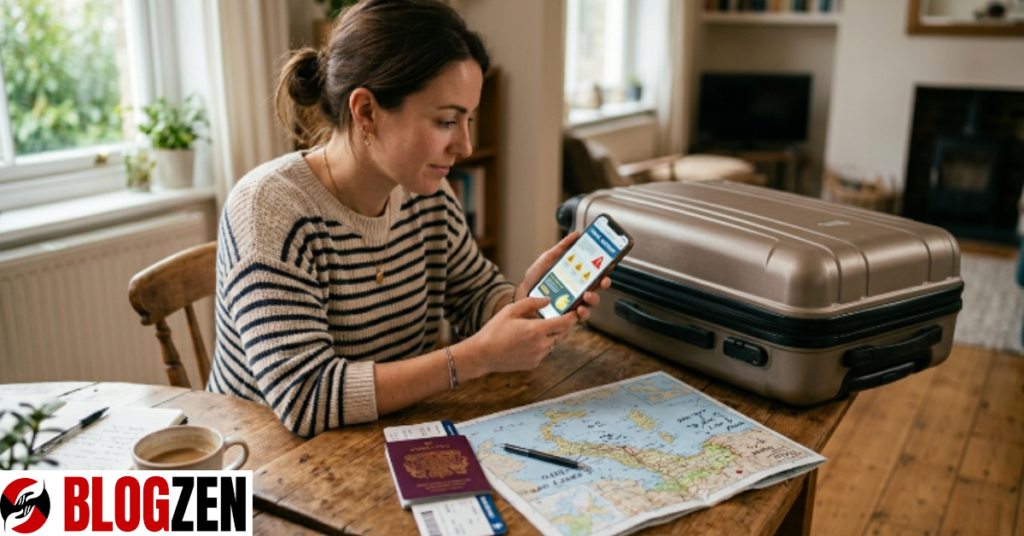
The United States, United Kingdom, Canada, and Australia all maintain independent advisory systems. Professionals — journalists, security consultants, NGO field workers — routinely cross-reference all four. Each government weighs risks differently based on their diplomatic relationships, intelligence priorities, and citizen demographics. When three out of four sources agree on elevated danger, that’s a signal worth trusting without question.
Understand What “Reconsider Travel” Actually Means
Most governments use language carefully. “Reconsider travel” doesn’t mean “don’t go.” It means weigh the risk seriously against your specific itinerary. A business traveler going to a capital city’s financial district faces different exposure than a backpacker heading into rural border regions. The level is a starting point — your personal risk profile is the deciding factor.
Register With Your Embassy Before You Depart
Many travelers don’t know their government offers a free enrollment program that alerts them if conditions change while abroad. The U.S. State Department has STEP (Smart Traveler Enrollment Program). The UK has a similar system. Registration takes under five minutes and ensures your embassy knows you’re in-country if a crisis erupts — potentially enabling faster evacuation assistance.
Real-World Examples and Case Studies
Case Study 1 — The Bali Volcano Traveler
In 2017, Mount Agung in Bali began showing eruption signs. Multiple governments raised their travel advisories for the region. Thousands of travelers ignored them because Bali had been safe for years. Over 70,000 tourists were stranded when the airport closed without warning. Those who had checked advisories, purchased appropriate travel insurance, and had flexible bookings recovered most of their costs. Those who hadn’t lost an average of $2,300 per person in non-refundable expenses, according to travel industry estimates at the time.
Case Study 2 — The “Green Country” Assumption
A corporate travel manager once shared this: a client company sent 12 employees to a country with a Level 1 (exercise normal precautions) advisory. What the company didn’t read was the fine print — a specific northern province had active kidnapping risks targeting business travelers. Two employees were routed through that province. Nothing happened, but the near-miss forced a complete overhaul of their travel risk policy. The advisory had the information. Nobody read past the headline level.
These cases illustrate one thing clearly: travel warnings are only useful if you actually use them.
Pro Tip: Forward the advisory link to every person traveling with you. Don’t assume your travel companion read it just because you did.
Step-by-Step Guide — Travel Warnings in Action
- Identify your destination’s official advisory page — Go directly to your government’s foreign affairs website. Search the country name plus “travel advisory.” Bookmark the direct page, not a third-party summary. Third-party summaries lag behind real-time updates by hours or days.
- Read the full advisory text, not just the level — Scroll past the headline risk level. Read every paragraph. Pay attention to crime type, affected regions, time-of-day risks, and specific traveler profiles mentioned (solo women, business travelers, LGBTQ+ travelers, dual nationals).
- Map the warnings against your specific itinerary — Overlay the risk zones against where you’re actually going and how you’re getting there. A risk in the north means nothing if you’re staying in the south — unless your transit route passes through it.
- Cross-reference with at least one other country’s advisory — Spend five minutes checking the UK or Canadian version. Note any differences. If one government is significantly more alarmed, find out why before dismissing it.
- Purchase appropriate travel insurance based on the level — Standard travel insurance often excludes countries above a certain advisory level. A country with a Level 3 or equivalent advisory may require specialized medical evacuation coverage. Buy it before you go, not after.
Myths vs Facts — What to Avoid With Travel Warnings
| Myth | Fact |
|---|---|
| A travel warning means the government will evacuate you | Governments may advise departure but cannot guarantee evacuation, especially at lower advisory levels |
| If a popular resort is open, the warning doesn’t apply to me | Tourist zones are often highlighted in advisories; some specifically warn about resort-area crime targeting foreigners |
| Travel warnings are politically motivated and unreliable | While diplomacy can influence language, the underlying risk data is sourced from multiple independent intelligence streams |
| My travel agent would have told me if it was dangerous | Travel agents are not required to disclose advisory levels; responsibility for checking falls on the traveler |
Conclusion
Three things will change how you travel from this moment forward.
First, a travel warning is not a yes or no answer — it’s data that requires interpretation. Read the full text, not just the level. Second, check it multiple times before departure, not just once at booking. The world doesn’t pause for your travel plans. Third, cross-reference sources and register with your embassy. These are free actions that take minutes and can matter enormously if things go sideways.
Most travelers will keep ignoring advisories until something forces them to pay attention. You don’t have to be one of them.
The question isn’t whether travel warnings are worth checking. The question is: what will you do with the information once you have it? Start with your next trip — look it up today, read the full advisory, and make an informed decision like the experienced traveler you’re becoming.
Safe travel begins before you leave home.
FAQs
What is the difference between a travel warning and a travel advisory?
Historically, the U.S. State Department used two separate terms: “travel warnings” for long-term conditions requiring reconsideration, and “travel alerts” for short-term events. In 2018, both were replaced by a unified four-level travel advisory system. Today, the terms are often used interchangeably in everyday language, though technically the word “advisory” now covers the full spectrum of official government guidance across all risk levels.
What are the travel warning levels and what do they mean?
The U.S. State Department uses four levels:
- Level 1 — Exercise normal precautions
- Level 2 — Exercise increased caution
- Level 3 — Reconsider travel
- Level 4 — Do not travel
Most other countries use similar tiered systems. The UK uses a traffic-light style system with narrative detail. Canada uses three tiers. Each level triggers different embassy support protocols and affects travel insurance coverage eligibility differently.
Does a travel warning affect my travel insurance coverage?
Yes — significantly. Most standard travel insurance policies contain clauses that limit or void coverage if you travel to a destination under a high-level advisory (typically Level 3 or 4 equivalent). Some insurers require you to purchase specialized war-risk or evacuation coverage for such destinations. Always read your policy terms against the current advisory level before purchasing insurance, not after. Contact your insurer directly if you’re unsure how the advisory affects your specific plan.
How often are travel warnings updated?
Government travel advisories are reviewed continuously, but formal updates vary by country and situation. Routine reviews may happen every three to six months for stable destinations. However, during active crises — natural disasters, elections, terror incidents, disease outbreaks — advisories can be updated within hours. Always check the “last updated” date visible on every advisory page, and re-check within 48 hours of departure regardless of when you last looked.
Can I still get a visa if a travel warning is in effect?
A travel warning does not legally prevent you from applying for or receiving a visa to that country. The warning is issued by your home government to its citizens — it has no bearing on the destination country’s visa policies. However, some countries under high-level advisories may have reduced or suspended consular services in that country, which could affect visa processing times or your ability to renew documents if something goes wrong while abroad.
What should I do if a travel warning is issued while I’m already abroad?
Act quickly and stay calm. First, contact your country’s local embassy or consulate — they become your primary resource. Second, register in your government’s traveler enrollment program immediately if you haven’t already. Third, identify your nearest exit options and confirm they’re operational. Fourth, contact your travel insurer and airline about rebooking options. Keep your passport and emergency cash accessible at all times. Follow embassy instructions over any other source during an active escalation.
