


Quick Answer
Homemade dog food recipes should include a protein source (chicken, beef, or fish), a carbohydrate (rice or sweet potato), and dog-safe vegetables. Always add a canine multivitamin or calcium supplement. Avoid onions, garlic, grapes, and xylitol. Consult your vet before switching your dog’s diet completely.
More than 60% of pet owners who switch to homemade dog food never look back — but a shocking number start doing it completely wrong, putting their dogs at serious nutritional risk without even realizing it.
If you’ve been wondering whether homemade dog food recipes are actually worth the effort, you’re asking the right question. The answer isn’t a simple yes or no. It depends on what you put in the bowl, what you leave out, and whether you understand the surprisingly thin line between “healthy home cooking” and “unbalanced diet that harms your dog over time.”
In this article, you’ll get the full picture — from the right ingredients and real recipe formulas to the common mistakes that trip up even well-meaning pet parents. By the end, you’ll be able to confidently cook for your dog without second-guessing every decision.
What Are Homemade Dog Food Recipes and Why They Matter Right Now
A homemade dog food recipe is exactly what it sounds like: a meal you prepare at home using whole food ingredients, instead of pouring kibble from a bag. But here’s what most people miss — it’s not just about swapping ingredients. It’s about replacing a carefully formulated nutritional system with something you build from scratch.
Pet food recalls, ingredient transparency concerns, and a growing understanding of canine nutrition have pushed millions of owners toward home cooking. The global pet food market crossed $150 billion in 2024, and a growing slice of that is owners spending on whole ingredients, not processed pellets. Your dog’s gut health, coat condition, and energy levels are directly tied to what goes in the bowl every day.
Think of it this way: you wouldn’t eat the same ultra-processed meal three times a day for years and expect to thrive. Many vets now agree that whole food diets — done correctly — can support longevity and reduce inflammation in dogs. The key phrase is “done correctly.”
Pro Tip: Ask your vet to run a baseline blood panel before switching your dog to homemade food. It gives you a benchmark so you can track whether the new diet is actually helping.
How Homemade Dog Food Actually Works
Here’s where most people get lost. They assume “natural = complete,” but a dog’s nutritional needs are specific — and a plain chicken-and-rice bowl doesn’t cut it long-term. A balanced homemade dog meal works like a formula, not a random mix.
Here’s the basic structure that nutritionists and integrative vets recommend:
- Protein (40–50% of the meal) — Lean meats like chicken breast, ground turkey, beef, or salmon. Protein drives muscle maintenance and organ function. Always cook it fully to eliminate pathogens.
- Carbohydrates (25–30%) — White rice, sweet potato, oats, or lentils. These provide digestible energy without spiking blood sugar the way corn-heavy kibble often does.
- Vegetables (15–20%) — Carrots, peas, spinach, zucchini, and green beans are all safe. They add fiber, antioxidants, and micronutrients. Skip the nightshades and alliums entirely.
- Supplements (essential, non-negotiable) — Calcium is the big one. Without a bone meal supplement or crushed eggshell, your dog won’t get enough calcium from muscle meat alone. A canine multivitamin fills remaining gaps.
- Healthy fats (5–10%) — A drizzle of fish oil or a spoonful of coconut oil adds omega-3s and supports coat health. Don’t skip this.
The ratio matters more than the specific ingredients. A dog fed 90% protein and no carbs or fiber will develop digestive issues within weeks. Balance is the engine that makes the whole thing work.
Common Mistakes People Make With Homemade Dog Food

Most people who start cooking for their dogs make at least one of these three errors. They’re not obvious — which is exactly why they’re so common.
Mistake 1: Skipping Supplements
Whole food sounds complete, but muscle meat is dangerously low in calcium. Without supplementation, dogs on homemade diets can develop metabolic bone disease over time. Fix it by adding 900mg of calcium carbonate per pound of food, or using a vet-approved canine vitamin blend that includes calcium, zinc, and vitamin D.
Mistake 2: Using the Same Recipe Forever
Rotating proteins and vegetables isn’t just for variety — it prevents nutritional gaps that form when one ingredient is over-relied on. Many owners find one recipe that works and use it for months. Rotate between chicken, beef, and fish weekly, and swap vegetables seasonally.
Mistake 3: Eyeballing Portions
Dogs need roughly 2–3% of their body weight in food per day, depending on age and activity level. A 40-pound dog needs about 12–16 oz of food daily. Most owners guess and either overfeed (obesity risk) or underfeed (energy crashes, weight loss). Use a kitchen scale for the first few weeks until your eye is calibrated.
Pro Tip: Batch cook in large quantities and freeze portions in silicone molds sized to your dog’s daily serving. It turns a weekend task into two months of stress-free feeding.
Expert Tips and Proven Strategies for Homemade Dog Food
Start With a Vet-Formulated Recipe, Not a Blog Post
The internet is full of recipes that look good but weren’t created by anyone with canine nutrition training. The safest starting point is a recipe from a board-certified veterinary nutritionist. Websites like BalanceIT.com let you build custom recipes based on your dog’s exact weight, age, and breed. It takes 10 minutes and removes the guesswork entirely.
The Eggshell Calcium Trick Nobody Talks About
Here’s something most homemade dog food guides skip: dried, powdered eggshell is one of the most bioavailable sources of calcium for dogs. Bake clean eggshells at 300°F for 10 minutes, grind them to powder, and add roughly ½ teaspoon per pound of food. It’s free, it’s natural, and it works. Most supplement-focused recipes never mention this.
Use the 3-Day Transition Rule Every Single Time
Switching your dog’s food abruptly — even to something healthier — causes digestive upset. Mix 25% homemade food with 75% current food for three days, then 50/50 for three days, then 75/25, and finally 100% homemade. This method prevents diarrhea and lets gut bacteria adjust gradually. Skipping this step is the fastest way to conclude that homemade food “doesn’t work.”WSAVA Global Nutrition Guidelines for Dogs
Real-World Examples and Case Studies
Consider a 7-year-old Labrador named Biscuit whose owner switched him to a homemade diet after two consecutive recalls on his premium kibble brand. Within 8 weeks on a rotating chicken-and-sweet-potato base with fish oil and a canine multivitamin, his coat changed visibly — shedding decreased by about 40%, and his seasonal allergy symptoms dropped enough that his vet reduced his antihistamine dose.
Contrast that with a 4-year-old Beagle whose owner fed homemade food for six months using only ground beef and rice — no supplements, no vegetable rotation. The dog developed hair thinning and low energy. Bloodwork revealed low calcium and borderline zinc deficiency. One vet visit, one supplement addition, and a recipe overhaul fixed everything within 10 weeks. The lesson: the effort is worth it, but the formula matters.
Pro Tip: Take a monthly photo of your dog’s coat condition under the same lighting. It’s a surprisingly useful visual tracker of nutritional improvement — easier to interpret than waiting for annual bloodwork.
Step-by-Step Guide — Homemade Dog Food in Action
Here’s a practical beginner recipe for a 30-pound adult dog (scales easily for larger breeds):
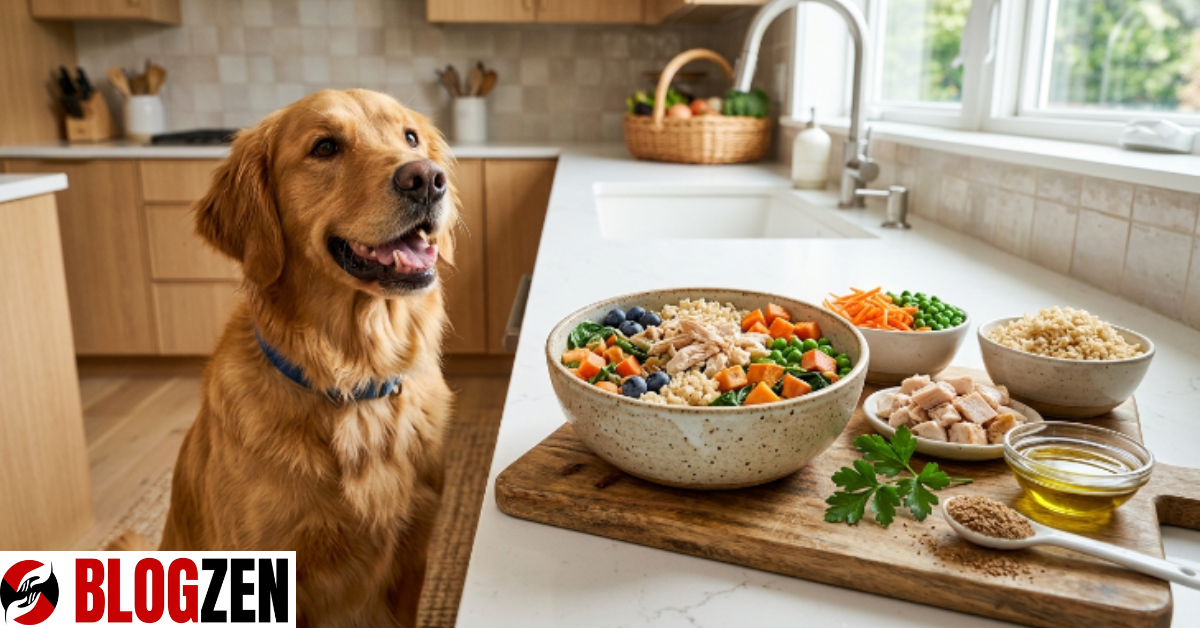
- Cook your protein — Boil or bake 1 lb of boneless chicken breast until fully cooked. No seasonings, no oil, no garlic. Let it cool and shred it. This is the nutritional foundation of the meal.
- Cook your carbohydrate — Prepare 1½ cups of white rice or diced sweet potato until soft. These digest easily and give your dog sustained energy without the inflammation linked to corn or wheat.
- Steam your vegetables — Add ½ cup of chopped carrots and ½ cup of peas. Steam rather than boil to preserve water-soluble vitamins. Avoid seasoning of any kind, including salt.
- Add your fats and supplements — Mix in 1 teaspoon of fish oil and your canine multivitamin dose (follow the product label by weight). Add ½ tsp of eggshell powder or 900mg of calcium carbonate. This step is what separates a nutritionally complete meal from a well-meaning but risky one.
- Portion and store — This recipe makes roughly 3 days of meals for a 30-pound dog. Refrigerate for up to 4 days or freeze in labeled portions. Never leave homemade dog food at room temperature for more than 2 hours.
Myths vs Facts — What to Avoid With Homemade Dog Food
| Myth | Fact |
|---|---|
| Raw meat is always safer and more natural for dogs | Raw diets carry real risks of Salmonella and E. coli — for both dogs and the humans handling the food. Lightly cooked proteins are safer and equally nutritious. |
| If my dog eats it and seems fine, the recipe must be balanced | Nutritional deficiencies often take months to surface. A dog on a calcium-deficient diet can appear healthy for 6–12 months before bone density issues become visible. |
| Homemade dog food is always more expensive than premium kibble | Batch cooking with seasonal produce and budget proteins like chicken thighs or canned sardines often costs less per meal than high-end grain-free kibble brands. |
Conclusion
Here’s what matters most from everything covered above. First, a homemade diet can absolutely be healthier than commercial kibble — but only when it’s nutritionally complete, which means supplements are non-negotiable. Second, the most common failure isn’t using the wrong ingredients; it’s skipping the calcium, the rotation, and the transition period. Third, you don’t need to be a nutritionist — you need a good starting recipe and the discipline to follow the formula.
Cooking for your dog is one of the most tangible ways to impact their health, their longevity, and honestly, your bond with them. The effort is modest. The upside is real.
Have you tried homemade dog food recipes before? Drop a comment — what ingredient does your dog go absolutely wild for?
If you’re ready to go deeper, check out our guide on canine nutrition basics — it’s the natural next step.
FAQs
Are homemade dog food recipes nutritionally complete?
Most homemade dog food recipes found online are not nutritionally complete on their own. A 2013 study in the Journal of Nutritional Science found that over 95% of owner-formulated recipes were deficient in at least one essential nutrient. To make yours complete, always include a vet-approved canine vitamin-mineral supplement and a calcium source. Have your vet review the recipe before you commit to it long-term.
What are the best proteins to use in homemade dog food?
The safest, most widely tolerated proteins for homemade dog meals include:
- Chicken breast or thighs (cooked, boneless)
- Ground turkey (lean, cooked)
- Lean ground beef (drained of fat)
- Canned or fresh salmon (no added salt)
- Eggs (fully cooked — raw egg whites block biotin absorption)
Rotate between two or three proteins weekly to ensure amino acid variety and reduce the risk of developing sensitivities.
How much homemade dog food should I feed per day?
The general guideline is 2–3% of your dog’s ideal body weight per day in cooked food. For a 50-pound dog, that’s roughly 1–1.5 pounds of food daily, split across two meals. Senior dogs and less active dogs sit closer to 2%, while active working dogs or growing puppies may need 3% or more. Always adjust based on your dog’s actual body condition score, not just weight.
What vegetables are toxic to dogs and must be avoided?
Several common kitchen vegetables are dangerous for dogs. Onions and garlic — in any form, including powder — damage red blood cells and can cause hemolytic anemia. Leeks and chives belong to the same family and carry the same risk. Grapes and raisins cause acute kidney failure even in small amounts. Avocado contains persin, which is toxic to dogs in quantity. When in doubt, stick to the safe list: carrots, peas, green beans, spinach, and zucchini.
Can puppies eat homemade dog food?
Puppies can eat homemade food, but their nutritional requirements differ significantly from adults — particularly for calcium-to-phosphorus ratios, which directly impact bone development. Large breed puppies are especially sensitive to calcium imbalances. If you want to feed a puppy homemade meals, work with a board-certified veterinary nutritionist (not just a general vet) to design a recipe specific to your puppy’s breed size and growth stage.
How long does homemade dog food last in the fridge?
Properly stored homemade dog food lasts 3–4 days in the refrigerator at or below 40°F (4°C). Store it in airtight glass containers rather than plastic to reduce bacterial contamination risk. For longer storage, freeze in daily-portion sizes — it keeps well for up to 3 months frozen. Always thaw overnight in the fridge, never at room temperature, and never microwave portions in plastic containers.
