


Quick Answer
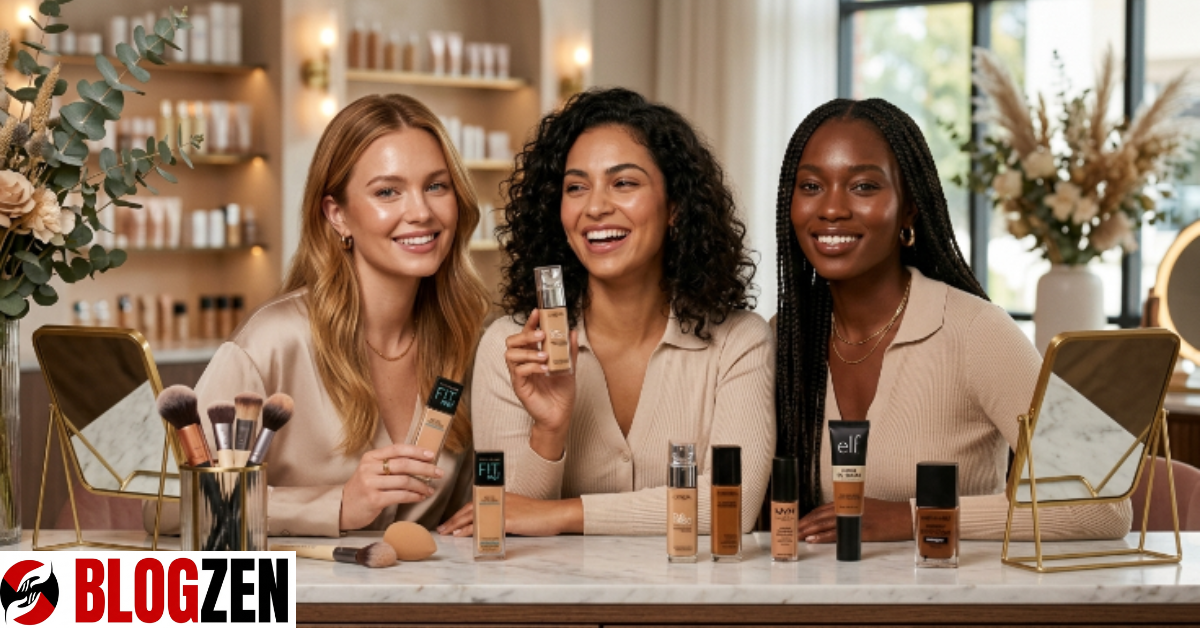
The best drugstore foundation in 2026 can absolutely rival a $60 luxury formula. Top picks include Maybelline Fit Me Matte + Poreless for oily skin, L’Oréal Infallible Pro-Matte for 24-hour wear, and Revlon ColorStay for sensitive skin — all under $15.
You’ve been convinced that good foundation has to be expensive. That’s one of the most profitable lies the beauty industry ever told.
In 2026, the gap between a $12 drugstore foundation and a $55 department store one has nearly closed. Formulation technology has advanced so dramatically that affordable brands now match — and sometimes beat — prestige labels in wear time, shade range, and skin-flattering finish. If you’re still walking past the drugstore aisle thinking “that’s not for me,” this article will change your mind.
We’re breaking down what actually makes the best drugstore foundation in 2026 worth buying, how these formulas work on a skin-science level, the mistakes that make even good foundations look bad, and a clear comparison of the top picks so you can stop guessing at the checkout.
Why Drugstore Foundation in 2026 Actually Rivals Luxury
Here’s what nobody tells you: prestige and drugstore foundations often share nearly identical base formulations. The difference historically was in pigment quality, shade range depth, and marketing spend — not magic ingredients your skin desperately needs.
In 2026, drugstore brands have closed those gaps aggressively. Brands like Maybelline, L’Oréal, Revlon, and e.l.f. now use micro-pigment technology, hyaluronic acid complexes, and non-comedogenic film-forming agents that were once exclusive to high-end lines. The result? Affordable foundations that deliver long-wear coverage, minimal oxidation, and skin-flattering finishes without the luxury price tag.
One professional makeup artist put it bluntly: the difference between drugstore and high-end foundation “narrows down to technique and product choice.” Applying a $10 foundation with the right tools and primer can outperform a $60 one slapped on without prep. That insight alone is worth the price of this article.
💡 Pro Tip
Always swatch foundation on your jaw, not your wrist. The jaw blends into both your neck and face and gives you the most accurate undertone match. Wait 3 minutes before judging — some formulas shift slightly as they oxidize.
How to Build a Full Face Using Only Drugstore Makeup
How Modern Drugstore Foundations Actually Work
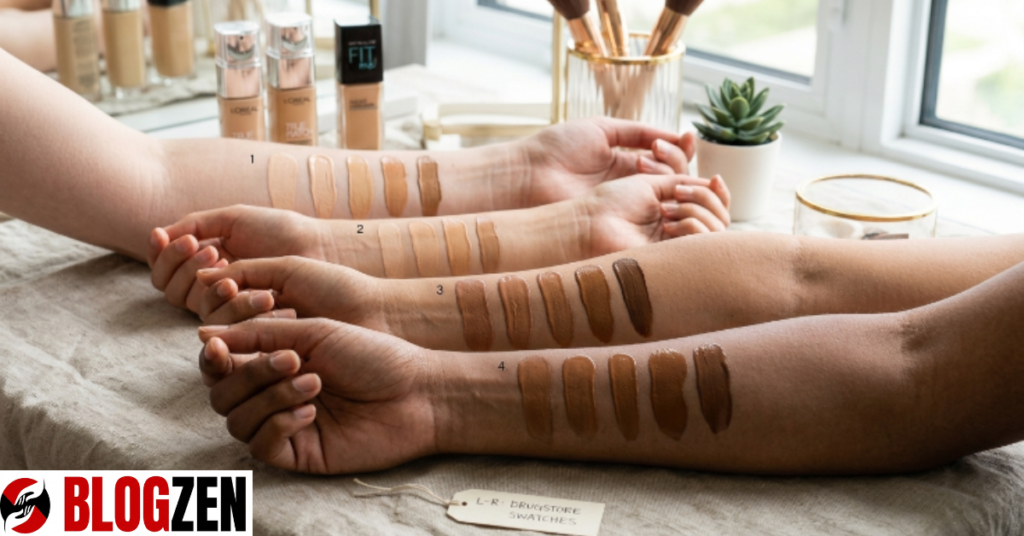
Most people think foundation is just tinted cream. The reality is far more interesting — and understanding it helps you pick the right one every time.
Today’s best drugstore foundations use a layered system. Pigment particles (often mica, iron oxides, or titanium dioxide) provide coverage and color. Film-forming polymers create a flexible layer that grips skin and resists transfer. Humectants like glycerin or hyaluronic acid prevent the foundation from drying into a mask. The ratio of these elements determines finish — more polymer = matte; more humectant = dewy.
The matte vs. dewy split matters enormously based on your skin type. Oily skin produces natural sebum that breaks down humectant-heavy formulas quickly, leading to midday shine and patchiness. That’s why matte formulas with oil-absorbing silica (like Maybelline Fit Me) perform better on oily skin. Dry and mature skin, on the other hand, benefits from hydrating bases — the thin film sits more smoothly over fine lines rather than settling into them.
What “buildable coverage” actually means
Don’t confuse “buildable” with “sheer.” A buildable formula starts light and layers to full coverage without going cakey. The key is letting each layer set for 20–30 seconds before adding more. Think of it this way: you’re stacking translucent films, not thick paint. The Milani Conceal and Perfect 2-in-1 is a great example — one layer looks natural; two layers rival a full-coverage concealer.
💡 Pro Tip
If your foundation looks cakey by noon, the problem is almost never the formula itself. It’s usually dry patches from skipped moisturizer, or an incompatible silicone primer underneath a water-based foundation. Check your prep routine before blaming the product.
The 2026 Top Picks: A Direct Comparison
After factoring in formula, wear time, shade inclusivity, and real-world performance, here’s how the top contenders stack up.
| Foundation | Best For | Finish | Wear Time | Price |
|---|---|---|---|---|
| Maybelline Fit Me Matte + Poreless | Oily / combination skin | Natural matte | 12 hrs | ~$9 |
| L’Oréal Infallible Pro-Matte | Long-wear lovers | Full matte | 24 hrs | ~$13 |
| Revlon ColorStay | Sensitive / normal skin | Natural / satin | 16 hrs | ~$12 |
| Maybelline Plump & Glow New 2026 | Dry / mature skin | Natural matte | 10–12 hrs | ~$11 |
| Milani Conceal + Perfect 2-in-1 | Full coverage seekers | Matte | 10 hrs | ~$10 |
| e.l.f. Soft Glam Satin Foundation | Normal / combo, fine lines | Satin | 12 hrs | ~$10 |
The truth is, for most people, Maybelline Fit Me Matte + Poreless remains the single best value pick in 2026 — reliable oil control, minimal oxidation, and 40+ shades starting under $10. But your skin type genuinely determines which formula wins for you specifically.
Common Mistakes That Make Good Foundations Look Terrible
Most people get this completely wrong: they blame the foundation when the real issue is what they did before applying it.
Skipping moisturizer on oily skin is mistake number one. Yes, even if you’re oily. Without a hydration base, your skin overproduces sebum to compensate, breaking down your foundation faster. A lightweight, oil-free moisturizer takes 90 seconds to apply and dramatically extends wear.
Mistake two is using the wrong primer pairing. Water-based foundations need water-based primers. Silicone primers under water-based formulas create a slick surface where the foundation slides and separates. If you’ve ever noticed your foundation “pilling” into little balls, that’s the culprit — not the product quality.
The oxidation problem people ignore
Oxidation happens when your foundation reacts with skin oils and air, turning slightly darker and more orange over time. This is more common in formulas with high iron oxide pigment content. The fix is applying a setting powder within the first 5 minutes — before oxidation has fully occurred. Waiting until the end of your full makeup application is usually too late. Set foundation immediately after blending, then build the rest of your look on top.
💡 Pro Tip
If you struggle with foundation settling into pores or fine lines, try applying with a damp beauty sponge instead of a flat brush. The bouncing motion pushes formula into the skin rather than sitting it on top, cutting the “cakey over texture” effect almost entirely.
Expert Tips for Getting the Most From Affordable Foundation
The best drugstore foundation in 2026 doesn’t perform itself — technique matters more than most people realize. Here’s what professional makeup artists actually do differently.
- Prep with a matching primer texture: Use water-based primer with water-based foundation, silicone with silicone. Check the first three ingredients of each product.
- Apply in thin layers: Start with less than you think you need. One pump covers most faces. Build in sections if you need more coverage on specific spots.
- Blend outward from the center: Start at the nose and blend outward to the hairline and jaw. This prevents the “mask” look from product building up at the edges.
- Use the warmth of your hands on stick formulas: Warm the product between fingertips for 5 seconds before pressing onto skin. Cold stick formulas drag and streak.
- Set immediately with a translucent powder: Even dewy-finish foundations benefit from a light dusting on the T-zone to lock in the formula and prevent midday breakdown.
- Check your undertone, not just shade number: A pink-based foundation on a yellow-undertone face will always look off, regardless of how “right” the depth is. Most drugstore brands now clearly label undertones (warm, cool, neutral) — use them.
Myths vs. Facts: What’s Actually True About Drugstore Foundations
The beauty world runs on myths. Let’s end a few of them right now.
Myth: Drugstore foundations are bad for your skin. False. Sensitive skin experts actually note that many drugstore formulas are less likely to cause reactions because they skip the complex fragrances and alcohol common in prestige lines. Revlon ColorStay, for instance, is widely recommended by dermatologists as a non-comedogenic option for acne-prone skin.
Myth: Expensive foundations last longer. Not inherently. Longevity is about formula chemistry and your prep routine — not price. L’Oréal Infallible Pro-Matte outperformed several luxury competitors in extended wear testing in 2025–2026 reviews, clocking 24 hours of wear in independent tests.
Myth: Full-coverage drugstore formulas look mask-like. This was true in 2015. It is not true in 2026. Modern full-coverage formulas like the Milani Conceal and Perfect use flexible film technology that moves with skin, not against it. One beauty editor described applying it as getting “smooth, non-streaky, full-coverage base” requiring “such little product.” The formula landscape has genuinely changed.
How to Choose the Right Drugstore Foundation for Your Skin Type
The single most important variable isn’t brand — it’s your skin type. Here’s a clear framework to find your match without trial and error.
Oily or combination skin
Look for: matte or natural matte finish, oil-absorbing ingredients like silica or kaolin clay, non-comedogenic labeling. Best pick: Maybelline Fit Me Matte + Poreless or L’Oréal Infallible Pro-Matte. Avoid heavy, emollient formulas that add moisture — they accelerate breakdown on oily zones.
Dry or mature skin
Look for: dewy, satin, or luminous finish, hydrating actives (hyaluronic acid, glycerin), lightweight texture. Best pick: Maybelline Plump and Glow or e.l.f. Soft Glam Satin. Avoid full-matte formulas — they emphasize dry texture and cling to patches.
Sensitive or acne-prone skin
Look for: fragrance-free, non-comedogenic, minimal ingredient lists. Best pick: Revlon ColorStay (normal/dry version has a flexible, breathable film that doesn’t aggravate breakouts). One customer with facial dermatitis reported being able to wear the Maybelline Plump and Glow comfortably when other foundations — including luxury ones — caused reactions.
💡 Pro Tip
Always buy two shades of any new drugstore foundation — one that matches and one slightly lighter. Mix them at home for a perfect undertone match. Drugstore shades have less variation between numbers, so blending is often the only way to nail an exact match, especially at the extremes of the shade range.
Final Verdict: The Best Drugstore Foundation 2026 Worth Buying Right Now
The honest answer? There’s no single “best” — but there’s definitely a best for you. The playing field in 2026 is genuinely level. You are not sacrificing performance by shopping at the drugstore.
If you want one formula that works for most people, most of the time, Maybelline Fit Me Matte + Poreless earns that crown. It’s under $10, covers 40+ shades, controls oil for 12 hours, and shows minimal oxidation. For maximum staying power, L’Oréal Infallible Pro-Matte is the formula that virtually won’t quit. For the most forgiving, skin-like finish on dry or mature skin, Maybelline’s newer Plump and Glow is the 2026 breakout pick.
Stop paying luxury prices for ingredient lists you can replicate for a fraction of the cost. Your foundation should work for your skin — not for someone else’s marketing budget. Try one of the picks above, apply it the right way, and you might never go back to overpaying again.
Which skin type are you shopping for? Drop a comment below and tell us which drugstore foundation has surprised you most — the answers might change what we recommend next time.
FAQs
What is the best drugstore foundation for oily skin in 2026?
Maybelline Fit Me Matte + Poreless tops the list for oily skin in 2026. It uses oil-absorbing micro-pigments and silica to control shine for up to 12 hours without clogging pores. For even longer wear, L’Oréal Infallible Pro-Matte extends that to 24 hours with a similar matte, full-coverage result. Both are available in wide shade ranges and typically cost under $13.
Can drugstore foundation really replace high-end foundation?
In most cases, yes. Dermatologists and professional makeup artists increasingly note that drugstore and prestige foundations share similar base formulations. The performance gap has narrowed to technique and skin prep rather than formula quality. For sensitive skin especially, fragrance-free drugstore options can actually be preferable to luxury formulas, which often include complex fragrance blends that irritate reactive skin.
What is the longest-lasting drugstore foundation in 2026?
L’Oréal Infallible Pro-Matte claims and consistently delivers up to 24-hour wear in real-world testing. It uses oil-absorbing micro-pigments that maintain full coverage without cracking or significant oxidation. Revlon ColorStay comes in second at 16 hours, with transfer-resistant film technology that adapts to skin movement — a strong choice if you need durability but also touch up throughout the day.
How do I stop my drugstore foundation from oxidizing and turning orange?
Oxidation happens when foundation reacts with skin oils and air after application. To minimize it: choose foundations with low iron oxide content, apply a setting powder within five minutes of foundation (not at the end of your routine), and use an oil-free moisturizer and primer to reduce the skin oils that trigger the reaction. Maybelline Fit Me and Revlon ColorStay both show significantly low oxidation rates in extended-wear testing.
What drugstore foundation is best for mature or aging skin?
Look for lightweight, dewy, or satin-finish formulas with hydrating ingredients like hyaluronic acid or glycerin. Maybelline Plump and Glow is the 2026 standout for this category — its skin-tint-like texture avoids settling into fine lines, unlike heavier matte formulas. The e.l.f. Soft Glam Satin Foundation is also praised by makeup artists for mature skin because it brings luminosity without the heaviness that emphasizes texture. Always pair with a hydrating primer.
Is there a best drugstore foundation for sensitive or acne-prone skin in 2026?
Yes. For sensitive skin, prioritize non-comedogenic, fragrance-free formulas with minimal ingredient lists. Revlon ColorStay is one of the most frequently dermatologist-recommended drugstore options for acne-prone skin. The Maybelline Plump and Glow has also received strong reviews from people with facial dermatitis who found it was the only foundation — including luxury formulas — they could wear without irritation. Key things to look for: no alcohol, no added fragrance, and non-comedogenic labeling.
