


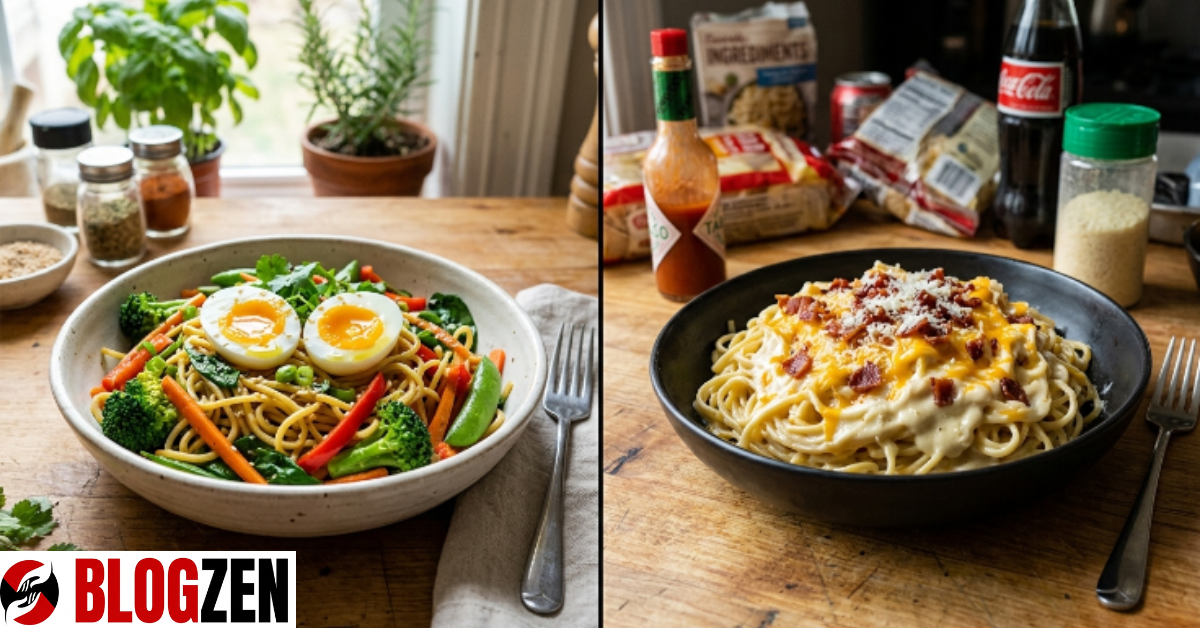
They’re a pantry staple in millions of homes — but most people are either overrating or completely dismissing their nutritional value. Here’s what the science actually says.
Quick Answer
Egg noodles are moderately healthy — they provide protein, B vitamins, and iron, but are higher in refined carbohydrates and calories than some alternatives. Whether they’re a smart choice depends on your portion size, dietary goals, and what you pair them with.
Most people eat egg noodles without ever wondering what’s actually in them — and the ones who do look often come away either pleasantly surprised or mildly confused. Here’s the honest truth: egg noodles occupy a fascinating nutritional middle ground that most food articles completely miss.
They’re not the empty-calorie villain some low-carb enthusiasts make them out to be. They’re also not a superfood. They’re a real food with real trade-offs, and once you understand those trade-offs, you can use them to your genuine advantage.
In this article, you’ll get the full nutritional breakdown, an honest look at who should eat egg noodles and who should scale back, expert-approved pairing strategies, and a myth-busting section that might change how you think about “healthy carbs” entirely. Let’s dig in.
What Egg Noodles Actually Are — And Why It Matters
Egg noodles aren’t just regular pasta with a fancier name. The key difference is right there in the name: eggs are a primary ingredient, typically mixed with wheat flour and water. That ratio — usually 1–2 eggs per cup of flour — changes the final product in meaningful ways.
Traditional pasta uses semolina flour and water. Egg noodles use wheat flour plus whole eggs or egg yolks, which raises the protein content, adds fat, and changes the amino acid profile. The result is a slightly richer, denser noodle with a more golden color and a more tender bite when cooked.
Why does this matter? Because when you’re evaluating whether egg noodles are healthy, you’re not comparing them to air — you’re comparing them to their actual alternatives: white pasta, rice noodles, whole wheat pasta, or shirataki noodles. The comparison is far more nuanced than a simple yes or no answer.
Pro Tip: When buying egg noodles, check the ingredient list for “whole egg” or “egg yolk” rather than “egg white powder.” Whole eggs mean more choline and healthy fats. Egg white powder alone offers less nutritional value and is common in cheap store-brand varieties.
The Nutritional Breakdown: What You’re Actually Eating
Per 100g of cooked egg noodles, you’re looking at roughly 150–160 calories, 5–6g of protein, 28–30g of carbohydrates, 2–3g of fat, and about 1–2g of fiber. That’s more protein and fat than plain pasta — the egg contribution is real, not cosmetic.
The micronutrient story is more interesting. Egg noodles deliver a respectable dose of B vitamins — particularly folate, B1 (thiamine), and B2 (riboflavin) — along with iron, selenium, and manganese. These aren’t trace amounts; they contribute meaningfully to daily requirements.
Choline is the hidden gem most people never mention. Egg yolks are one of the richest dietary sources of choline, a nutrient crucial for brain function, liver health, and fetal development that roughly 90% of Americans don’t consume enough of. When egg noodles contain whole eggs, you’re getting a modest but real choline contribution that plain pasta simply cannot offer.
| Noodle Type (per 100g cooked) | Calories | Protein | Carbs | Fiber | Glycemic Index |
|---|---|---|---|---|---|
| Egg Noodles | 155 | 6g | 29g | 1.5g | ~57 |
| White Pasta | 158 | 5.8g | 30.9g | 1.8g | ~65 |
| Whole Wheat Pasta | 154 | 6.3g | 29.2g | 3.9g | ~37 |
| Rice Noodles | 135 | 2.9g | 29.5g | 0.9g | ~61 |
| Shirataki Noodles | ~10 | 0.1g | 3g | 2g | ~0 |
Values are approximate and vary by brand. GI values are estimates based on available research. Whole wheat pasta wins on fiber; egg noodles lead on micronutrient density among the conventional options.
“From a nutritional standpoint, egg noodles sit closer to pasta than most people realize — but the egg content creates a small but real advantage in protein quality and micronutrients that accumulates meaningfully over time if you eat them regularly.”
How Egg Noodles Affect Your Blood Sugar (Most People Get This Wrong)

The glycemic index of egg noodles is approximately 57 — classified as medium. That number is meaningfully lower than white bread (~75) and even slightly lower than standard white pasta (~65). The egg protein and fat content slows digestion, which moderates the blood sugar spike compared to pure starch-based options.
Here’s what nobody tells you about glycemic index: the number on paper matters far less than how you actually eat the food. Combining egg noodles with protein, vegetables, and healthy fats can drop the effective glycemic load of your meal dramatically. A bowl of egg noodles with chicken broth, bok choy, and sliced chicken is a fundamentally different metabolic event than egg noodles with a heavy cream sauce and nothing else.
Portion size is the other variable that gets ignored. A realistic 1-cup serving of cooked egg noodles (about 160g) contains roughly 38g of carbohydrates. That’s meaningful but manageable for most people. The problem arises when restaurant-sized portions — often 2.5 to 3 cups — become the norm, tripling that carbohydrate load in one sitting.
Pro Tip: If blood sugar management is a priority, try slightly undercooking your egg noodles — al dente pasta has a lower glycemic response than fully soft noodles. The firmer starch structure digests more slowly, which gives you a gentler blood sugar curve with no change to the ingredient list.
Who Should Eat Egg Noodles, Who Should Be Cautious
Egg noodles are not a universal health food — but they’re also not a food anyone should fear. The answer to whether they’re right for you depends on several real-world factors.
People who benefit most from egg noodles
Athletes and physically active people with higher carbohydrate requirements can use egg noodles as an efficient energy source with better protein content than standard pasta. The iron and B vitamins support energy metabolism directly, which makes them a functional choice around training.
Older adults often struggle with adequate protein and choline intake. Egg noodles offer a gentle, easy-to-chew source of both — particularly relevant for people recovering from illness or managing reduced appetite. They’re also easy on the digestive system, which matters more than their glycemic profile for this population.
People who should be more mindful
Anyone managing type 2 diabetes or insulin resistance should treat egg noodles like any other moderate-GI refined carbohydrate — portion control and pairing strategy are non-negotiable, not optional. People with wheat allergies or celiac disease need to avoid conventional egg noodles entirely, though gluten-free versions made with rice flour and eggs are widely available. Those on very low-carb diets will find that even a modest portion pushes against daily carbohydrate limits.
Common Mistakes That Turn Healthy Egg Noodles Into a Problem
Most of the bad nutrition outcomes attributed to egg noodles aren’t really the noodles’ fault. They’re the fault of how people cook and serve them.
Mistake 1: Drowning them in heavy cream sauces. A cup of cooked egg noodles has about 155 calories. Add a standard carbonara-style cream sauce and you’ve potentially tripled the calorie count while removing most of the dish’s satiety value. The noodles aren’t the issue — the sauce is.
Mistake 2: Treating a side dish as a main. Egg noodles work beautifully as a component in a balanced meal — think beef and broccoli stir-fry, chicken noodle soup, or a Vietnamese pho. They struggle nutritionally when they become the star of the plate with nothing else alongside them.
Mistake 3: Ignoring portion sizes entirely. Restaurant ramen and pasta dishes routinely contain 3–4 servings of noodles. The nutritional profile that looks reasonable for one cup becomes genuinely problematic at three. Weighing your noodles dry — about 56g per serving — is the most accurate way to stay calibrated.
Pro Tip: Stretch your egg noodle portions without feeling deprived by bulking up the bowl with zucchini noodles or shredded cabbage. You get the flavor and texture satisfaction of egg noodles with fewer refined carbohydrates per serving. Some home cooks use a 50/50 split with excellent results.
How to Make Egg Noodles Work for Your Health Goals: A Practical Guide
The most useful thing you can do is stop thinking about egg noodles as inherently healthy or unhealthy, and start thinking about how to build a genuinely nourishing meal around them. Here’s a step-by-step framework that actually works.
- Start with proteinChoose your protein source first — grilled chicken, lean beef, tofu, shrimp, or soft-boiled eggs add 20–35g of protein that transforms egg noodles from a simple carb dish into a complete meal.
- Add substantial vegetablesAim for at least as much vegetable volume as noodle volume. Bok choy, spinach, mushrooms, broccoli, snap peas, and carrots all work brilliantly. Vegetables add fiber, micronutrients, and volume that slows gastric emptying.
- Choose a broth-based sauce over cream-basedA quality bone broth or miso-based sauce adds collagen, umami, and minerals. A heavy cream or butter sauce primarily adds saturated fat and calories without meaningful nutritional benefit.
- Measure your noodle portion before cooking56g dry (roughly 160g cooked) is one realistic serving. Eyeballing after cooking is notoriously inaccurate — dry weighing takes ten seconds and removes the guesswork entirely.
- Consider whole wheat egg noodles for regular consumptionWhole wheat egg noodles combine the egg protein advantage with the fiber benefit of whole grains. The glycemic response is noticeably more gentle, and the fiber jump (from ~1.5g to ~4g per serving) adds up significantly over weeks of regular eating.
Following this framework, a bowl of egg noodles can genuinely be a nutrient-dense meal delivering 35–45g of protein, meaningful fiber, B vitamins, iron, choline, and sustained energy. That’s not a compromise — that’s good eating.
Egg Noodle Myths vs. Facts: Setting the Record Straight
Nutrition misinformation travels fast, and egg noodles have attracted more than their fair share. Let’s clear up the ones that matter most.
❌ MythEgg noodles are basically the same as regular pasta, just shaped differently.
✅ FactEgg noodles have more protein, more fat, more choline, and a different amino acid profile due to whole egg content. The difference is real and nutritionally meaningful.
❌ MythThe cholesterol in egg noodles will raise your blood cholesterol levels.
✅ FactDietary cholesterol has a far smaller impact on blood cholesterol than saturated and trans fats for most people. Current evidence does not support avoiding egg-based foods for this reason.
❌ MythYou can’t eat egg noodles on a weight-loss diet.
✅ FactWeight management depends on total caloric balance, not food exclusions. Egg noodles in appropriate portions, within a caloric deficit, are entirely compatible with fat loss goals.
❌ MythMore fiber always means healthier — so egg noodles lose to whole wheat automatically.
✅ FactFiber is one factor. Egg noodles win on choline, certain B vitamins, and protein quality. A complete nutritional picture requires comparing multiple dimensions, not just one.
The takeaway: egg noodles are neither a health hazard nor a superfood. They’re a versatile, moderately nutritious food whose value depends entirely on how intelligently you use them.
The Bottom Line on Egg Noodles
Three things worth remembering: egg noodles are nutritionally superior to plain pasta in protein and micronutrient content, their impact on your health is almost entirely determined by portion size and what you eat alongside them, and the whole wheat egg noodle version is a quiet upgrade worth making if you eat them regularly.
Stop asking whether egg noodles are healthy in isolation — start asking whether the meal you’re building with them is healthy. That’s the question that actually moves the needle.
What’s your go-to egg noodle recipe? Drop it in the comments — especially if you’ve found a way to make a classic dish feel both indulgent and genuinely nourishing. And if you want to keep building smarter carbohydrate strategies, check out our guide to the best low-glycemic grains for sustained energy.
Your bowl is only as healthy as the choices you make around it — make them count.
FAQs
Are egg noodles healthier than regular pasta?
In terms of protein and micronutrients, egg noodles have a slight edge over plain white pasta — the egg content adds choline, additional B vitamins, and a marginally better protein quality. However, whole wheat pasta beats both on fiber and glycemic response. Egg noodles are not dramatically healthier than pasta, but they are nutritionally different in ways that matter depending on your specific dietary goals.
Can egg noodles be part of a healthy diet for weight loss?
Yes, with appropriate portion control. At roughly 155 calories per 100g cooked, egg noodles are not a high-calorie food when eaten in realistic amounts. The protein content (about 6g per 100g) also contributes to satiety. The key is building a balanced meal around them — lean protein, vegetables, and a broth-based sauce — rather than relying on large portions with calorie-dense sauces.
Are egg noodles healthy for people with diabetes?
Egg noodles have a medium glycemic index of approximately 57, which is lower than white bread and standard white pasta. For people with diabetes or insulin resistance, the guidance is the same as for any moderate-GI carbohydrate: watch portion sizes carefully, always combine with protein and fiber-rich vegetables to blunt the blood sugar response, and consider whole wheat egg noodles for a gentler glycemic impact. Consult with a registered dietitian for personalized carbohydrate targets.
How many calories are in a serving of egg noodles?
A standard serving of egg noodles (56g dry / approximately 160g cooked) contains about 220–240 calories, 8–9g of protein, and 40–44g of carbohydrates. Calorie counts vary meaningfully between brands depending on egg content and wheat flour type, so checking the specific nutrition label for the brand you’re using is worthwhile rather than relying on general estimates alone.
What is the best way to make egg noodles healthier?
The most impactful strategies, ranked by effect size, are:
- Choose whole wheat egg noodles to significantly increase fiber content
- Add at least one substantial protein source to the meal
- Use broth-based sauces instead of cream or butter-heavy ones
- Include a generous volume of vegetables alongside the noodles
- Measure portions dry (56g) rather than estimating after cooking
Are egg noodles gluten-free?
Traditional egg noodles are not gluten-free — they are made with wheat flour, which contains gluten. People with celiac disease or non-celiac gluten sensitivity cannot safely eat conventional egg noodles. However, gluten-free egg noodles made with rice flour, chickpea flour, or a blend of gluten-free starches combined with eggs are increasingly available at specialty grocery stores and online. Always verify the label for certified gluten-free status and cross-contamination warnings.
