


QUICK ANSWER
Thrift shopping in the UK means finding designer and quality clothing for 50–80% less than retail. Start at Oxfam bookshops and Sue Ryder stores, always check seams and zips, and visit midweek when stock is freshest. The secret? Patience beats speed.
INTRODUCTION
Most people walk into a charity shop, grab the first “vintage” thing they see, and leave angry that it cost more than a high-street jumper.
Here’s what they don’t know: thrift shopping in the UK isn’t random. It’s a skill. And once you learn it, you’ll find the exact pieces everyone else walks past—designer handbags for £3, perfectly worn-in Levi’s for £5, and cashmere jumpers that feel like touching clouds.
This guide isn’t about romanticising thrift shopping. It’s about giving you the real, practical knowledge that charity shop regulars use every single week. You’ll learn where the best shops actually are, what to look for before you hand over your money, which shops to skip, and the exact mistakes beginners make that cost them time and cash.
By the end, you won’t just understand thrift shopping tips for UK beginners—you’ll become the person your friends text for styling advice. Because honestly? Once you crack this, you’ll never understand paying full price again.
THE TRUTH ABOUT UK THRIFT SHOPPING: WHY IT’S NOT WHAT YOU THINK
Thrift shopping in Britain isn’t what TikTok shows you.
Those aesthetic hauls? Yes, real. But they’re one shot from 47 visits. What actually happens is this: you find five okay things, miss one absolute gem because you were looking at your phone, and sometimes walk out empty-handed. That’s normal. That’s how it works.
The real advantage isn’t Instagram aesthetics—it’s this: a £200 Boden dress for £7.99. A functioning Barbour jacket for £12. Levi’s 501s that fit better than anything in River Island because they’re actually broken in. The maths is wild.
Why does this matter to you right now? Because charity shop culture in the UK is changing. Oxfam, British Heart Foundation, and Sue Ryder aren’t dumping grounds anymore—they’re genuinely where fashion-conscious people source pieces. You’re not alone in looking. But you’ll only find the good stuff if you know what you’re actually looking for.
UNDERSTANDING THE UK CHARITY SHOP LANDSCAPE: NOT ALL SHOPS ARE EQUAL
Here’s the uncomfortable truth: some charity shops are treasure troves. Others are just sad.
The difference isn’t luck. It’s knowing which shops actually get quality donations, which neighbourhoods support better inventory, and which chains are worth your Saturday afternoon.
Oxfam shops—especially the Oxfam Bookshops in university towns and city centres—get donations from people with actual taste. You’re looking at former designer pieces, vintage finds, and books that aren’t yellowed.
British Heart Foundation shops skew toward slightly newer high-street pieces. Think Next, Marks & Spencer, and mainstream fashion from 2–5 years ago. Excellent for basics and coats.
Sue Ryder locations vary wildly. Hit the ones in affluent areas (suburban commuter belts, university cities). The stock reflects it immediately.
Traid (on Oxford Street and scattered across London) specialises in sustainable fashion and gets younger, trendier donations. Perfect if you’re under 30 and looking for something with attitude.
Barnardo’s stores are unpredictable but worth a quick check. You’ll find hidden gems or absolutely nothing. No in-between.
The honest take: your location changes everything. If you live near a university city, your local Oxfam is better than Harrods’ clearance rail. If you’re in a smaller town, you might need to travel. That’s just reality.
THE BIGGEST MISTAKES BEGINNERS MAKE (AND HOW TO AVOID THEM)
Mistake #1: Buying on emotion instead of practicality
You see a vintage coat. It’s beautiful. It’s 1970s. It’s £8.50. You buy it.
Three months later, it still hangs in your wardrobe because it clashes with everything you own. This is the number-one reason people waste money thrift shopping.
The fix? Only buy things that match your actual lifestyle and current wardrobe. If you work in an office, don’t buy vintage band tees (unless you actually wear them). If you’re a jeans person, don’t buy four floral dresses.
Mistake #2: Ignoring the condition checks
Most people see a designer label and stop looking. Big mistake. That Whistles jumper is lovely, but if the armpit seams are separating, you’ve wasted £4.50.
Always check: seams (run your finger along them), zips (pull them slowly), elastication (it shouldn’t feel like cardboard), stains (check collars, underarms, hems—these don’t come out), and pilling (excessive bobbling = worn-out fabric).
Mistake #3: Thinking vintage = better quality
Sometimes the 1990s jumper is beautiful. Sometimes it’s thin and going to pill after three wears. Age doesn’t guarantee quality. Natural fabrics (wool, cotton, linen, silk) age better than synthetics. But even a 30-year-old polyester top is still polyester.
Always check the fabric content on the tag. Wool blends that are 80% or higher? Excellent. Acrylic with 20% wool? Pass.
Mistake #4: Shopping without a list
You walk in with vague ideas. You leave with random things. This is how people end up with charity shop bags that sit in their hallway for six months.
Before you go, ask yourself: What do I actually need? (A winter coat? Smart trousers? A nice jumper?) Then only look for those things. This discipline saves money and stops impulse buys.
THE INSIDER’S GUIDE: WHAT SEASONED THRIFT SHOPPERS ACTUALLY DO
Seasoned charity shoppers follow these rules religiously:
They go midweek, early morning. Friday and Saturday? Picked over. The absolute best stock arrives Tuesday and Wednesday, before the weekend shoppers descend. Shops like Oxfam often stock new donations in the morning. Show up at 10 a.m. on a Wednesday, and you’re first through the racks.
They know their sizes across brands. Vintage Levi’s run small. Older Next pieces run large. High street brands from 2010–2015 had different sizing than today. Before you try anything on, know what size usually fits you in that brand. This saves 20 minutes of faffing in changing rooms.
They scan the back rooms. Some charity shops keep better stock in back rooms or on higher shelves. Politely ask: “Do you have anything else in this section?” Often the volunteer will retrieve something they haven’t even priced yet. Seriously.
They check every shelf, not just the rail. Stacked shelves might have jumpers with tiny flaws priced at £2.99 instead of £5.99. That’s not a negative—that’s where deals live.
They never pay the first price. Some charity shops will negotiate, especially on multiple items or larger purchases. You won’t know unless you ask. Worst case? They say no. Best case? You save 30%.
They build relationships with staff. Tell the volunteer what you’re looking for. “I’m after men’s vintage Levi’s—if anything comes in, would you keep it?” Regulars often get first pick before items hit the floor.
STEP-BY-STEP: YOUR FIRST THRIFT SHOPPING TRIP (DONE RIGHT)
Step 1: Choose your shop strategically
Don’t hit the Oxfam nearest your house. Travel to the one in the nicer neighbourhood. Drive 15 minutes to the Sue Ryder in a wealthy suburb. This matters more than you think.
Step 2: Arrive midweek, early
Aim for Tuesday, Wednesday, or Thursday morning. 10 a.m.–12 p.m. is peak freshness. Stock is rotated, and you’re not fighting crowds.
Step 3: Scan the entire shop first—don’t buy anything yet
Walk the whole floor. Get a feel for what’s there. Make a mental note of 3–5 promising pieces. Now check them properly.
Step 4: Inspect each piece rigorously
Seams? Check. Zips? Check. Stains? Check. Does the fabric feel right? Check. Is the label visible? Check. Can you imagine actually wearing this tomorrow? If the answer is no to any of these, put it back.
Step 5: Try everything on
Charity shop fitting rooms are small and weird, but seriously—try it on. Things look different on your body than on a hanger.
Step 6: Ask yourself: Would I buy this new?
If the answer is no, put it back. If yes, and it’s under £10, consider it. If it’s over £15, make absolutely sure. You’re thrift shopping, not paying full price.
Step 7: Hand over cash, and move on
Don’t second-guess. You’ve done the work. Trust your choices.
WHAT THE LABELS ACTUALLY MEAN (AND WHY IT MATTERS)
Not all “vintage” is created equal.
Vintage technically means 20+ years old. But in charity shops, staff use it loosely to mean “old” or “not current season.” Don’t let the label trick you.
Deadstock means never worn, tags attached. Rare in charity shops but genuinely valuable. If you see it? Grab it.
Pre-loved is honest—someone wore it, didn’t destroy it. Most charity shop pieces fall here.
Condition: Good often means “has visible wear but nothing broken.” Fine for everyday pieces.
Condition: Excellent means barely worn. Usually priced higher, sometimes worth it.
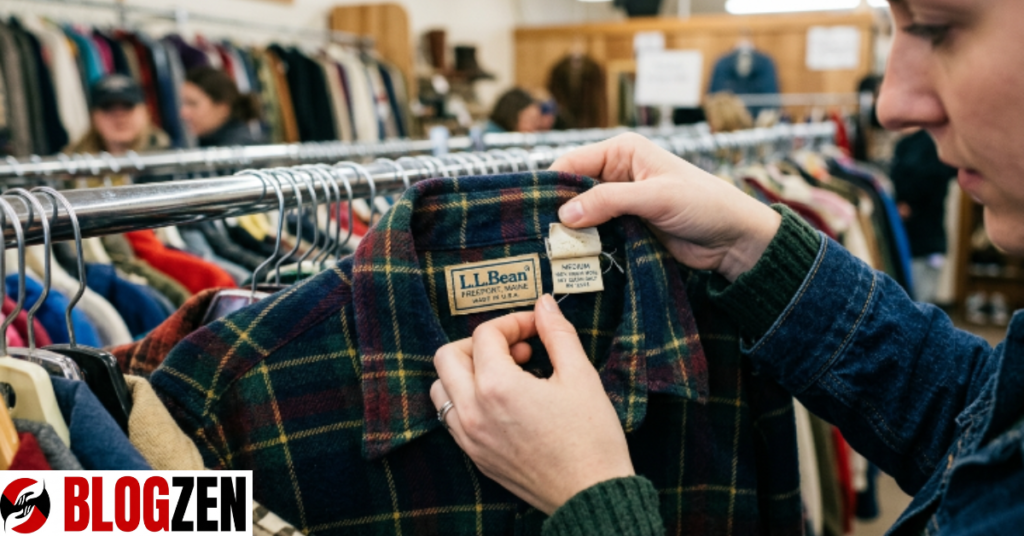
Fabric content is literally on the tag. Wool blend? Look at the percentage. 100% linen? Expect wrinkles. 50% polyester? It’ll feel cheaper and pill faster.
Pro Tip: Ignore size labels. A 1990s UK 12 is NOT the same as a 2024 UK 12. Check measurements on the care label or try it on. That’s the only truth.
THE SHOPS TO SKIP AND WHY
Be honest about low-value trips:
Some Barnardo’s shops are genuinely picked over. Some small-town Sue Ryders have incredibly basic inventory. Not every trip will yield treasure, and that’s okay. But if you’ve hit a shop three times and found nothing, rotate it out of your route.
Also skip: shops in business parks (too corporate donations, usually polyester), shops in very small villages (limited stock variety), and places where volunteers seem unwilling to help. You’re looking for enthusiasm and accessibility.
The geographic reality: If you live in Manchester, London, Cambridge, or Bristol, you have genuinely excellent charity shop networks. If you’re in a smaller town, you might need a quarterly trip to a city centre. Budget time accordingly.
REAL EXAMPLES: WHAT THESE TIPS ACTUALLY MEAN IN PRACTICE
Example 1: The Barbour Jacket
Your local Oxfam has a navy Barbour jacket, pre-owned, no visible damage, size 12. Price: £18. Your immediate thought? “Designer jacket, cheap price, easy yes!”
But wait. Check it. The wax coating is flaking (that’s a restoration cost of £40+). The collar is wearing thin. The pockets are patchy. The “bargain” becomes expensive. You’d spend £60+ fixing it. Pass.
Example 2: The Cashmere Jumper
Sue Ryder. Cream cashmere blend (80% cashmere, 20% nylon). Size medium. Tiny moth hole on the back left. Price: £6.99.
This is a real find. Cashmere moth holes are repairable by an expert (£15–20). You’re buying an £80+ jumper for £7, repair cost of £20. Total: £27 for something normally £80+. This is the thrift shop win.
Example 3: The Trendy Fast-Fashion Piece
Traid has a Zara co-ord set (matching top and trousers), current season styling, perfect condition, £9.99.
You like it. It matches your style. But ask yourself: Will you actually wear it? Or will it sit in your wardrobe looking cute until Zara brings out the next trendy set? If you’re chasing trend cycles, thrift shopping isn’t saving you money—it’s enabling impulse buying in bulk. Pass unless it’s actually you.
COMMON MYTHS VS. REALITY
Myth: Thrift shops are cheaper than online fast fashion.
Reality: Sometimes yes, sometimes no. Boohoo has £3 jumpers. But thrift-sourced pieces last longer. The maths changes when you factor in durability.
Myth: Everything in a thrift shop is authentic designer.
Reality: Most is high-street (Next, Marks & Spencer, John Lewis). Designer pieces exist but are rare. Don’t expect Gucci at every turn.
Myth: Thrift shopping is environmental gold.
Reality: It’s better than buying new constantly, but it’s not a guilt-free pass. Charity shops do send unwanted stock to landfill. Aim to buy things you’ll actually wear.
Myth: You need hours to thrift shop properly.
Reality: 45 minutes in a good shop beats 2 hours in a bad one. Know your shops. Be efficient.
THE CONFIDENCE FACTOR: WHY MOST BEGINNERS QUIT
Honestly? Most people thrift shop three times, find nothing they love, and decide “thrift shopping just isn’t for me.”
Here’s what’s actually happening: they haven’t learned to see quality. They haven’t trained their eye. They think every charity shop is the same (it’s not). They give up after one slow afternoon.
The truth: thrift shopping is a learnable skill, not a talent. The people who seem naturally good at it? They’ve been doing it for two years and hit the same shops weekly. That’s not magic. That’s repetition.
Give yourself permission to learn. Visit the same shop four times before judging it. Follow your preferences—if you love vintage, hit Oxfam. If you want contemporary high-street, hit British Heart Foundation. Play to your strengths.
FINAL THINGS NOBODY TELLS BEGINNERS
Fitting rooms smell weird. That’s normal. Bring a scarf or lightweight hoodie if it bothers you.
You’ll develop a sixth sense about price. After 10 visits, you’ll instantly know if a piece is overpriced. Trust that instinct.
Seasonal timing changes everything. December is packed (people clearing wardrobes). August is light (people away). September is golden (back-to-school donations). January is chaotic (post-Christmas decluttering). Plan accordingly.
You’ll find things and think about them for weeks. That’s fine. Go back and get it if it’s still there. If not, it wasn’t yours. If yes, you were meant to have it.
The best pieces aren’t on display. They’re in back rooms, on top shelves, or priced wrong because volunteers didn’t recognise them. Always ask. Always look up.
CONCLUSION
Thrift shopping in the UK isn’t about finding every single bargain. It’s about knowing where to look, what to look for, and when to walk away. It’s about building a wardrobe that actually fits your life instead of chasing trends that don’t.
The three most important things you learned today: First, location and timing matter more than luck—the right shop on a Wednesday morning beats random searching. Second, condition and fabric trumps labels—a designer piece in poor condition is just an expensive mistake. Third, patience wins—the people who consistently find amazing pieces aren’t faster; they’re more selective.
Here’s your actual next step: Pick one Oxfam or Sue Ryder near you that’s in a nice neighbourhood. Go next Tuesday or Wednesday morning. Bring time, no expectations, and this guide as your checklist. You’ll find something. You might not love it. That’s fine. Go back next week. By week four, you’ll start seeing pieces that feel like they were waiting for you.
Because that’s when thrift shopping shifts from a hobby into a superpower. And that’s why the people who get it, never stop doing it.
FAQs
What’s the best time to visit UK charity shops for the best stock?
Tuesday through Thursday mornings (10 a.m.–12 p.m.) offer the freshest stock and smallest crowds. Shops stock new donations overnight and throughout the week. Weekends are picked over. If you can only visit weekends, arrive when the shop opens (usually 9–10 a.m.). Most volunteers will tell you when deliveries arrive if you ask—build that relationship.
How much should beginners actually expect to spend on thrift shopping?
Budget £5–20 per item for good-quality, wearable pieces. Designer or vintage pieces might hit £15–30, but that’s rare. If you’re spending over £25 on a single charity shop item, make absolutely sure it’s worth it. Most people find their sweet spot at £7–15 per piece, which still represents 60–80% savings compared to retail.
What fabric types last longest when thrift shopping?
Natural fibres—wool, linen, cotton, and silk—age better than synthetics. Look for wool blends at 70% or higher. 100% cotton basics are reliable. Linen wrinkles but lasts decades. Pure polyester tends to pill and feel cheap within two years. Check the care label before buying anything.
Can you return items to UK charity shops if they don’t work out?
Most charity shops don’t accept returns—they’re final sale. This is why trying items on properly in-store matters. However, if something has a hidden defect (broken zip you didn’t notice, seam splitting immediately), some volunteers will exchange it if you return within 24–48 hours with receipt. Always ask, but don’t expect yes.
How do I know if a “vintage” piece is actually vintage or just old?
True vintage is 20+ years old, though charity shops use the term loosely. Check the tag for a manufacturing date if visible. Look at the label style, fabric technology, and stitching—these change over decades. If it says “vintage” but the label is modern, it’s just second-hand. Neither is bad; just know what you’re buying. Feel free to ask volunteers how old something might be—they often know.
What’s the difference between thrift shops in rich vs. poorer areas?
Wealthy areas receive donations from people with higher-income lifestyles, so inventory skews toward quality high-street, designer, and well-maintained pieces. Poorer areas sometimes receive more varied, occasionally lower-condition stock. This isn’t judgment—it’s just demographics of who donates what. If possible, explore charity shops across different neighbourhoods in your city to compare stock quality and variety.
