


Quick Answer
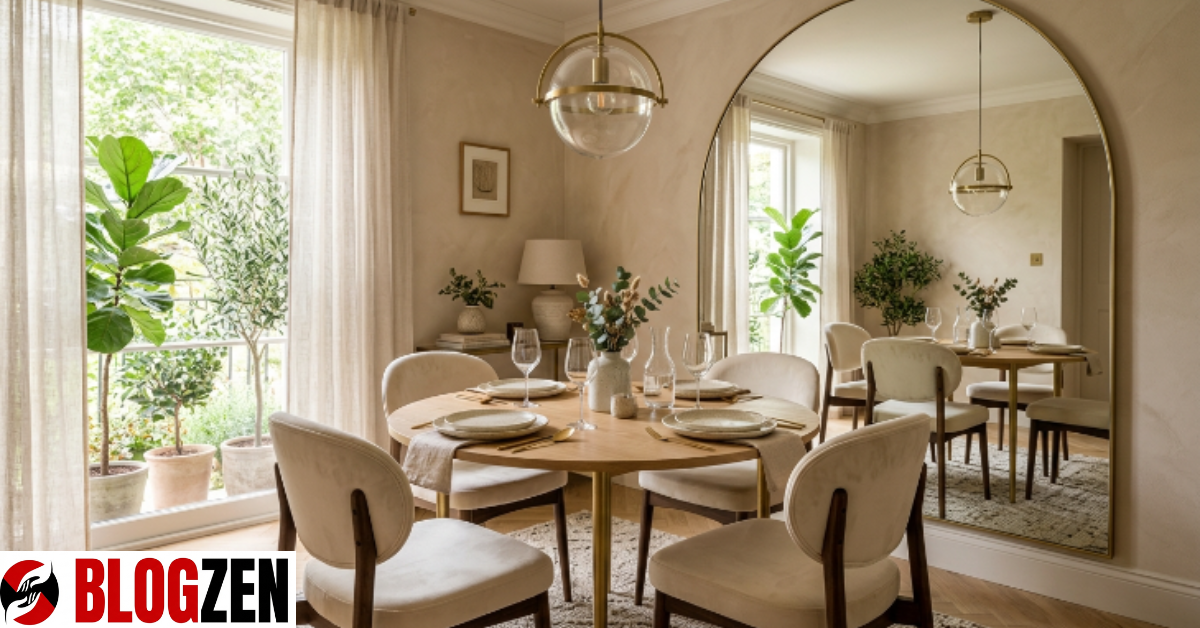
The best small dining room ideas combine multifunctional furniture (like drop-leaf tables and bench seating), strategic mirror placement, and vertical storage to maximize every square foot. Light, neutral wall colors paired with proper lighting can visually double your space. The goal isn’t just fitting a table — it’s creating a room that feels intentional, not cramped.
Introduction
Your dining room fits a table and four chairs — barely. Every dinner feels like a game of Tetris, and guests spend half the meal bumping elbows. Sound familiar? Here’s what most design articles won’t tell you: small dining rooms aren’t a problem to solve — they’re a design challenge to win.
With the right small dining room ideas, a tight 8×10 space can feel more inviting than a cavernous formal dining room that echoes when you talk. The difference isn’t square footage. It’s knowing which choices create openness and which ones quietly shrink your room without you realizing it.
In this guide, you’ll get practical, tested strategies — from furniture layout to color psychology to lighting tricks — that actually work in real homes, not just Pinterest mockups. Whether you’re renting a city apartment or working with a compact breakfast nook, this is the article you’ve been looking for.
Let’s get into it.
What Makes a Small Dining Room Feel Small (And Why It Matters More Than Size)
Most people blame square footage when their dining room feels cramped. The real culprit is almost always something else entirely.
Visual clutter is the number one space-killer in compact dining areas. Too many chair legs, busy rugs, low ceilings visually dragged down by dark paint, or furniture that fights for attention — these are what make a room feel like it’s closing in on you. A 100-square-foot dining room with smart design can feel more open than a 150-square-foot one where every decision worked against the space.
Here’s what nobody tells you: the eye processes visual “noise” as physical mass. Every extra item your brain has to register makes the room feel fuller. Reducing that noise — through furniture choice, color, and layout — is the core principle behind every great small space transformation.
Think of it this way: hotels master tiny rooms not by shrinking furniture, but by eliminating anything that doesn’t earn its place. Your dining room deserves the same editorial eye.
Pro Tip: Before buying anything new, spend 10 minutes removing everything from your dining room that isn’t furniture. Take a photo. That clarity — that instant sense of openness — is what you’re designing toward.
The Right Furniture Makes or Breaks a Small Dining Room
Here’s where most people make their biggest mistake: they buy a dining set that “fits” the room without asking whether it works in the room. Those are two very different things.
Round and oval tables are almost always superior in small dining rooms. They eliminate corners that jab into traffic flow, seat one extra person when pushed against a wall, and keep the visual line of sight moving around the room rather than stopping at hard edges. A 42-inch round table seats four comfortably and takes up significantly less visual and physical space than a 36×60-inch rectangular one.
Drop-leaf tables are underrated heroes of small-space dining. Fully folded, many take up less than 12 inches of depth against a wall. Opened for dinner, they seat four to six. Brands like IKEA’s GAMLEBY and West Elm’s Mid-Century line offer options that look intentional, not makeshift.
Bench seating along one wall is another game-changer. A built-in or floating bench eliminates the need for chairs to be pulled out — saving 18–24 inches of clearance depth per side. Pair it with two chairs on the opposite side and you’ve reclaimed nearly two feet of usable floor space.
Color, Light, and Mirrors: The Invisible Expansion Tricks
Color psychology is real, and in small dining rooms, it’s one of your most powerful tools — and it costs almost nothing compared to new furniture.
Light, warm neutrals (think soft white, warm greige, pale sage, or creamy linen) reflect light back into the room, making walls appear to recede. A 2022 study by the Colour Marketing Group found that rooms painted in light, warm neutrals were consistently perceived as 15–20% larger than identical rooms painted in cool dark tones. The ceiling matters too — paint it the same shade as your walls or even slightly lighter to visually lift it.
Mirrors deserve their own conversation. A well-placed mirror — especially one that reflects a window — can effectively “add” a window to a room. Position a large mirror on the wall opposite your main light source, and you’ll double the perceived brightness instantly. Avoid placing mirrors where they’ll reflect a cluttered corner; that just doubles the visual chaos.
Lighting layering is the trick designers use in every small dining space. A single overhead fixture creates flat, shadowless light that flattens the room. Layer it with a statement pendant hung low over the table (the closer to the table, the more intimate and defined the dining zone feels) plus wall sconces or a buffet lamp for secondary glow. This creates depth — and depth creates the perception of space.
Pro Tip: Swap a standard 60W overhead bulb for a warm 2700K LED in a dimmer-compatible socket. The ability to lower light in the evening transforms a tight dining room into a genuinely cozy space — and cozy is just “small done right.”
Smart Layout: How to Arrange a Small Dining Room That Actually Flows
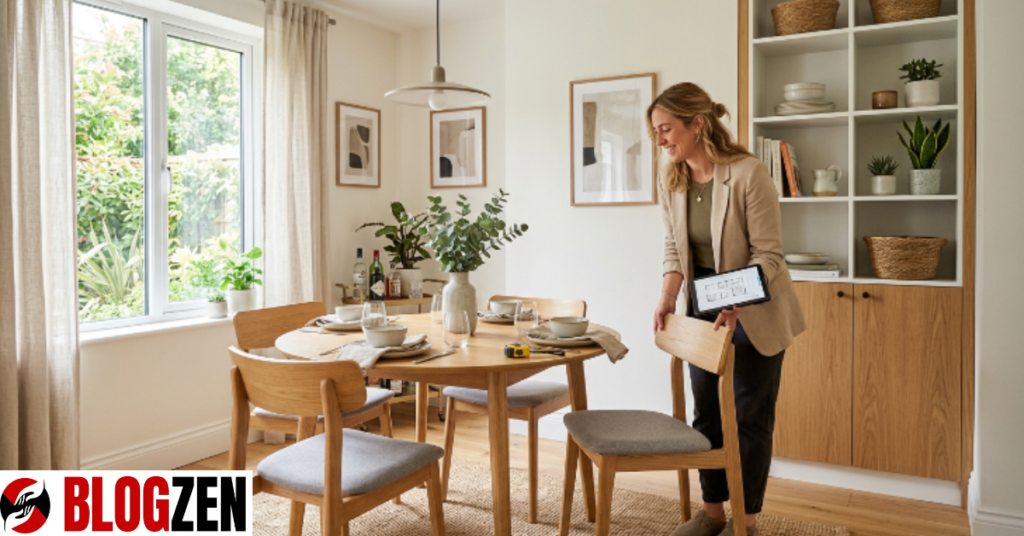
Layout is where good intentions and bad execution collide. You can have perfect furniture and beautiful colors, and still end up with a dining room that feels impossible to navigate.
The golden rule: every chair needs 18–24 inches of clearance behind it when pulled out. That’s the minimum for a person to sit and stand without hitting the wall. Work backward from that number when deciding table placement. If you only have 36 inches between your table edge and the wall, a bench or wall-mounted seating is your answer — chairs simply won’t work.
| Layout Strategy | Best For | Space Saved |
|---|---|---|
| Round table, center | Square rooms | 15–20% vs rectangular |
| Drop-leaf against wall | Narrow rooms | Up to 50% when folded |
| Bench on one side | Rooms with low clearance | 18–24 inches |
| Built-in banquette corner | Corner dining nooks | Doubles seating capacity |
| Wall-mounted fold-down table | Tiny apartments | Entire table footprint |
Traffic flow is equally critical. Aim for at least 36 inches of clearance on the primary pathway through the room (typically from kitchen to dining area). Anything tighter and people will be turning sideways to pass — which creates a psychological sense of confinement even when seated.
Don’t overlook vertical space. Install floating shelves above eye level for glassware and serveware. A tall, slim buffet or sideboard (under 16 inches deep) can hold as much as a wide cabinet while keeping the floor plan open. The eye travels up, and the room feels taller.
Common Mistakes People Make With Small Dining Room Ideas
Let’s talk about what goes wrong — because most small dining rooms aren’t struggling due to lack of ideas. They’re struggling because of a handful of specific, very fixable errors.
Oversized rugs are one of the most common mistakes. A rug that extends beyond the chair legs when pulled out traps the furniture in a visual box and makes the room feel smaller, not larger. The right rug size for a small dining room keeps all four chair legs on the rug when chairs are tucked in — nothing more. For a round 42-inch table, a 6-foot round rug is typically the maximum.
Matching furniture sets are another trap. An 8-piece dining set in a small room looks like you moved a showroom floor into your home. Mixing a table with different chairs, or using a bench instead of matching chairs, breaks visual monotony and makes the room feel curated rather than crammed.
Most people also forget about the dining room’s relationship to adjacent spaces. If your dining room opens to a living room, keep the color palette cohesive and avoid creating visual “walls” with contrasting rugs, furniture styles, or lighting heights. Continuity between spaces makes both rooms feel larger because the eye reads them as one connected zone rather than two small ones.
Expert Strategies: Small Dining Room Ideas That Designers Actually Use
Here’s what separates a beautifully designed small dining room from one that just “makes do.”
Multifunctionality is the designer’s first instinct. A dining table that doubles as a workspace, a bench with built-in storage, a sideboard that serves as a home bar — every piece in a small room should do more than one job. This isn’t about compromise; it’s about intentionality. A storage bench at a dining table can hold table linens, serving pieces, and seasonal items while seating two additional guests.
Statement pendant lighting is non-negotiable in small dining rooms. Counterintuitively, going bigger with a pendant over a small table draws the eye upward, creates a focal point, and makes the room feel designed rather than default. A single large pendant over a round table in a small dining room is one of the most dramatic and affordable transformations possible.
Gallery walls — used sparingly — can also reframe a small dining room. One large piece of art is better than many small ones (which create that visual noise we talked about earlier). Scale your art to 2/3 the width of your table or sideboard, and you’ll anchor the room without overwhelming it.
Pro Tip: Use a console or narrow sideboard behind the seated side of the table rather than a buffet against the wall. It creates depth in the room and gives you a serving surface without adding bulk to the walls.
Step-by-Step: How to Transform Your Small Dining Room This Weekend
You don’t need a renovation. You need a process. Here’s one that works:
Step 1: Clear everything out. Remove furniture, rugs, and décor. Take measurements: wall lengths, doorway widths, the distance between any permanent fixtures like windows and outlets.
Step 2: Decide on your anchor piece. For most small dining rooms, that’s the table. Use painter’s tape on the floor to mark out different table shapes and sizes before buying anything. A 42-inch circle of tape is far cheaper than returning a table.
Step 3: Solve the seating clearance problem. Measure 24 inches out from each taped edge. Can you move through the room comfortably? If not, adjust your table size or switch to bench seating.
Step 4: Choose your wall color before buying furniture. Paint samples on 12×12-inch poster boards and hold them against your actual walls at different times of day. Light in the morning versus evening changes color dramatically.
Step 5: Add lighting in layers. Install a dimmer switch (a $15–25 DIY project), hang a pendant at 30–36 inches above the table surface, and add one secondary light source like a wall sconce or buffet lamp.
Step 6: Bring in the mirror. Hang one large mirror (at least 24×36 inches) on the wall that gets the least natural light. Lean it slightly forward rather than flush for a more relaxed, less formal look.
Step 7: Edit ruthlessly. Every item you add back into the room must earn its place. If it doesn’t serve a function or create genuine visual interest, leave it out.
Myths vs. Facts: What You’ve Been Told About Small Dining Rooms Is Wrong
The internet is full of small dining room advice that sounds logical but actively makes rooms worse. Let’s clear the record.
Myth: Small rooms need small furniture. False. A room full of small furniture looks cluttered and chaotic. One or two appropriately scaled statement pieces — a round table, a strong pendant, a large mirror — create order and presence. Scaling down everything makes the room look like a dollhouse.
Myth: Light colors are always best. Mostly false. Light colors reflect light and visually expand space — true. But a deep, rich color on a single accent wall or even all four walls can create a cozy intimacy that makes a small dining room feel like a feature, not a compromise. Dark dining rooms have been trending in high-end interior design for a reason: they feel intentional and dramatic, not small.
Myth: Open shelving makes small rooms feel bigger. Conditionally true. Open shelving keeps the visual plane lighter than solid cabinets — but only if the shelves are neatly styled. Cluttered open shelves are visually louder than a closed cabinet and will make your room feel smaller every single time you see them.
The truth is that small dining room design has fewer rules than you think — and more creative freedom than you’ve been led to believe.
Conclusion
Three things matter most when designing a small dining room: choosing furniture that fits the room’s function (not just its footprint), using light, mirrors, and color strategically rather than reactively, and editing ruthlessly — because in a small space, restraint is the most powerful design tool you have.
You don’t need more square footage. You need better decisions about the square footage you already have.
Start with just one change this week — swap your rectangular table for a round one, hang a large mirror, or install a dimmer switch. Small dining rooms transform fast when you start making intentional choices instead of default ones.
Which of these small dining room ideas are you tackling first? Drop it in the comments — and if you’re working with a particularly tricky layout, describe it and let’s figure it out together.
FAQs
What is the best table shape for a small dining room?
Round tables are widely considered the best choice for small dining rooms. They eliminate sharp corners that interrupt traffic flow, allow people to be seated closer together comfortably, and can be pushed against a wall to save space without losing a seating position. A 36–42-inch round table typically seats four people and takes up significantly less perceived space than a rectangular table of similar capacity, making it the top recommendation of most interior designers for compact spaces.
How do I make a small dining room look bigger?
To visually expand a small dining room, focus on four key strategies:
- Paint walls in light, warm neutrals to reflect light
- Hang a large mirror opposite your main light source
- Choose a round or oval table over rectangular
- Use a low-hung pendant light to draw the eye up and create visual depth
Keeping the floor visible — through narrow furniture legs or a properly sized rug — also creates an important sense of openness that makes the room feel less dense.
What colors work best in a small dining room?
Soft whites, warm creams, pale sage greens, and warm greiges (gray-beige blends) consistently test as the most space-expanding colors for small dining rooms. They reflect light rather than absorbing it, which makes walls appear to recede. That said, deep, saturated colors like navy, forest green, or charcoal can also work beautifully when used intentionally — they create a cozy, enclosed atmosphere that feels luxurious rather than cramped. The key is committing fully rather than hedging with a mediocre mid-tone.
Can I use a dining room rug in a small space?
Yes, but sizing is everything. The most common mistake with dining room rugs in small spaces is going too large. For small dining rooms, your rug should be just large enough that all four chair legs sit on it when chairs are fully tucked in. For a 42-inch round table, a 6-foot round rug is usually the maximum. Going larger traps the furniture visually and makes the room feel boxed-in. A well-chosen rug that’s slightly too small is almost always better than one that’s too large.
What are the best small dining room furniture ideas for apartments?
Apartment small dining room ideas should prioritize multifunctionality and flexibility. Drop-leaf tables that fold flat against the wall are ideal — they provide full dining capacity when needed and disappear when not in use. Wall-mounted fold-down tables are the most space-efficient option, taking up zero floor space when folded. Bar-height tables with stools seat the same number of people as standard-height tables but occupy a smaller footprint and create a more casual, modern feel that works well in open-plan apartment layouts.
How do I create storage in a small dining room?
Storage in a small dining room requires thinking vertically and multifunctionally. Floating wall shelves above eye level keep glassware and serveware accessible without consuming floor space. A slim sideboard or buffet (under 16 inches deep) along one wall provides significant storage without projecting far into the room. Bench seating with built-in lift-top storage solves two problems simultaneously. If you have a corner, a built-in banquette with under-seat storage is the gold standard — it maximizes every inch of an area that standard chairs would waste.
