


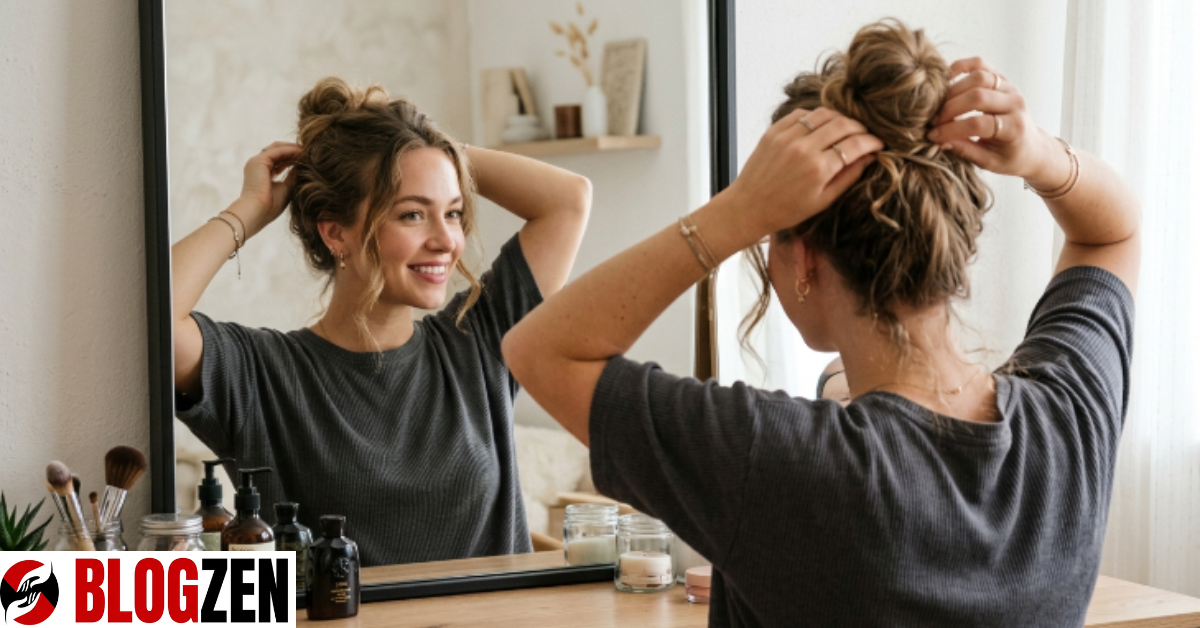
QUICK ANSWER
A messy bun is an intentionally undone updo that takes 3–5 minutes to create. Gather hair at the crown or nape, twist loosely, wrap around itself, secure with bobby pins, and pull out face-framing pieces. Works best on second-day hair with texture.
INTRODUCTION
You’re running 10 minutes late, your hair looks flat, and you need to look put-together in the next 30 seconds. Here’s the thing nobody tells you about a messy bun tutorial: the messier you think it looks, the better it actually is. This isn’t your grandmother’s tight ballet bun. A proper messy bun is that “I woke up like this but also I’m actually put-together” move that works for the gym, work, a first date, or literally any situation where you need your hair out of your face and want to look effortlessly cool.
The irony? Most people fail at messy buns because they try too hard to make them perfect. You’re about to learn exactly why that fails, what really works, and how to create one that lasts all day—even if your hair is short, fine, thick, curly, or refuses to cooperate. By the end of this messy bun tutorial, you’ll understand the real technique, the common mistakes that sabotage you, and the secret tricks that separate “I look like I just rolled out of bed” from “I look effortlessly chic.”
WHAT IS A MESSY BUN AND WHY DOES IT ACTUALLY MATTER?
A messy bun is an undone, textured updo that sits anywhere from the crown to the nape of your neck. The whole point is that it should look like you didn’t try too hard—but you absolutely did. This hairstyle has exploded in popularity because it solves a real problem: we all want to look polished without spending an hour on our hair.
Here’s why this messy bun tutorial matters right now: the old “tidy bun” screams formal or athletic. A messy bun says you’re confident, you have taste, and you’re comfortable being imperfect. It’s become the default for anyone who wants to look intentionally casual—which is basically everyone under 40.
The best part? A messy bun works on every hair type, every hair length (yes, even shorter hair), and every texture. Straight, curly, wavy, fine, thick—they all work. You just need to know the actual technique.
HOW A MESSY BUN TUTORIAL ACTUALLY WORKS (THE REAL TECHNIQUE)
Most tutorials online show you the wrong way, and that’s why you keep failing. Let me explain the real technique that actually holds.
A successful messy bun starts with texture. If your hair is completely smooth and freshly washed, it will slide around like spaghetti and fall apart in two hours. Second-day hair (or hair with dry shampoo sprayed in) works infinitely better because the texture gives you grip. This is the first thing nobody explains.
Step 1: Flip your head forward and gather all your hair at the crown area or slightly lower (depending on where you want the bun to sit). Don’t make it too tight. Secure with a hair tie—elastic or silk, either works, but silk causes less breakage.
Step 2: Take that gathered ponytail and twist it loosely around itself, creating that twisted rope effect. This isn’t a tight twist; it’s loose and relaxed. The twist is what gives you texture and makes it look intentional.
Step 3: Wrap that twisted section around the base of your ponytail, forming a bun shape. Don’t tuck the ends in perfectly. Let some pieces stick out.
Step 4: Secure with bobby pins inserted at different angles. This matters more than you think. Parallel pins don’t hold as well as pins inserted in an X pattern.
Step 5: Gently pull at random sections of the bun to loosen it and create that “undone” texture. This is where most people get nervous and stop. Pull more than you think you should. It should look slightly messy.
Pro Tip: Use bobby pins that match your hair color. One black pin in blonde hair stands out like a lighthouse and ruins the whole aesthetic.
THE BIGGEST MISTAKES THAT DESTROY YOUR MESSY BUN TUTORIAL
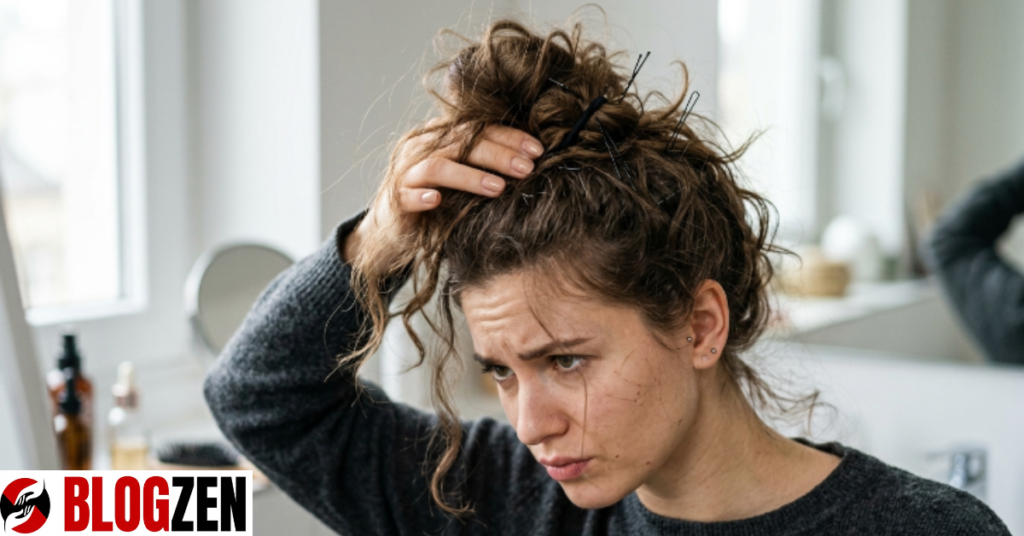
You’re failing at messy buns for exactly three reasons, and fixing them changes everything.
Mistake #1: Starting with clean, smooth hair. This is the #1 killer. Clean hair is slippery. Your bun will slip down by 10 AM and sit awkwardly at the back of your head instead of where you put it. Spray dry shampoo the night before or wait until day-two hair. Texture is your friend here.
Mistake #2: Making it too tight. A tight bun stays put, yes, but it doesn’t look effortless—it looks like you’re trying. And it pulls on your hairline, which is uncomfortable and actually damages your hair over time. A messy bun tutorial that works is one that’s secured but loose enough to move slightly.
Mistake #3: Not securing it properly with enough pins. One hair tie is not enough. Use two to three bobby pins at minimum, inserted at different angles. If you have thick or long hair, use four to five. This isn’t optional; this is why your bun falls out.
The lesser mistake people make? Using too many bobby pins of the wrong size. Small, thin pins slip out of thick hair. Use pins that match your hair thickness.
EXPERT TIPS THAT ACTUALLY MAKE THIS WORK
Here’s what stylists know about messy bun tutorials that regular people don’t.
Tip #1: The pre-bun spray matters. Not for style—for grip. A light texturizing spray or sea salt spray gives your hair something to grip onto. This alone adds two extra hours of hold. Spray before you even start the messy bun tutorial process.
Tip #2: Position matters based on face shape. A bun at the crown elongates your face; a bun at the nape makes a round face look longer. If you have a long face, position it lower. If you have a round face, position it higher. This is a subtle detail that makes a massive visual difference.
Tip #3: Pull out face-framing pieces intentionally. Don’t let them escape by accident. Pull out two or three strands on each side of your face before you secure the bun. This softens the look and is intentional styling, not a failure.
Tip #4: Wet your fingers and smooth down flyaways after the bun is done. A tiny bit of water on your fingertips, rubbed over flyaways, takes two seconds and transforms “it fell apart” to “it’s perfectly imperfect.”
Pro Tip: Keep a small bobby pin in your pocket. When you notice a section slipping during the day, give it a tiny adjustment and secure with that backup pin. Nobody will notice.
REAL-WORLD MESSY BUN TUTORIAL VARIATIONS FOR DIFFERENT SITUATIONS
Not every messy bun looks the same, and that’s the point. Here’s how to adjust the technique for where you’re actually going.
The Gym Messy Bun: Position it high on the crown, pull it tight (go against my earlier advice here), and use four bobby pins. This one is about security. You want zero movement during burpees.
The “I’m Going Out” Messy Bun: Position it at the crown or slightly lower, keep it looser, and really pull out those face-framing pieces. Add a small strand of hair around the base of the bun if you want fancy. This is the Instagrammable version.
The Work Messy Bun: Crown to mid-height positioning, structured enough to look professional but textured enough to be current. This is the “I’m serious but also modern” version.
The Casual Night Out Messy Bun: Go loose, go textured, and add one or two sparkly bobby pins if you want to dress it up. Or don’t. This version works either way.
The honest truth: if you get the basic technique right, you can adjust it for literally any scenario in 30 seconds.
MYTHS VS. FACTS ABOUT MESSY BUN TUTORIALS
Myth: You need special bobby pins for a messy bun. Fact: Regular bobby pins work fine. What matters is that you use enough of them and insert them at angles, not parallel to each other.
Myth: Messy buns only work on long hair. Fact: They work on shoulder-length hair, collarbone-length hair, and even shorter bobs if you have enough volume at the crown. The key is volume, not length.
Myth: A messy bun tutorial is the same regardless of hair type. Fact: Curly and textured hair holds a messy bun better and longer than straight hair. Straight hair needs more texture added first. Thick hair needs stronger pins. Thin hair might need a teasing brush first to create grip.
Myth: Your messy bun should look obviously undone. Fact: It should look intentionally undone—there’s a difference. Random strands falling out is failure. Strategic, pretty strands escaping is style.
STEP-BY-STEP ACTIONABLE MESSY BUN TUTORIAL (THE COMPLETE PROCESS)
Here’s the exact process to follow, start to finish.
- Prepare your hair (Day-two hair preferred). If it’s freshly washed, spray dry shampoo and let it sit for two minutes.
- Apply texture spray. Lightly mist a texturizing spray throughout, especially at the roots and mid-lengths.
- Flip your head forward or tilt your head back—whatever position makes it easy for you to gather at your desired height.
- Gather all hair into a ponytail at your chosen position (crown, mid-height, or nape). Use a soft hair tie. Secure loosely.
- Twist the ponytail loosely around itself, creating a rope texture. Keep it relaxed—not tight.
- Wrap around the base. Wind the twisted section around the elastic, tucking it naturally into a bun shape.
- Insert bobby pins at different angles (X pattern works best). Use 3–5 pins depending on hair thickness and length.
- Pull and loosen. Starting from the outside and working toward the center, gently pull sections of the bun to create volume and texture. This step is essential.
- Add face-framing pieces. Carefully pull out two to three strands on each side of your face for softness.
- Smooth flyaways. Use wet fingers or a tiny bit of styling cream to tame any wild strands.
- Final check. The bun should move slightly when you touch it—it’s not cemented in place. If it’s completely rigid, you’ve made it too tight.
Pro Tip: Film yourself doing this once so you can see where you’re placing things. It’s a lot easier to understand when you see the angle of the pins and the tension level.
COMPARISON TABLE: MESSY BUN VARIATIONS AT A GLANCE
| Type | Position | Tightness | Hold Duration | Best For | Difficulty |
|---|---|---|---|---|---|
| Gym Bun | Crown (high) | Tight | 2+ hours | Workouts | Easy |
| Casual Bun | Crown/Mid | Medium | 4–6 hours | Daily wear | Easy |
| Fancy Bun | Mid-height | Loose | 3–5 hours | Nights out | Medium |
| Professional Bun | Crown | Medium | 6–8 hours | Work | Easy |
| Bedhead Bun | Varies | Loose | 2–4 hours | Lazy days | Very Easy |
CONCLUSION
A messy bun tutorial doesn’t have to be complicated. The entire technique comes down to five things: start with textured hair, twist loosely, secure with multiple pins at angles, pull it to create volume, and trust that “messy” is the whole point. Most people fail because they either try too hard to make it perfect or they don’t secure it properly. Now you know the difference.
The biggest shift in your messy bun game will happen when you stop seeing imperfection as failure. That strand escaping? That’s intentional. That slightly loose twist? That’s the look. That texture you can see? That’s what makes it work.
Your next messy bun is going to last all day, and you’ll actually feel confident wearing it. So spray some texture spray tonight, let your hair sit, and try this technique tomorrow. Then tell me in the comments: what’s your go-to messy bun situation?
FAQs
What’s the best way to secure a messy bun tutorial so it lasts all day?
Use a combination of a soft hair tie and three to five bobby pins inserted at different angles, not parallel to each other. The X-pattern insertion method holds significantly better than pins all going the same direction. For extra security, spray a light texturizing spray before you start. Most people use only one hair tie and wonder why it falls—pins are what actually keep it in place for 8+ hours.
Can I do a messy bun tutorial with short hair?
Yes, if you have volume at the crown. Shoulder-length hair or longer works best, but bobs with height can work too. The technique stays the same: gather at the crown, twist loosely, secure with pins. Shorter hair might need a teasing brush at the base first to create grip, since there’s less hair to work with. Curly or textured short hair holds better than straight short hair.
How do I prevent my messy bun tutorial from slipping down throughout the day?
The most common reason for slipping is starting with clean, smooth hair. Use day-two hair or spray dry shampoo into clean hair and wait two minutes. Second, use enough bobby pins—minimum three, inserted at angles. Third, don’t make the initial ponytail too tight or too loose; secure it firmly but not painfully. A light hairspray mist over the finished bun adds staying power without making it stiff.
What hair products work best for a messy bun tutorial?
Texturizing spray or sea salt spray is the MVP—it gives grip without adding weight. Dry shampoo also works well. For flyaways, use a tiny amount of smoothing cream or gel on your wet fingers. Avoid heavy oils or conditioning products, which make hair slippery. Light hairspray over the finished bun (not before) keeps everything in place without making it look stiff or overdone.
Is a messy bun tutorial appropriate for work or formal events?
For work, absolutely. Position it at the crown or mid-height, keep it slightly more structured than casual, and it reads as professional and modern. For formal events like weddings, you’d typically want something more polished—tighter, with deliberate styling rather than truly “messy.” A messy bun works for casual events and everyday professional settings, but formal black-tie events need something more refined.
How do I fix a messy bun tutorial if it starts falling apart during the day?
Keep a small bobby pin and a hair elastic in your pocket. If a section is slipping, gently gather it back and secure with the backup pin inserted at an angle. For flyaways, use a tiny bit of water on your fingertips or keep a small travel-size smoothing product handy. Most slipping happens mid-afternoon because gravity and movement loosened it—this is normal and fixable in 10 seconds.
