


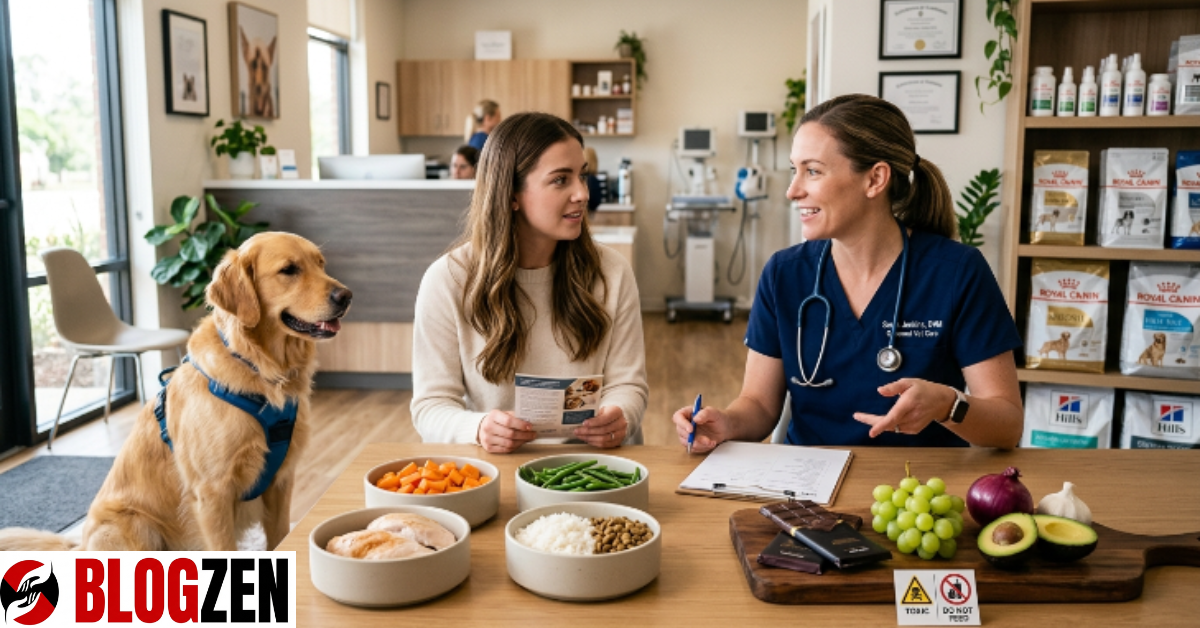
QUICK ANSWER BOX
Which foods are most dangerous to dogs? Chocolate, grapes/raisins, onions, garlic, xylitol (artificial sweetener), avocado, and macadamia nuts top the list. Just one grape can cause kidney failure in some dogs. Keep all of these completely away from your pet.
INTRODUCTION
Your dog’s eyes light up when you’re eating at the dinner table—those big puppy-dog eyes are impossible to resist. But here’s what most pet owners don’t realize: about 25% of dog poisonings come from foods you probably have sitting in your kitchen right now. Some of the most common human foods dogs should not eat can cause serious illness, organ damage, or even death within hours.
This isn’t about scaring you. This is about giving you the knowledge to keep your dog safe. In the next few minutes, you’ll discover exactly which foods are dangerous, why they’re dangerous at the cellular level, what symptoms to watch for, and most importantly—what you can safely share with your furry best friend instead.
By the end of this guide, you’ll have a mental checklist of toxic foods that could literally save your dog’s life.
Why Foods Dogs Should Not Eat Matters More Than You Think
Your dog’s digestive system isn’t designed like yours. While you can metabolize certain compounds that seem harmless, your dog’s liver and kidneys process food completely differently. A food that’s safe for humans can be toxic to dogs at much lower quantities than you’d expect.
The danger is that dogs don’t discriminate. They eat fast, don’t chew properly, and will swallow almost anything that smells appealing. This means accidental poisoning happens in seconds—before you even realize what’s happening. Unlike allergies that show up over time, some food toxins cause immediate, severe reactions.
Pet poison control centers report that food-related toxicity calls spike during holidays and family gatherings—exactly when people are most likely to give their dogs “just a little bite” of something they shouldn’t. Understanding which foods dogs should not eat isn’t just about rules; it’s about recognizing that your dog’s safety depends entirely on you.
The Complete List of Toxic Foods Dogs Cannot Eat
Chocolate is the most famous one, but most people don’t understand why it’s so dangerous. Chocolate contains theobromine and caffeine—compounds that dogs metabolize 10 times slower than humans. Dark chocolate and baking chocolate are especially dangerous because they contain higher concentrations. A 50-pound dog eating just 2 ounces of dark chocolate can experience serious toxicity symptoms.
Grapes and raisins are deceptively dangerous. Scientists still don’t fully understand why they’re toxic, but even small amounts can cause acute kidney failure. One case study involved a 2-pound Chihuahua that developed kidney failure from eating just 4 grapes. The scary part? There’s no antidote—only supportive care after the fact.
Onions and garlic—both raw and cooked—contain compounds called thiosulfates that damage dogs’ red blood cells, causing hemolytic anemia. A dog would need to eat significant quantities for severe toxicity, but even small, repeated doses build up in their system over time. This makes seasoned food especially risky.
Xylitol (artificial sweetener) triggers a massive insulin release in dogs, causing hypoglycemia within 30 minutes. Found in sugar-free candy, gum, peanut butter, and baked goods, xylitol is insidious because it’s invisible. Just half a stick of gum can send a small dog into insulin shock.
Avocado contains persin, which can cause vomiting, diarrhea, and in severe cases, heart damage. While the flesh is mildly toxic, the pit and leaves are most dangerous.
Macadamia nuts cause weakness, tremors, and hyperthermia in dogs. The exact mechanism isn’t fully understood, but even as few as 6 nuts can cause symptoms in a 10-pound dog.
Alcohol (in any form—beer, wine, or liquor) is rapidly toxic to dogs. Ethanol depresses their central nervous system and can cause respiratory failure.
Pro Tip: Keep a photo of this list on your phone. When family members or friends visit, show them—most people genuinely don’t know these foods are dangerous.
SECTION 3: How Toxicity Works (The Science Explained Simply)
Your dog’s liver is smaller and less efficient at breaking down certain compounds compared to a human liver. When your dog eats something toxic, their body doesn’t have the enzymatic machinery to process it safely, so the compound builds up to dangerous levels.
Acute toxicity happens fast—sometimes within minutes. Your dog eats something, and their body immediately reacts with vomiting, seizures, or collapse. Theobromine in chocolate and xylitol work this way.
Chronic toxicity is slower but sneakier. It happens when your dog eats small amounts repeatedly over time. Onions and garlic work this way—each exposure damages a few more red blood cells, until one day your dog is anemic and you don’t even know why.
The dose matters enormously. A tiny chocolate chip probably won’t harm a 80-pound German Shepherd, but the same amount could kill a 5-pound Chihuahua. This is why you can’t just say “a little won’t hurt”—you have to factor in your dog’s weight, age, and health status.
Age and health matter too. Puppies have immature livers that can’t detoxify as efficiently. Senior dogs and dogs with liver disease are at higher risk. If your dog has kidney problems, grape toxicity becomes even more dangerous.
Common Mistakes Dog Owners Make (And Why You’re Probably Making One)

Mistake #1: “Just one bite won’t hurt.” This phrase has sent more dogs to emergency vets than almost anything else. You might be right—or you might be wrong. Without knowing the exact compound concentration and your dog’s exact weight, you’re gambling with their health.
Mistake #2: Assuming homemade means safe. When you bake at home, you check ingredients, right? But do you check them against a dog toxicity list? Many homemade dog treats use “healthy” ingredients like xylitol-sweetened peanut butter, dried raisins, or macadamia nuts. Intention doesn’t equal safety.
Mistake #3: Not teaching guests the rules. Your mother-in-law means well when she slips your dog a piece of chocolate. Your kids’ friends think they’re being kind. Set the boundary once, firmly: “Our dog can’t have human food—it’s a medical thing.” Most people respect clear rules.
Mistake #4: Underestimating quantity. You think your dog “just ate a couple grapes” but dogs are fast. They might have eaten more than you think. When in doubt, contact poison control—don’t guess.
Mistake #5: Waiting to see if symptoms develop. If your dog eats something toxic, symptoms might not appear for hours. By then, damage is already happening internally. Poison control and your vet exist to help prevent damage before symptoms show.
The Most Dangerous Foods: Real Stories That Could Happen to You
A 3-year-old Golden Retriever named Bailey ate a entire container of sugar-free gum while her owner was in the shower. She seemed fine initially. Two hours later, her owner noticed Bailey was acting confused and uncoordinated. The emergency vet discovered dangerously low blood sugar from the xylitol. Bailey spent three days on IV glucose support and made a full recovery—but it cost $4,000 and easily could have been fatal.
A family’s dog ate half of a chocolate cake at a birthday party. The dog’s owner didn’t think it was enough to worry about—he was a 60-pound Lab. But it was dark chocolate cake with a high cocoa percentage. Within 8 hours, the dog had tremors and an irregular heartbeat. The vet treated him with activated charcoal and IV fluids. The owners learned that “it’s just a little” is the most dangerous assumption in pet ownership.
A dog developed anemia seemingly out of nowhere. Vet visits revealed the culprit: the dog’s owner had been adding “fresh ingredients” to the dog’s food daily for months, including fresh onions. The damage was done—it took weeks of treatment and diet changes to reverse the red blood cell damage.
These aren’t theoretical scenarios. They happen monthly at emergency vet clinics across the country. The common thread? The owner thought “just this once” or didn’t know the food was dangerous.
Step-by-Step: How to Keep Your Dog Safe From Toxic Foods
Step 1: Create a physical list. Write down every toxic food and post it on your refrigerator. Make it visible so every person who enters your home sees it.
Step 2: Communicate with everyone in your household. Your kids, your partner, your babysitter, your parents—everyone needs to understand that dog food isn’t negotiable. Frame it as medical, not optional.
Step 3: Store risky foods securely. Chocolate, sugar-free products, and nuts should be in high cabinets or locked drawers. Dogs are clever; they can open lower cabinets and unattended bags.
Step 4: Check every ingredient. If you’re giving your dog anything from a package—including treats, peanut butter, or yogurt—read the label. Look specifically for xylitol.
Step 5: Set up a “safe snack” station. Keep your dog’s approved treats visible and accessible. When your dog looks at you with those eyes, you have an immediate alternative: “Here’s what YOU get.” Carrot sticks, plain cooked chicken, and dog-specific treats replace the guilt.
Step 6: Have poison control’s number saved in your phone. ASPCA Animal Poison Control Center is (888) 426-4435. Call immediately if your dog eats anything questionable—they can assess risk and advise you within minutes.
Step 7: Talk to your vet about your dog’s specific risk factors. If your dog has liver or kidney disease, the danger threshold is much lower. Your vet can give you personalized guidance.
Pro Tip: Screenshot the toxic foods list and send it to anyone who watches your dog—friends, family members, dog walkers, or pet sitters. Make it easy for them to be safe.
What Your Dog CAN Safely Eat Instead
The good news? You have plenty of options for sharing food with your dog that are actually nutritious and safe.
Fruits: Most dogs love apples (remove seeds), bananas, blueberries, watermelon, and pumpkin. These offer real nutritional value—antioxidants, fiber, vitamins.
Vegetables: Carrots, green beans, sweet potatoes, broccoli (in small amounts), and peas are all safe and most dogs enjoy them. Carrots are especially good because they’re low-calorie and help clean teeth.
Proteins: Plain cooked chicken, turkey, beef, and fish (without seasoning) are excellent. Eggs are also great—many trainers use them as high-value rewards.
Dairy: Small amounts of plain yogurt or cheese are fine for most dogs. Avoid milk, as many dogs are lactose intolerant.
The key rule: plain, unseasoned, cooked. No garlic, no onions, no salt, no spices. When you serve your dog something from your plate, it should be the plain version before you added seasonings.
Myths vs. Facts About Foods Dogs Cannot Eat
Myth: “A little chocolate is fine if it’s not dark chocolate.” Fact: All chocolate is dangerous. Milk chocolate has less theobromine than dark chocolate, but it’s not “safe”—just slightly less dangerous. Baking chocolate is the most dangerous type.
Myth: “My neighbor’s dog eats grapes and is fine.” Fact: Some dogs seem unaffected by grapes while others develop kidney failure from a single grape. It’s not about consistency—it’s about individual sensitivity you can’t predict. Russian roulette isn’t a strategy.
Myth: “Cooked onions are safe; only raw onions are toxic.” Fact: Cooking doesn’t destroy thiosulfates. Cooked onions remain toxic.
Myth: “If the dog vomits, the poison is gone.” Fact: Vomiting might remove some of the toxic substance, but the damage is already happening at the cellular level. Your dog needs veterinary care regardless.
Myth: “Dogs naturally avoid toxic foods.” Fact: Dogs don’t have poison-detection abilities. They eat based on smell and taste, and many toxic foods smell delicious to them.
CONCLUSION
Your dog depends entirely on you to keep them safe. Foods dogs should not eat aren’t forbidden arbitrarily—they’re dangerous because of how your dog’s body processes them. Chocolate, grapes, xylitol, onions, and the other foods on this list aren’t “people food your dog shouldn’t have.” They’re poisons in a dog’s system.
The three most important takeaways: First, create a physical list and share it with everyone in your life. Second, check every label for xylitol before giving your dog anything packaged. Third, have poison control’s number saved—because acting fast can save your dog’s life.
Your dog’s biggest health risk isn’t rare diseases or genetic problems. It’s accidental poisoning from something sitting in your kitchen. You now have the knowledge to prevent that. Use it.
What’s the one toxic food you didn’t know about before reading this? Comment below—let’s make sure every dog owner sees this list.
FAQs
What happens if my dog eats chocolate?
Chocolate contains theobromine, which dogs process 10 times slower than humans. Symptoms include vomiting, diarrhea, tremors, rapid heart rate, and in severe cases, seizures or death. The severity depends on the amount, type of chocolate (dark is worse), and your dog’s weight. Dark chocolate is most dangerous. If your dog eats any amount of chocolate, contact poison control immediately—don’t wait for symptoms.
Can a single grape really hurt my dog?
Yes. While the exact mechanism of grape toxicity remains unknown, even one grape has triggered acute kidney failure in some dogs. The risk is unpredictable—some dogs eat multiple grapes with no obvious effect, while others suffer severe damage from one. Because you can’t predict your dog’s individual sensitivity, grapes should be completely avoided. No grape is worth the risk.
Is xylitol really that dangerous?
Xylitol is one of the most dangerous substances for dogs because it’s invisible and common. It triggers rapid insulin release, causing severe hypoglycemia (low blood sugar) within 30 minutes. A dog can go into shock, seizures, or respiratory failure. It’s found in sugar-free gum, candy, peanut butter, baked goods, and yogurt. Always read labels—this is the #1 emergency poison control call for food toxicity.
What are the early warning signs if my dog ate something toxic?
Early symptoms vary by toxin but commonly include vomiting, diarrhea, drooling, lethargy, tremors, loss of appetite, or unusual behavior. Some toxins cause immediate symptoms (xylitol within 30 minutes), while others take hours (grapes can take 24 hours). If your dog ate something questionable within the last 6 hours, contact poison control before symptoms even appear—treatment is most effective early.
Are all nuts dangerous to dogs?
No, but some are extremely dangerous: macadamia nuts are toxic at very small quantities; black walnuts contain tremorgenic toxins; and moldy nuts (any type) produce tremorgenic mycotoxins. Peanuts and almonds in moderation are generally safe, but many are sold with salt or coatings. The safest approach: avoid nuts entirely. If your dog ate macadamia nuts, call poison control immediately—even a few can cause serious symptoms.
What should I do right now if my dog ate a toxic food?
Call ASPCA Animal Poison Control Center immediately at (888) 426-4435. Have ready: your dog’s weight, the food eaten, how much, and when. They’ll assess the risk level and advise whether you need emergency vet care. Do NOT wait for symptoms to develop—some toxins cause internal damage before external symptoms appear. Fast action prevents organ damage and saves lives.
