


Quick Answer
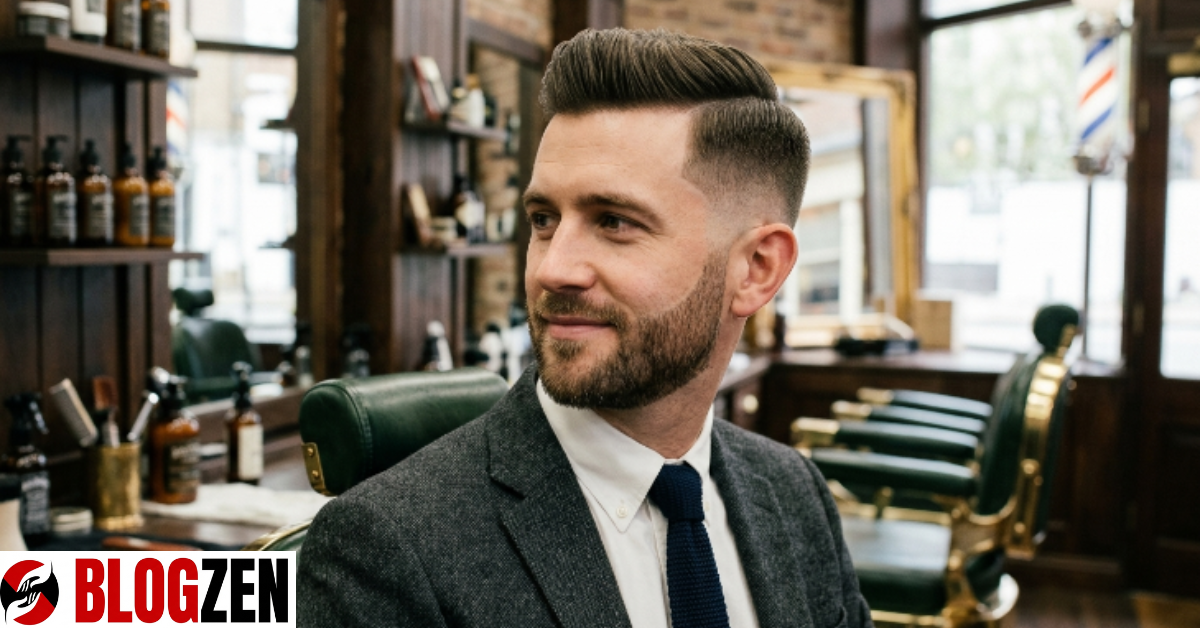
A faded beard is a grooming style where the beard transitions gradually from full density at the chin to shorter, blended hair near the cheeks and temples. It creates a seamless connection between the beard and haircut. The result looks clean, modern, and intentional — whether you grow thick or sparse facial hair.
Most men spend $60 at a barber and walk out with a style that fades out in four days because nobody explained the one thing that makes a faded beard actually last.
A faded beard isn’t just a trend you’ve seen on Instagram. It’s become the dominant facial hair style for men under 40 — and for good reason. Done correctly, it slims the face, modernizes any haircut, and makes even patchy growth look intentional. Done wrong, it looks like a half-finished project.
Here’s what this article delivers: a real explanation of how the fade actually works, the most common mistakes men make at home and in the chair, proven styling tips, and a step-by-step guide you can bring to your barber or use yourself. No fluff. Let’s get into it.
What a Faded Beard Actually Is (And Why It’s Taken Over)
Here’s what nobody tells you about the faded beard — it’s not really about the beard at all. It’s about transition. The fade is the gradual blending of beard hair from one length to another, moving from longer hair at the jaw and chin up toward shorter, sparser coverage near the cheekbones and sideburns.
Think of it this way: a traditional beard has hard edges. It stops where the barber draws a line. A faded beard has no hard stop — it dissolves into the skin. That subtle difference is what makes it look expensive and well-considered rather than simply “trimmed.”
The style exploded in popularity around 2015–2018 when barber culture went mainstream, and search data shows “faded beard” queries have grown by over 200% since then. Men with taper fades and skin fades in their haircuts started demanding the same seamless aesthetic in their facial hair. Barbers responded by developing techniques that blend the two together.
Pro Tip: If you already have a skin fade or taper haircut, a faded beard isn’t optional — it’s essential. A sharp hard-line beard against a skin fade creates a jarring visual break that undermines the whole cut.
The style works across face shapes, ethnicities, and hair textures, which is rare in grooming. Whether you’re working with coarse Black hair, fine straight Asian hair, or wavy Mediterranean hair, the fade principle adapts.
How the Fade Technique Actually Works
Let me explain why this matters before we get into the mechanics: understanding the technique is what separates someone who can maintain their style at home from someone who has to book an appointment every two weeks just to stay presentable.
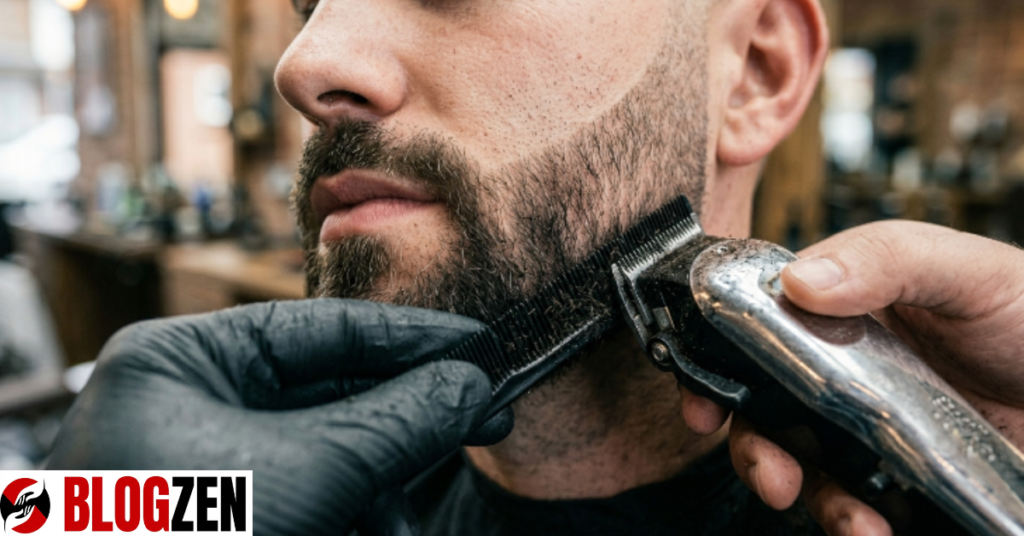
A barber creates a faded beard using three tools in combination: clippers with guard attachments, a detail trimmer (often called a T-liner), and sometimes scissors. The process is layered — they’re not just cutting at one length and calling it done.
The Three Zones of a Faded Beard
Every faded beard has three distinct zones that must be treated differently:
- The base zone — the chin, jaw, and lower cheeks where the beard is fullest. This gets the longest guard setting, typically 3 or 4 on clippers.
- The transition zone — the upper cheek area where length decreases. Guards drop to 1 or 2 here, and this is where most of the blending work happens.
- The fade zone — the very top of the beard near the sideburns and temple, where hair needs to taper to near-skin level. This often requires a close trim with a 0.5 guard or a detail trimmer.
The magic happens in zone two. A skilled barber will go over that middle section multiple times with progressively shorter settings, using flicking wrist movements to avoid hard lines. This takes about 70% of the total time in the chair. Don’t let any barber rush through it.
Types of Faded Beards
| Type | Fade Level | Best For | Maintenance Level |
|---|---|---|---|
| Low fade beard | Fades near the ear base | Oval, round faces | Low — every 3–4 weeks |
| Mid fade beard | Fades at mid-ear level | Most face shapes | Medium — every 2–3 weeks |
| High fade beard | Fades near temples | Square, diamond faces | High — weekly touch-ups |
| Skin fade beard | Goes to bare skin | Bold, defined looks | Very high — 1–2 weeks |
| Shadow fade beard | Subtle, very soft blend | Beginners, patchy growth | Low — forgiving |
Pro Tip: The mid fade beard is the most universally flattering option. It works on every face shape and suits nearly every haircut — it’s the safest first choice if you’ve never tried a fade before.
The Most Common Mistakes Men Make With a Faded Beard
The truth is, most men who try faded beards at home end up with something that looks more like a “glitched” beard than a fade. Here’s why — and how to stop it from happening to you.
Mistake #1: Drawing a hard cheek line. This is the number one destroyer of a good fade. When you shave a perfectly straight line across your upper cheek and then try to fade downward from it, you’ve already lost. The hard edge fights the fade. Instead, let the cheek line be a soft suggestion, not a razor boundary.
Mistake #2: Starting too short. Men grab their clippers, set them to a 1 guard, and start cutting. Then they realize the whole beard is now one uniform short length with no variation. You can always go shorter — you can’t go longer. Always start with your longest guard setting and work down.
Mistake #3 is subtler: not blending the sideburns into the head fade. If you have any kind of taper or fade in your haircut, the beard needs to connect. If it doesn’t, your head looks like it’s sitting on top of a different head’s beard. Take that detail trimmer just above the sideburn level and blend carefully.
Mistake #4: Ignoring the neckline. A faded beard without a clean neckline is like a great suit with unlaced shoes. Your neckline should curve naturally following your jaw — not be a straight horizontal line, which looks artificial and ages poorly as the beard grows out.
Pro Tip: If you’ve made a mistake and cut too short on one side, resist the urge to “even it out” by cutting the other side down. Instead, let it grow for 3–5 days and try again. Chasing symmetry with clippers usually ends worse than where you started.
Expert Tips and Proven Strategies That Actually Work
I’ve seen men spend $80 a month on premium beard oils and use $20 drugstore clippers. That’s completely backwards. Most of a faded beard’s result comes down to the cutting technique and the tool quality, not the product lineup.
Tool Upgrades That Make a Real Difference
Professional barbers typically use cordless clippers with ceramic or titanium blades. The reason matters: these blades stay cooler under friction, which means they cut cleanly instead of pulling hairs. Pulled hairs create uneven patches that look like sparse growth even when growth is fine. A $60–$80 trimmer from a reputable brand (Wahl, Andis, BaByliss) outperforms most $200 gadget-brand options.
A T-liner (also called a zero-gap trimmer or detailer) is non-negotiable for the fade zone. Regular clippers have too wide a blade to get into tight transitions near the ears and sideburns. The T-liner gives you precision in the narrow zone where the fade actually happens.
The Mirror Trick Most Barbers Use
Professional barbers work with a hand mirror positioned at 45 degrees behind the client to check both sides simultaneously. At home, set up a second mirror behind you so you can see both sides at once while working. Fading is entirely about symmetry, and it’s nearly impossible to judge symmetry from the front alone.
Light matters too — always trim under direct, even lighting. Bathroom overhead lights that cast shadows on your face will hide unevenness until it’s too late. Natural light from a window is your best option, or invest in a lighted vanity mirror.
Pro Tip: Apply a small amount of beard oil before trimming, not after. It slightly softens coarse hair and allows the blade to glide more evenly, reducing the pulling that causes patchy results.
Real-World Examples: What Works and What Doesn’t
Consider two men — same face shape, same hair thickness. One has a full beard with a classic hard cheek line. The other has the same beard growth but uses a shadow fade that blends up toward his mid-fade haircut. In every photo comparison study done by grooming publications, the faded beard is consistently rated as “more groomed” and “younger-looking” — not because it’s more hair, but because it reads as intentional.
Athletes and public figures have made this style ubiquitous. The reason it photographs so well is partly mathematical: the gradient draws the eye from cheekbone down to chin, which creates the illusion of a sharper jawline regardless of actual bone structure.
Men with patchy beards benefit the most. A shadow fade — the softest version of a faded beard — can make sparse cheek growth appear intentional rather than incomplete. Instead of trying to fill in patchiness with growth, you’re using the fade to make sparseness part of the design.
Step-by-Step Guide: How to Fade Your Beard at Home
This process works best if your beard is at least half an inch long at the chin. Anything shorter and there isn’t enough length differential to build a convincing fade.
- Wash and dry your beard completely. Wet hair cuts differently from dry hair and distorts the length you think you’re working with.
- Start with a #3 or #4 guard and trim the entire beard to establish your base length. Go against the grain for an even cut.
- Switch to a #2 guard and trim from your cheekbone down about one inch. Use a flicking outward motion at the boundary — don’t stop the clipper sharply.
- Switch to a #1 guard and go over just the top quarter inch of your beard border. Again, flick outward at the edge rather than stopping hard.
- Use your T-liner with no guard (or a 0.5 if you prefer) for the final fade zone right at the top near the sideburns and just below the cheek hairline.
- Clean the neckline using the T-liner. Follow the natural curve of your neck rather than drawing a straight horizontal line.
- Check in your second mirror for symmetry. Make micro-adjustments only — a single pass, not full sections.
- Apply beard oil and comb through once to reveal the final look with hair lying in its natural direction.
The whole process takes about 15 minutes once you’ve done it a few times. The first time, budget 30 minutes and go slow.
Pro Tip: Take a photo from both sides before you start trimming. It’s far easier to evaluate your fade quality when comparing a “before” to your live mirror — your brain adjusts too quickly when staring at the same face throughout.
Myths vs Facts: What the Internet Gets Wrong About Faded Beards
Most people get this completely wrong: you don’t need thick beard growth for a faded beard to look good. The myth persists because most reference photos show men with dense, full facial hair. But the fade technique is actually more forgiving on sparse growth — there’s less density to expose the “steps” between guard lengths.
Myth: “A faded beard requires a barber every week.” Fact: a mid-fade or low-fade beard only needs a full shaping every 2–3 weeks. Between appointments, you can maintain it with a detail trimmer in under 5 minutes. The haircut part of a high-fade style needs more frequent upkeep than the beard itself.
Myth: “Faded beards only look good with short haircuts.” The fade principle works with medium and longer haircuts too — the blend just happens over a shorter distance. A man with a longer pompadour and a faded beard can absolutely make it work; the style just requires a softer fade rather than a dramatic skin fade.
Pro Tip: If your barber insists on drawing a sharp razor line before fading your beard, ask them specifically to “fade without a hard cheek line.” Some barbers default to their standard template — you have to ask for the soft approach explicitly.
Conclusion
Here’s what actually matters about the faded beard: it’s not the style itself, it’s what it signals. A man who understands how a fade works, who maintains it properly, and who chooses the right type for his face shape — that man looks in control of how he presents himself. That reads in real life and in every photo.
Three things to take with you: First, choose the right fade height for your face shape — mid fade is your safest bet. Second, prioritize tool quality over product quantity. Third, learn the three-zone technique even if you use a barber, because understanding it helps you communicate what you actually want.
The faded beard isn’t going anywhere — it’s graduated from trend to standard. The only question is whether yours will be the one that turns heads.
What’s your biggest challenge with your beard fade?Drop your question in the comments — or check out our guide on beard styles by face shape to build on what you’ve learned here. Your perfect style is one informed decision away.
FAQs
How long does a faded beard take to grow out enough to style?
Most men need at least 2–3 weeks of uninterrupted growth before a barber has enough length differential to work with. The chin should have at least 0.5 inches (roughly 1.2 cm) of coverage for a proper fade to take shape. Trying to create a faded beard on shorter stubble results in a minimal shadow effect rather than a true gradient — which can still look intentional, but limits your style options significantly.
Can you do a faded beard if your facial hair grows unevenly?
Yes — and this is actually where the fade technique shines most. Uneven growth is one of the main reasons men avoid growing beards at all, but a correctly applied fade uses the gradient to make sparse areas look intentional. Here’s a quick approach: let the densest areas set the length; fade the sparse zones even shorter so the transition looks designed rather than accidental; use a soft cheek line to avoid highlighting where growth stops. A shadow fade specifically works well for uneven coverage.
What is the difference between a faded beard and a tapered beard?
These terms often overlap but have a subtle technical distinction. A tapered beard refers to a change in beard shape — usually meaning the beard narrows toward the chin or jaw. A faded beard refers specifically to a change in hair length density, creating a gradient from shorter to longer. You can have a tapered shape without a fade, and you can have a fade without tapering the shape. Most modern barber styles combine both elements for a complete, sculpted result.
How often should I get my faded beard touched up?
It depends on which fade style you’re maintaining:
- Skin fade beard — every 7–10 days
- High fade beard — every 10–14 days
- Mid fade beard — every 2–3 weeks
- Low fade or shadow fade — every 3–4 weeks
Between professional appointments, a detail trimmer can maintain the upper fade zone in about 5 minutes. Beard oil applied daily also slows the visual deterioration of the style by keeping hair flat and controlled.
What products help maintain a faded beard between barber visits?
Three products matter most for maintaining a faded beard between cuts. Beard oil (applied daily) keeps the transition zone hydrated so shorter hairs don’t become frizzy and visually disrupt the gradient. A boar-bristle beard brush trains hair to lie flat and in the right direction. A light-hold beard balm can tame flyaways in the fade zone without stiffening the beard unnaturally. Avoid heavy waxes in the fade zone — they clump short hairs together and destroy the smooth gradient effect.
Does a faded beard work with all beard lengths?
A faded beard works from very short (3–5mm at the chin) all the way up to full, long beards. The technique adapts across lengths — a longer beard requires a more dramatic length drop from chin to cheekbone, often using larger guard jumps, while a shorter beard uses smaller guard increments over a tighter range. The only length where fading becomes genuinely difficult is on a stubble beard under 3mm, where there simply isn’t enough length variation to create a visible gradient without going to bare skin at the top.
