


Quick Answer
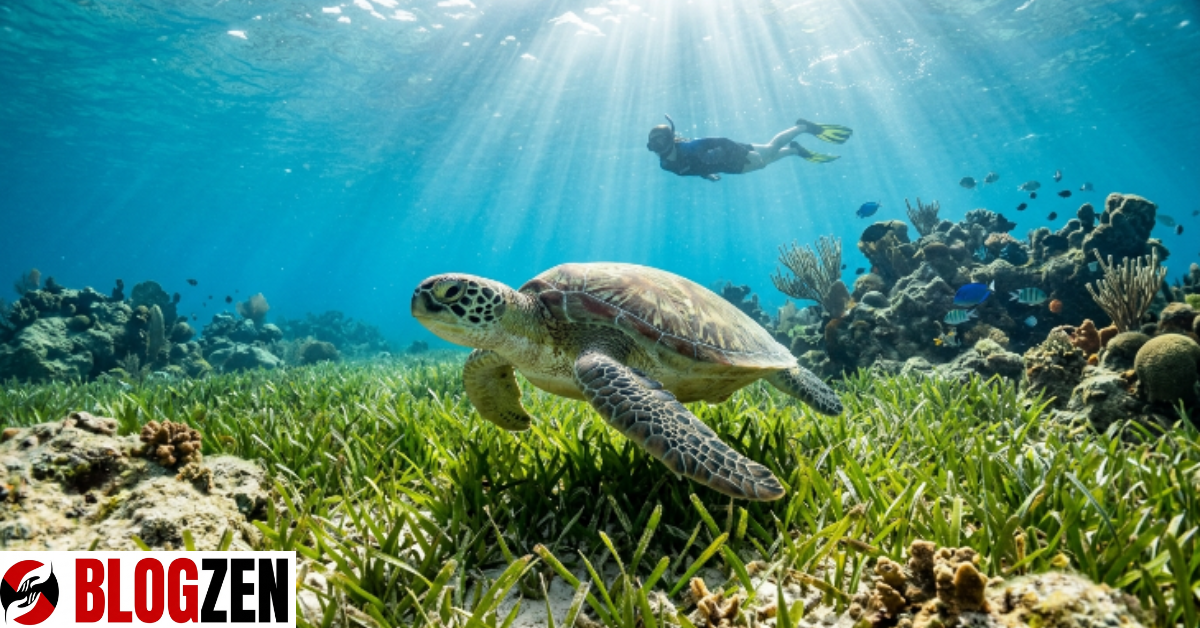
The best places to swim with turtles include Hawaii’s Turtle Town (Maui), Akumal Bay in Mexico, the Great Barrier Reef, and Barbados’ Carlisle Bay. Look for spots with seagrass beds, calm shallow water, and strict no-touch rules — that combination almost always means healthy turtle populations and ethical encounters.
Most people picture swimming with turtles like it’s a theme park ride — hop in, turtle shows up, perfect photo, done. It rarely works that way. The best places to swim with turtles are specific, seasonal, and often depend on things like tide charts and seagrass growth that nobody mentions in the glossy travel ads.
Here’s what nobody tells you: turtles aren’t performing for you. They’re eating, resting, or migrating, and the “best” locations are simply where their natural behavior overlaps with human access. Once you understand that, the whole search changes. You stop looking for “turtle hotspots” and start looking for healthy marine habitats — because that’s where turtles actually are, consistently, year after year.
This article breaks down the real locations worth your time, how these encounters actually work, the mistakes that ruin trips (and hurt turtles), and a step-by-step guide to doing it right. By the end, you’ll know exactly where to go and how to behave once you’re there.
What Swimming With Turtles Actually Means (And Why It Matters Now)
Swimming with turtles isn’t a managed activity like a dolphin show — it’s wildlife tourism in open water, which means the animal’s welfare has to come first. Sea turtle populations have been recovering in several regions over the past two decades, partly because of protected marine zones, but that recovery is fragile. Green sea turtles, hawksbills, and loggerheads are still listed as endangered or vulnerable in most parts of the world.
This matters because tourism can help or hurt that recovery depending on how it’s managed. Well-regulated sites — with distance limits, no-touch rules, and licensed guides — actually support conservation funding. Poorly managed ones stress the animals, disrupt feeding, and in some documented cases have driven turtles away from historic feeding grounds entirely.
The key takeaway: the best places to swim with turtles are almost always the best-regulated ones, not the most famous ones. Popularity and ethics don’t always overlap, and that’s the first thing to check before booking anything.
How These Encounters Actually Work
Turtles gather where the food is, and that’s almost entirely determined by seagrass and algae growth. Green turtles in particular are grazers — they need shallow beds of seagrass, and they’ll return to the same feeding areas for years if the habitat stays stable.
This is why places like Akumal Bay in Mexico or Turtle Town off Maui aren’t random. They sit on top of exactly the kind of seagrass meadows turtles depend on. Guides in these areas know the feeding patterns well enough to predict, with real accuracy, where turtles will surface for air and where they’ll be grazing below.
Tide and time of day matter more than most visitors realize. Early morning, before boat traffic picks up, tends to produce calmer water and less-stressed turtles. Think of it this way: you’re not hunting for turtles, you’re timing your visit to match their routine, not the other way around.
Common Mistakes People Make When Swimming With Turtles
Most people get this completely wrong on their first attempt, and it’s rarely intentional. The mistakes are almost always about proximity and expectation.
- Touching or chasing turtles, which is illegal in most protected marine parks and can cause the animal to flee to deeper, riskier water
- Using flash photography, which startles turtles and disrupts their natural surfacing pattern
- Wearing regular sunscreen instead of reef-safe sunscreen, which damages the seagrass turtles feed on
Beyond that, a lot of travelers show up expecting a guaranteed sighting, book the wrong season, and leave disappointed — not because the location was bad, but because they didn’t check migration or feeding timing first.
Pro Tip: Always ask your tour operator how many swimmers are allowed near a turtle at once. Two or fewer at a time is the sign of a well-managed, sustainable operation.
Expert Tips and Proven Strategies
Marine biologists and dive instructors consistently recommend the same core approach: stay horizontal, stay at the surface, and maintain at least 10 feet of distance. Diving down toward a turtle almost always triggers a stress response, even if it looks calm from above.
The truth is, the best encounters happen when you do almost nothing. Floating still, breathing steadily, and letting the turtle surface naturally on its own terms produces far better sightings — and far better photos — than swimming aggressively toward one.
Booking through a marine park with certified guides, rather than an independent boat operator, also tends to produce better results. Certified guides know the exact feeding zones and tide windows, which means less time searching and more time actually in the water with turtles.
Real-World Examples Worth Knowing
Akumal Bay, Mexico, is one of the most consistent green turtle feeding grounds in the Caribbean, largely because of a local cooperative that limits daily swimmer numbers and enforces strict distance rules. That single policy change reportedly helped turtle sightings stabilize after years of overcrowding in the early 2000s.
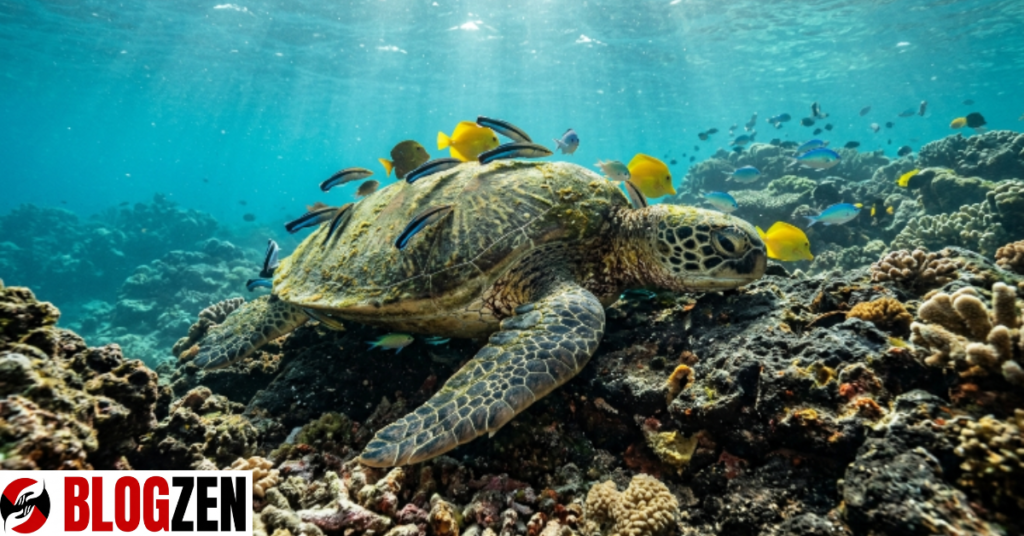
Turtle Town off Maui works differently — it’s a series of lava rock reefs where turtles rest and get cleaned by reef fish, a behavior called “cleaning stations.” Visitors who understand this behavior tend to get much closer, natural encounters simply by staying near the rocks rather than chasing turtles into open water.
Ningaloo Reef in Western Australia offers a lesser-known but increasingly popular option, with nesting loggerheads visible seasonally alongside whale sharks — making it one of the few spots where two major marine attractions overlap.
Step-by-Step Guide to Doing It Right
- Research the season — most turtle feeding and nesting windows are predictable and location-specific
- Book with a licensed, small-group operator instead of a large tour boat
- Apply reef-safe sunscreen at least 20 minutes before entering the water
- Enter the water slowly and float at the surface rather than swimming directly toward turtles
- Maintain distance and let the turtle dictate the encounter
- Avoid flash photography and any physical contact
- Exit the water calmly, without startling nearby wildlife
Pro Tip: Bring a mask with a wide field of view — turtles often surface at the edge of your vision first, not directly in front of you.
Myths vs Facts About Swimming With Turtles
| Myth | Fact |
|---|---|
| Turtles enjoy being touched or petted | Contact causes measurable stress responses and is illegal in most marine parks |
| More tourists means better sightings | Overcrowding often pushes turtles into deeper, less accessible water |
| Any beach with turtles is a good spot | Regulated habitats with seagrass and no-touch rules produce far better long-term encounters |
| Turtles are most active at midday | Early morning, calmer water typically produces the best natural behavior |
Most people assume popularity equals quality here, and that assumption is usually the difference between a mediocre trip and a genuinely memorable one.
Conclusion
The best places to swim with turtles aren’t the most Instagrammed ones — they’re the ones with healthy seagrass, strict swimmer limits, and guides who understand feeding patterns. Akumal Bay, Turtle Town, and Ningaloo Reef consistently deliver because they’re protected, not because they’re famous.
Get the season right, book a small, licensed operator, and let the turtle set the pace once you’re in the water. That’s really the whole strategy.
Which location is on your list first — Mexico, Hawaii, or Australia? Drop it in the comments, and check out our guide on reef-safe sunscreen before you pack for the trip.
FAQs
What is the best time of year to swim with turtles?
Timing depends heavily on location. In the Caribbean, green turtles feed year-round but are most active in calmer morning waters between May and September. In Australia, nesting season runs November through March. Always check local marine park schedules, since feeding and nesting cycles shift the visibility window significantly by region.
Is it safe to swim with turtles in the wild?
Yes, when done through a licensed operator following distance and no-touch guidelines. Turtles are generally non-aggressive and will simply swim away if they feel crowded. The main safety concerns are usually boat traffic and strong currents, not the turtles themselves, so always check local water conditions first.
Do turtles bite swimmers?
Bites are extremely rare and almost always happen when a swimmer gets too close or attempts to touch the turtle. Sea turtles are grazers, not predators, and have no natural reason to engage with humans unless startled or cornered in shallow water.
Which country has the most turtle swimming spots?
Mexico and Australia are widely considered top destinations, each offering multiple protected sites. A few standouts include:
- Akumal Bay and Isla Mujeres in Mexico
- Ningaloo Reef and the Great Barrier Reef in Australia
- Maui’s Turtle Town in Hawaii, technically part of the U.S.
Can beginners swim with turtles without diving experience?
Yes. Most well-known turtle sites, including Akumal Bay and Turtle Town, involve shallow snorkeling rather than scuba diving, making them accessible to beginners with basic swimming ability. A guided tour is still recommended for first-timers unfamiliar with reef navigation.
Why do some turtle tourism spots get shut down or restricted?
Restrictions usually follow documented overcrowding, habitat damage from sunscreen chemicals, or repeated harassment incidents reported by conservation groups. Marine parks monitor turtle behavior and will limit or close access if sightings drop or nesting patterns show signs of disruption. VISIT BLOGZEN
