


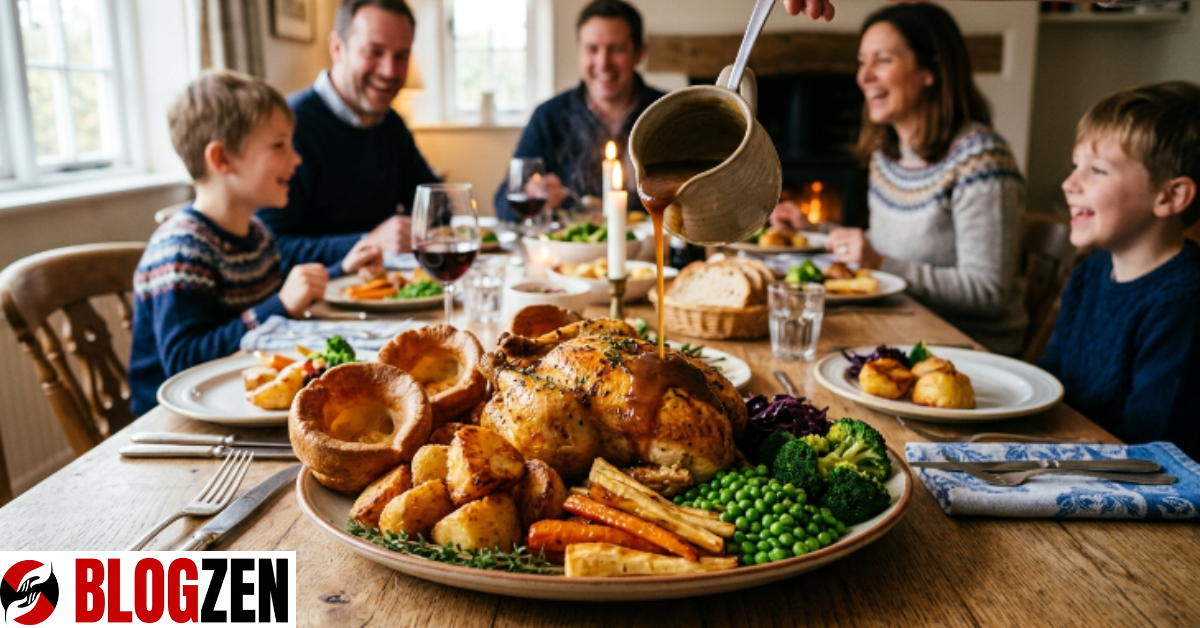
QUICK ANSWER
New to roasting? Here’s the shortcut: Preheat oven to 200°C, season your chicken, roast for 20 minutes per 500g plus 20 minutes extra, baste halfway through, and let it rest 15 minutes before serving. Done. The key is starting hot and letting time do the work for you.
INTRODUCTION
Most people overcomplicate the Sunday roast and end up with dry chicken or burnt vegetables. But here’s what nobody tells you: a perfect easy Sunday roast recipe isn’t about complicated techniques or fancy equipment—it’s about understanding three simple rules that make everything click into place.
I’ve watched countless home cooks stress over timing, fiddle with temperature changes, and pull out a bird that’s somehow both dry and undercooked. The truth is, the British Sunday roast tradition exists because the method works, not because it’s difficult. You just need the right approach.
In this guide, you’ll discover exactly how to roast chicken and vegetables so they come out crispy, golden, and genuinely delicious. We’ll cover why beginners make the mistakes they do, walk through the entire process step-by-step, and give you the insider tricks that separate a mediocre roast from one that has your family asking for seconds.
Here’s what you’ll learn:
- Why timing matters more than temperature tinkering
- The exact sequence for perfect roasties and tender veg
- How to avoid the three most common roasting disasters
- Pro tips that professional chefs use (but rarely share)
- Variations for different proteins and dietary preferences
Let’s get started.
What Is a Sunday Roast and Why It Still Matters Today
A Sunday roast isn’t just dinner—it’s a British institution. But if you’re new to cooking, you might wonder what all the fuss is about. Simply put, a Sunday roast is a one-pan meal where a protein (usually chicken, beef, or lamb) roasts alongside seasonal vegetables and is served with gravy.
Here’s why it still dominates UK tables in 2026: it’s genuinely simple, deeply satisfying, and brings people together. There’s something about a perfectly roasted bird with crispy skin and juicy meat that makes everyone slow down and enjoy their food. No fancy plating needed.
The magic isn’t in complexity—it’s in understanding heat. When you get heat right, everything else falls into place naturally. That’s the entire secret. Most recipes make you believe you need a meat thermometer, special roasting pans, and constant attention. You don’t. You need confidence and a kitchen timer.
How an Easy Sunday Roast Actually Works (The Science Made Simple)
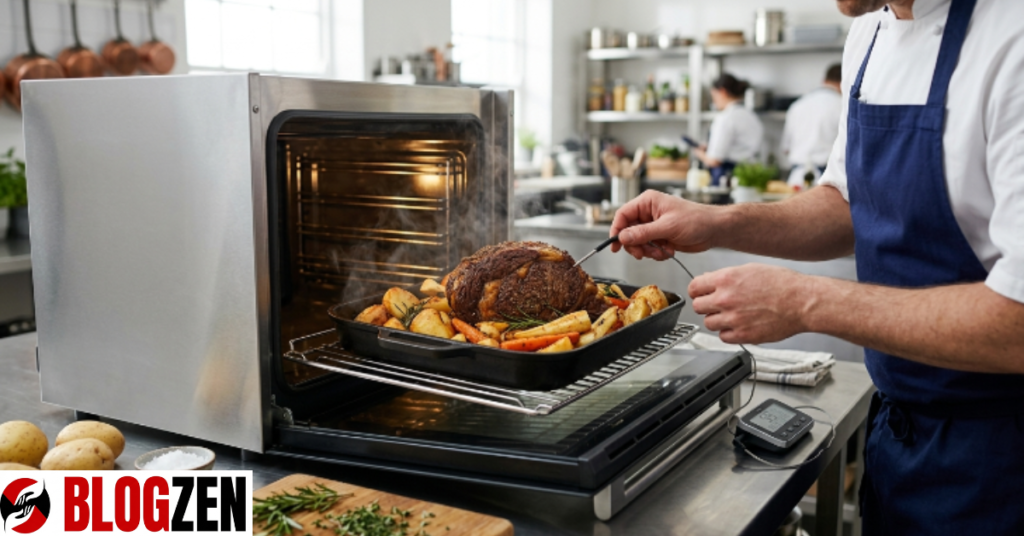
Think of roasting like this: you’re using dry heat to cook the outside fast while keeping the inside moist. The Maillard reaction—that’s the browning process—is what creates flavor. If your oven isn’t hot enough, you get steamed chicken instead of roasted chicken.
Here’s what happens step-by-step:
The first 20 minutes (high heat): Your oven blasts the chicken at high temperature. The skin begins to brown and crisp. The outside proteins start sealing in moisture. This is non-negotiable. Skip this, and your chicken will never be properly golden.
The middle phase (steady heat): Once browning starts, you maintain heat but let time do the work. The chicken’s interior gradually reaches safe temperature (165°F / 74°C) while the outside continues crisping. Your roasting vegetables—potatoes, carrots, parsnips—absorb those rendered chicken juices and become golden too.
The final 15 minutes (the crucial rest): Most people skip this or rush it. Resting allows juices to redistribute through the meat. Cut into chicken immediately, and juices run out onto the plate. Rest it, and those juices stay trapped inside, keeping meat tender and moist.
The result? Crispy, golden skin on the outside and tender, juicy meat within.
The Three Most Common Mistakes People Make With Easy Sunday Roast
Mistake #1: Using an oven temperature that’s too low
I see this constantly. Someone sets the oven to 180°C, thinks that’s safer, and ends up with pale, rubbery chicken. Low and slow works for pulled pork or brisket, but not for roasting a bird. Your oven needs to be hot—at least 200°C for the first blast. The high heat is what creates that golden, crackling skin everyone loves.
Mistake #2: Skipping the resting period (or only resting 5 minutes)
You’ve waited 1.5 hours. Your chicken looks perfect. Surely you can carve it now? No. The residual heat is still working inside. The proteins are still contracting. Cut it now and all those lovely juices spill onto the carving board. Rest it for a full 15 minutes—your reward is tender, juicy meat that rivals restaurant chicken.
Mistake #3: Cramming the roasting pan and ignoring the vegetables
Vegetables need space and fat to crisp properly. Overcrowding your pan means everything steams instead of roasts. If your potatoes are touching each other, they’ll be pale and soft. And here’s the detail most people miss: add your roasties 30–40 minutes after the chicken starts. They cook faster than you think, and if they go in at the same time, you get burnt potato and undercooked chicken.
Expert Tips and Proven Strategies That Change Everything
Pro Tip: Use a digital oven thermometer
Home ovens lie. Seriously. Your dial might say 200°C, but the actual temperature could be 180°C or 220°C. A £10 digital thermometer takes the guesswork out. Pop it on a shelf at chicken level, preheat for 15 minutes, and you’ll know exactly what you’re working with.
The basting technique nobody mentions
Here’s where impatience ruins things: resist the urge to open the oven constantly. Every time you do, heat escapes and your chicken takes longer to cook. Instead, baste twice during cooking—at the 30-minute mark and again at 60 minutes. Use a spoon to scoop hot fat from the pan and drizzle it over the chicken. This keeps skin moist during cooking and helps it crisp evenly.
Why your salt timing matters
Season the cavity and outside of the chicken at least 40 minutes before roasting (or the night before, even better). This gives salt time to penetrate the skin and season the meat throughout, not just the surface. Many cooks salt 10 minutes before roasting and wonder why their chicken tastes bland.
The vegetable size trick
This is simple but changes everything: cut vegetables similarly sized so they cook evenly. Potatoes the size of golf balls, parsnips cut into 3-inch pieces, carrots cut into thick batons. If one potato is twice the size of another, one will be mushy and one will be hard.
Step-by-Step Guide: How to Cook Your Easy Sunday Roast
PREP PHASE (20 minutes before cooking)
Step 1: Remove your chicken from the fridge 20 minutes before roasting. Cold meat cooks unevenly. Room temperature chicken cooks evenly throughout.
Step 2: Pat the chicken completely dry inside and out using paper towels. Moisture prevents crisping. If your chicken is wet, your skin will never be truly golden.
Step 3: Season generously inside the cavity (salt, pepper, maybe fresh thyme) and all over the outside. Don’t be shy. Your skin needs seasoning too.
Step 4: Prep your vegetables: wash and peel, then cut into similar-sized pieces. Potatoes and parsnips in large chunks, carrots in thick batons, any onions quartered.
Step 5: Place a roasting pan in your preheating oven. Yes, preheat the pan itself. A hot pan means immediate heat transfer to the chicken, kickstarting that Maillard reaction.
THE ROASTING PHASE (1 hour 15 minutes for a 1.5kg chicken)
Step 6: When your oven hits 200°C and your pan is smoking-hot, carefully place the chicken breast-side up in the pan. Listen for that sizzle—that’s your cue that the skin is starting to brown.
Step 7: Roast for exactly 20 minutes per 500g of chicken weight, plus an extra 20 minutes. For a 1.5kg bird, that’s 60 + 20 = 80 minutes total.
Step 8: At the 30-minute mark, add your vegetables (potatoes, parsnips, carrots) around the chicken. Toss them in the hot fat at the bottom of the pan. They’ll cook faster than you expect.
Step 9: At 50 minutes, stir your vegetables so they brown evenly and don’t stick. This is your only “stirring moment”—don’t open the oven multiple times.
Step 10: At 70 minutes (with 10 minutes remaining), the skin should be deep golden. Check your vegetable color. If they’re browning too fast, move the pan to a lower shelf for the final 10 minutes.
Step 11: Pierce the thickest part of the thigh with a skewer or knife. The juices should run clear (not pink). If you have a meat thermometer, internal temperature should hit 165°F / 74°C.
THE RESTING PHASE (15 minutes—don’t skip this)
Step 12: Remove the chicken and vegetables to a warm serving plate. Tent loosely with foil (this keeps them warm without steaming off the crispy skin).
Step 13: Let the chicken rest undisturbed for exactly 15 minutes. This is when the magic happens. Juices redistribute. Meat becomes tender. Your effort gets rewarded.
Step 14: While it rests, make your gravy using the pan drippings (skim fat, add flour or cornflour, then hot stock or vegetable water, and simmer 2–3 minutes).
Step 15: Carve your chicken, arrange everything on a platter, pour gravy over, and serve. The entire meal came from one pan and took minimal actual hands-on time.
Why Different Proteins Need Slightly Different Approaches
Chicken (the easiest): Roast at 200°C for 20 minutes per 500g + 20 minutes. The classic choice. Forgiving, reliable, affordable.
Beef roasts (rib or sirloin): Roast at 200°C for 20 minutes at high heat, then reduce to 160°C. Cook for 15–20 minutes per 500g depending on how rare you like it (medium-rare is 160°F / 71°C internal temp).
Lamb (leg): Roast at 180°C for 20 minutes per 500g + 20 minutes. Lamb is fattier and needs slightly lower heat to avoid burning the outside before the inside cooks.
Pork (loin or belly): Roast at 200°C for 25 minutes per 500g + 25 minutes. Pork needs thorough cooking (71°C internal temp) and slightly longer timing than chicken.
The fundamentals stay the same: hot oven, proper resting, and patience with the vegetables. The main variable is cooking time based on size and type.
Real-World Example: What a Perfect Easy Sunday Roast Looks Like
Let me walk you through what you’re actually aiming for.
You pull a 1.5kg chicken from the oven. The skin is deep mahogany brown, crackling to the touch. It’s not burnt—it’s properly caramelized. The smell is incredible, somewhere between buttery, herby, and roasted. That’s how you know you got it right.
Your roasting vegetables are golden at the edges, soft inside. Your potatoes have crispy outsides and fluffy centers. Parsnips are caramelized on the cut sides. A single carrot piece is tender but not mushy.
You rest the chicken 15 minutes. When you carve it, the first thing you notice is how juicy it is. The meat is pale and tender, never stringy or dry. A small amount of clear juice comes out, but most stays in the meat where it should be.
Your gravy tastes rich (from chicken fat and caramelized bits scraped from the pan), savory, and complex—and you made it in 3 minutes using the pan drippings.
That’s what you’re shooting for. It’s not fancy, but it’s genuinely excellent. A restaurant would charge £18–22 per person for this meal.
Myths vs. Facts: What Experts Know That You Don’t
MYTH: “You have to turn the chicken halfway through roasting.”
FACT: No. Turning introduces new complexity and cools your pan. Roast breast-side up the entire time. Basting covers any worry about the breast drying out.
MYTH: “Chicken is done when it reaches 165°F / 74°C everywhere.”
FACT: True, but here’s the detail: the internal temperature rises 5°F even after you remove it from the oven (carryover cooking). Pull your chicken at 160°F / 71°C internal temp and it’ll be perfectly safe and juicier.
MYTH: “A bigger chicken takes proportionally longer to cook.”
FACT: Not exactly. A 2kg chicken takes 20 minutes per 500g + 20 minutes = 100 minutes. A 1.5kg chicken takes 80 minutes. The difference isn’t linear—a 33% heavier bird takes only 25% longer because heat penetrates from all directions.
MYTH: “You can skip roasting vegetables and just boil them.”
FACT: You can, but why? Roasted vegetables absorb those incredible pan drippings and develop flavor boiling can’t match. Even with minimal effort, they elevate the entire meal.
Don’t use a roasting bag. Yes, it keeps the chicken moist. It also prevents skin from crisping. Sacrifice nothing—just roast properly and you get both moisture and crispiness.
What to Avoid: The Roasting Mistakes That Even Experienced Cooks Make
Don’t cover the chicken with foil during roasting (except maybe the final 10 minutes if it’s browning too fast). Foil traps steam and defeats the entire purpose of roasting.
Don’t put the chicken on a trivet. A raised rack means the bottom doesn’t cook evenly and the pan juices go unwasted. Roast directly in the pan.
Don’t stuff the chicken cavity with bread stuffing. Stuffing insulates the inside, slowing cooking and risking bacteria if the thickest part of the thigh doesn’t reach safe temperature. Make stuffing separately.
Don’t roast at the temperature your recipe says if your oven thermometer reads differently. Go by actual temperature, not what your dial claims. This is the #1 cause of disappointing roasts.
Comparison Table: Chicken Roasting Times at 200°C
| Chicken Weight | Cooking Time | Resting Time | Best For |
|---|---|---|---|
| 1kg (2.2 lbs) | 60 minutes | 12 minutes | 2 people |
| 1.5kg (3.3 lbs) | 80 minutes | 15 minutes | 4 people (standard) |
| 2kg (4.4 lbs) | 100 minutes | 15 minutes | 5–6 people |
| 2.5kg (5.5 lbs) | 120 minutes | 20 minutes | 7–8 people |
Remember: These times assume your oven is truly at 200°C and you’re cooking with the chicken at room temperature.
Variations: Make Your Easy Sunday Roast Your Own
The Lemon & Herb Version: Stuff the cavity with half a lemon, fresh thyme, and rosemary sprigs. The citrus keeps everything bright and helps render fat.
The Garlic Lovers’ Roast: Make small cuts in the chicken skin and push garlic slivers underneath. Garlic becomes sweet and mellow when roasted whole.
The Mediterranean Roast: Add Mediterranean vegetables (zucchini, bell peppers, cherry tomatoes added in the last 30 minutes) and use olive oil instead of the rendered chicken fat.
The Vegetarian Version: Roast a cauliflower “steak” (thick vertical slice) or portobello mushrooms using the same method. They take 40–50 minutes at 200°C and develop incredible depth of flavor.
The Quick Weeknight Roast: Use chicken thighs or drumsticks instead of a whole bird. They cook in 40–45 minutes and are nearly impossible to dry out (thighs are more forgiving than breast meat).
Preparing for Leftovers: Extend Your Sunday Into the Week
Here’s what almost nobody thinks about: a proper Sunday roast gives you four meals.
Day 1 (Sunday): Enjoy the fresh roast with gravy and all the trimmings.
Day 2 (Monday): Shred leftover chicken meat and use it for a simple curry or stir-fry. A light chicken soup made from the roasting pan drippings plus stock.
Day 3 (Tuesday): Make a chicken pie using leftover meat, vegetables, and gravy as filling. Freeze half.
Day 4 (Wednesday): Chicken salad with leftover roasted vegetables. The roasted veg adds depth that fresh salad can’t match.
This is why the Sunday roast tradition persists—it’s economical, reduces food waste, and tastes better than most people’s everyday cooking.
The Equipment You Actually Need (Not What Marketing Says)
Essential:
- One large roasting pan (10×14 inches minimum)
- One sharp knife for carving
- One kitchen timer
- Paper towels
Genuinely Helpful (but not essential):
- A digital oven thermometer (£8–12)
- A meat thermometer for checking doneness (£5–15)
- A baster or large spoon for basting
Nice but skip-able:
- Fancy carving sets, specialized roasting racks, expensive cookware
The meal’s quality depends on technique and understanding, not equipment. A £20 budget-brand roasting pan and proper technique beats a £150 professional pan and guesswork every time.
Why This Method Actually Works (The Confidence Factor)
Here’s something chefs won’t tell you: most beginner failures come from second-guessing, not from bad recipes.
You open the oven at 40 minutes because you’re nervous. You think the chicken isn’t browning fast enough, so you crank the heat. You’re unsure about resting time, so you carve it early. Each tiny doubt creates a small mistake, and the combination makes the meal mediocre.
This guide works because it gives you confidence through clarity. You know exactly what to do, why you’re doing it, and what success looks like. You don’t need to wonder if you’re on the right track. Follow the steps, trust the timing, and the meal comes out well.
That confidence carries into other cooking. Once you’ve nailed a Sunday roast, you understand heat, timing, and technique in a way that transfers to every other cooking project.
CONCLUSION
The perfect easy Sunday roast is less about complexity and more about respecting the three principles: hot oven for initial browning, proper timing for even cooking, and a full rest before carving. Follow these, and you’ll serve restaurant-quality chicken to your family using nothing but a pan, an oven, and a timer.
Most people overcomplicate roasting because they don’t understand what’s actually happening. Once you see it as a simple exchange between heat, time, and technique—not as some mysterious culinary art—it becomes genuinely easy. Your confidence grows. Your results improve. Your family starts asking when the next Sunday roast is happening.
The next time someone asks for your recipe, you won’t give them a checklist of steps. You’ll tell them the truth: it’s not the recipe that matters—it’s the understanding. Use a hot oven, season properly, respect the timing, and rest the chicken. Everything else is detail.
Start this weekend. Pick your chicken size, trust the timing, and see what happens. I promise you’ll be surprised by how much better your roast is when you understand the “why” behind each step.
FAQs
What is the best temperature for an easy Sunday roast?
200°C (400°F / Gas 6) is optimal for creating golden, crispy skin while cooking the meat through evenly. Many home ovens run 10–20°C cooler than their dials claim, which is why a digital oven thermometer is worth the small investment. If your oven runs cold, increase to 210°C. The key is actual temperature, not the setting.
How long does a 1.5kg chicken take to roast?
A 1.5kg chicken at 200°C takes 80 minutes (20 minutes per 500g, plus an extra 20 minutes). Add 15 minutes of resting time before carving. Total time from cold oven to plated meal is roughly 2 hours. If your chicken is straight from the fridge, add another 20 minutes to that for reaching room temperature beforehand.
Should I cover my chicken with foil while roasting?
No. Foil traps steam and prevents the skin from crisping properly. The entire point of roasting is dry heat creating golden, crackling skin. If browning happens too fast (rare at proper temperature), cover loosely for only the final 10 minutes. Otherwise, leave uncovered for the full roasting time.
What’s the safest way to check if my chicken is cooked?
Use a meat thermometer inserted into the thickest part of the thigh (not touching bone): 165°F / 74°C is fully safe, though pulling at 160°F / 71°C and allowing carryover cooking gives juicier results. Alternatively, pierce the thigh with a skewer—juices should run completely clear, with no trace of pink. If juices are still pink, it needs more time.
Can I prepare my easy Sunday roast the night before?
Yes. Season your chicken (inside and out) and refrigerate overnight. Remove from the fridge 20 minutes before roasting. Prep your vegetables (cut and stored in a container) 4–6 hours ahead. Don’t roast vegetables ahead—they lose their crispiness. Keep everything chilled until it’s time to roast.
Why does my chicken alwas come out dry?
Most likely causes: (1) carving before proper resting—juices escape instead of staying in the meat; (2) roasting at too-low temperature so meat cooks slowly and dries out; (3) not enough time before checking doneness, leading to overcooking; or (4) using the wrong cut (white breast meat dries faster than thighs). Pull chicken at 160°F / 71°C, rest 15 minutes, and use thighs if you’re anxious about dryness.
