


Quick Answer
Threading eyebrows is an ancient hair-removal technique that uses a twisted cotton thread to lift hairs from the follicle with precise control. It lasts 2–6 weeks, causes less skin irritation than waxing, and is the most accurate method for defining brow shape — especially for sensitive skin.
Your eyebrows change your face more than any makeup product ever will — and most people are shaping them wrong. Threading eyebrows has been practiced for over 6,000 years across South Asia and the Middle East, yet it still surprises people in Western countries as if it’s some exotic secret. It isn’t. It’s arguably the smartest, most precise eyebrow shaping method available — and once you understand how it actually works, you’ll wonder why you ever let wax near your face.
This article breaks down everything: how the technique works at the follicle level, why it beats waxing and tweezing for most skin types, the mistakes beginners (and even professionals) make, and a step-by-step guide you can follow at home. Whether you’re considering threading for the first time or you’ve been doing it for years but aren’t getting the results you want — this is the complete resource.
What Is Eyebrow Threading — And Why It Actually Matters Now
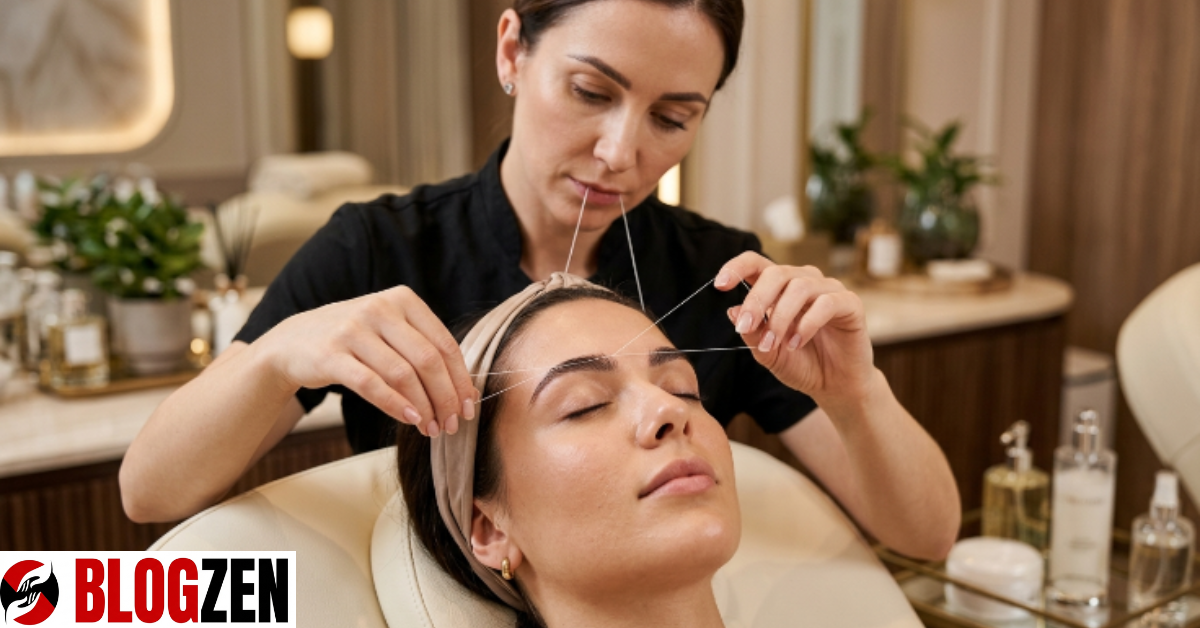
Threading is a method of hair removal that uses a thin, doubled-up cotton or polyester thread, twisted into a loop. The technician rolls this loop across the skin, catching and pulling hairs at the root simultaneously. Unlike waxing — which strips a layer of skin along with the hair — threading only contacts the hair itself. No chemicals, no heat, no adhesives.
The technique originated in ancient Persia and India, where it was used as a full-face grooming ritual. Today it’s had a global comeback, and for good reason: precision is impossible to replicate with wax. A skilled threader can remove individual hairs or clean entire rows in seconds, giving them a level of control that lets them sculpt an arch millimeter by millimeter.
Here’s what nobody tells you about why it matters more than ever: the rise of bold, defined brow trends — thick natural arches, straight “soap brows,” and feathered looks — all demand precision over bulk removal. Waxing was designed for broad-stroke hair removal. Threading was designed for sculpture. That’s a meaningful difference.
How Threading Eyebrows Actually Works (The Science Behind It)
Most people think threading is just “pulling hair with a string.” That description is technically accurate but completely misses what makes it effective. The thread is twisted into a spiral, and as the technician moves their hands apart and together, that spiral rotates rapidly. The rotating thread traps individual hairs between its fibers and extracts them from the follicle in one clean pull.
What happens at the root level
When hair is removed by threading, it’s pulled from the follicle — not broken at the surface like shaving. This means regrowth takes significantly longer, typically between 2 and 6 weeks depending on your hair growth cycle. Over time, with repeated threading, some clients notice that regrowth becomes finer because repeated extraction can weaken the follicle. This isn’t guaranteed, but it’s a commonly reported benefit that waxing shares too.
The thread’s angle matters enormously. A properly twisted thread held at a 45-degree angle can remove even short, stubborn hairs (as short as 1mm) that wax simply can’t grip. This is one reason threading works so well on facial fuzz and the small hairs near the brow tail that are notoriously difficult to manage.
Pro Tip Before your threading appointment, avoid applying any moisturizer, sunscreen, or makeup near the brow area. Oils and creams on the skin can make it harder for the thread to grip the hairs cleanly — and they increase the chance of skin irritation right after the session.
Think of it this way: waxing is like using a paint roller — fast, broad, effective. Threading is like using a fine-tipped brush. You’d never paint detail work with a roller, and you’d never choose a fine brush for covering large areas. Match the tool to the task.
Threading vs. Waxing vs. Tweezing: The Honest Comparison
People spend a lot of time debating which method is “best” — but the right answer depends on your skin, pain tolerance, budget, and goals. Here’s an honest breakdown so you can make an informed decision rather than just defaulting to whatever your salon offers.
| Method | Precision | Pain Level | Skin Irritation | Duration | Cost (avg) |
|---|---|---|---|---|---|
| Threading | ⭐⭐⭐⭐⭐ Highest | Moderate (2–4/10) | Very low — no skin contact | 2–6 weeks | $8–$20 |
| Waxing | ⭐⭐⭐ Moderate | Moderate–High (4–6/10) | Higher — strips skin layer | 3–6 weeks | $15–$35 |
| Tweezing | ⭐⭐⭐⭐ High | Low–Moderate (2–3/10) | Low — single hair at a time | 1–3 weeks | DIY / free |
| Laser | ⭐⭐⭐⭐ High | High (5–7/10) | Low — no mechanical contact | Permanent reduction | $100–$400+ |
The truth is, threading wins on the combination of precision and gentleness. For anyone with sensitive skin, rosacea, or skin prone to post-wax breakouts, threading is often the only method dermatologists recommend. The skin doesn’t get pulled, no adhesives touch it, and there’s no heat involved. That’s a meaningful safety advantage.
Common Mistakes People Make When Threading Eyebrows
Most people get eyebrow threading and still end up disappointed. Usually it’s not the technique at fault — it’s one of these very fixable errors that most guides never mention.
Mistake 1: Choosing a shape that doesn’t suit your face
The biggest threading mistake has nothing to do with the thread. People walk in with a screenshot of someone else’s brows and ask for that exact arch. The problem? Eyebrow shape is determined by bone structure, not preference. A high-arched brow that looks stunning on one face can look harsh or surprised on another. A good technician will measure your natural brow alignment against your eye socket before touching you — if yours doesn’t, you need to speak up or find someone who does.
Mistake 2: Threading over recently retinol-treated skin
Retinol and other exfoliating acids thin the outer layer of your skin — dramatically. Threading over retinol-prepped skin can actually cause skin to lift and tear, leaving small raw patches. Most dermatologists recommend stopping retinol use at least 3–5 days before any threading appointment. This includes prescription tretinoin, OTC retinol serums, and even some vitamin C formulas. Most people don’t know this until something goes wrong.
Mistake 3: Threading too frequently
Over-threading at short intervals prevents the brow from filling in and can create patchy, uneven density over time. Let your brows recover for a minimum of 3 weeks between sessions. If you’re constantly trying to clean up the edges, use a small pair of sharp tweezing tools between appointments rather than booking another full session.
Pro Tip Apply a cold compress or chilled aloe vera gel immediately after threading to calm redness and close the hair follicles. This reduces post-threading breakouts significantly — especially important for acne-prone skin. Avoid touching the threaded area for at least 2 hours after your appointment.
Step-by-Step Guide to Threading Eyebrows at Home
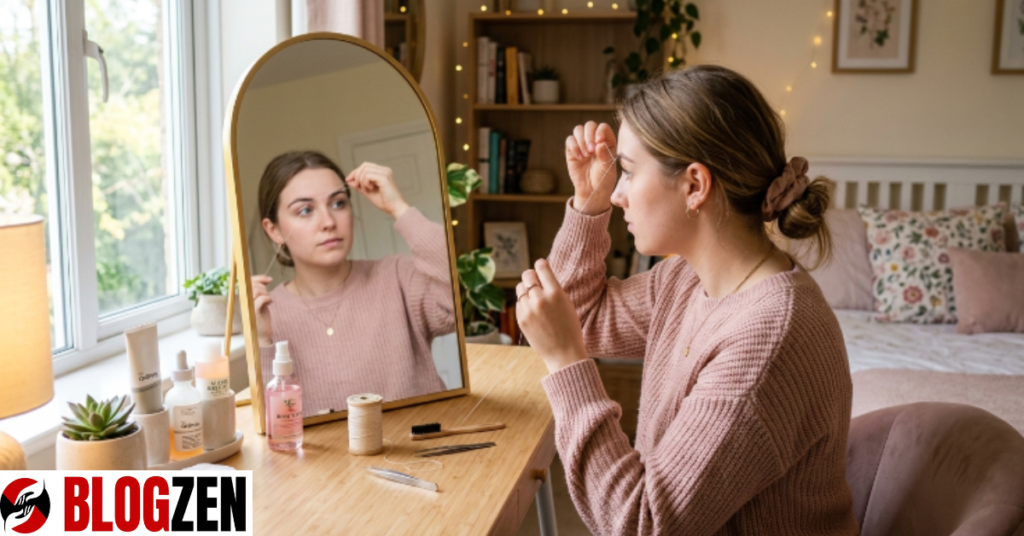
Professional threading is always preferred — the skill takes time to develop. But if you’re between appointments, need to clean up your brows, or simply want to learn, here’s how to do it properly. Don’t attempt a full reshape at home; stick to maintenance and cleanup.
What you’ll need: 12–18 inches of 100% cotton thread (not polyester — it snaps under tension), a mirror with good lighting, and clean, dry skin.
- Cut the thread
to about 16 inches and tie the ends together to form a loop. - Twist the loop
5–7 times in the center to create a figure-eight shape with a tight spiral in the middle. - Hold one loop
open with three fingers of one hand, and the other loop open with three fingers of your other hand. The twisted center section sits between them. - Practice the movement
open one hand while closing the other. The twist moves toward the closing hand. This is the core motion — master it before going near your skin. - Position the twistat the base of the hairs you want to remove. The spiral should be right at the skin surface.
- Move the thread
by opening your dominant hand and closing the other. The rotating spiral grabs hairs in the direction of movement. - Pull skin taut
with your non-dominant hand or use facial expressions (raise your eyebrows) to flatten the area being threaded. Loose skin leads to uneven pulls and pain. - Soothe immediately
with aloe vera gel or a cold compress once finished.
The learning curve is real. Your first attempt will likely feel awkward and slow — that’s normal. Most beginners need 4–6 practice sessions before the motion feels natural. Start on areas other than the main brow arch, like the space between the brows (the unibrow zone), where errors are easier to correct.
Expert Tips for Getting the Best Threading Results Every Time
These are the things experienced brow artists know that clients almost never ask about — but they make the entire difference in outcome.
Tell your technician which hairs to leave alone
Most threading clients stay completely silent during the process and then wonder why their brows look too thin. You are in control of the session. Point out any hairs you want kept, and ask the technician to pause before removing any hair from the brow body. Cleaning up stray hairs below the brow is standard; reshaping the upper edge requires your explicit agreement. Don’t assume they know your preferences.
Go to your appointment with grown-out brows
Threading works best on hairs at least 1–2mm long. If you’ve been tweezing obsessively or your brows are in an in-between growth phase, let them grow out for 2–3 weeks before booking. A good threader can’t define a shape they don’t have material to work with. The longer, the more control — for both you and the technician.
Pro Tip Take a photo of your eyebrows before every threading session and after — front-facing, with neutral expression. Over 6–12 months, this gives you a clear visual record of how your brow shape is evolving and whether it’s drifting too thin or asymmetric. It’s also invaluable to show new technicians what your “normal” looks like.
The post-threading care window matters
For 24 hours after threading, avoid direct sun exposure, swimming, heavy exercise (sweat can irritate open follicles), and any skincare products with active ingredients. Think of the 24 hours post-threading as a recovery window. Breaking these rules is the number one cause of post-threading folliculitis (small red bumps that look like acne).
Threading Eyebrows: Myths vs. Facts
There is more misinformation about eyebrow threading circulating than almost any other beauty topic. Let me clear up the ones that actually matter.
| Claim | Verdict | The Real Story |
|---|---|---|
| “Threading hurts more than waxing” | Myth | Pain is highly subjective, but threading typically rates lower than waxing because there’s no skin involvement. Waxing removes a thin layer of skin; threading does not. Most clients find threading a 2–4/10 pain level. |
| “Threading causes premature wrinkles from skin stretching” | Myth | Threading doesn’t stretch skin — it contacts only hair. The tautening that looks like stretching is just the technician flattening the area to get an even pull. No evidence links threading to wrinkle formation. |
| “Threading makes hair grow back thicker” | Myth | No hair removal method that works at the follicle level causes thicker regrowth. This myth likely comes from comparing hair removed at the root (which grows back with a tapered, soft tip) to shaved hair (which has a blunt edge). Threading, like waxing, produces soft regrowth. |
| “Only South Asian or Middle Eastern practitioners do it properly” | Myth | While threading has deep roots in those cultures, skill comes from practice — not ethnicity. Excellent threaders exist globally. Look for experience, technique, and portfolio, not background. |
| “Threading is unsafe for sensitive skin” | Fact-check | Actually the opposite is true. Threading is often recommended FOR sensitive skin precisely because no chemicals, adhesives, or heat are involved. However, if you have active acne or open skin in the brow area, threading that zone should be avoided until healed. |
The Bottom Line
Threading eyebrows is one of the oldest grooming techniques in human history — but it’s also one of the most misunderstood. Three things matter most: first, the shape comes before the session, not during it. Know what you want and communicate it clearly. Second, skin prep and aftercare determine 40% of your result — ignore the 24-hour recovery window and you’ll undo good work fast. Third, threading’s precision advantage is real, but only in experienced hands.
Whether you go to a professional or learn to thread at home, the investment pays off in brows that actually frame your face instead of fighting it. Defined, well-maintained eyebrows take years off your appearance and reduce the amount of makeup you need daily — and threading is the most reliable way to get there without chemical irritants or skin damage.
What’s your threading experience?Have you switched from waxing to threading — or the other way around? Drop a comment below and share what worked for you. And if you’re wondering which eyebrow shape actually suits your face structure, check out our guide on matching brow shape to face shape — it’s the next step most people skip that makes all the difference.
Your brows are the most expressive feature on your face. Treat them like it.
FAQs
How long does eyebrow threading last before you need to go back?
Threading eyebrows typically lasts 2–6 weeks, depending on your individual hair growth cycle. People with fast-growing hair may need a touchup at 3 weeks; others can wait up to 6 weeks before regrowth becomes noticeable. Hormonal changes, certain medications, and even diet can affect growth speed. During the first few threading sessions, you may find regrowth appears slightly faster as hair cycles sync up — this usually stabilizes after 3–4 sessions.
Is threading eyebrows safe during pregnancy?
Threading is generally considered one of the safest hair removal options during pregnancy because it uses no chemicals, heat, or adhesives. However, hormone-driven skin sensitivity tends to increase during pregnancy, meaning threading may feel more uncomfortable than usual. Many expectant mothers report that their pain threshold temporarily drops. Avoid threading if you have skin conditions that have worsened during pregnancy, and always let your technician know you’re pregnant so they can adjust pressure and technique.
Can threading eyebrows permanently remove hair over time?
Threading doesn’t cause permanent hair removal, but repeated sessions over months and years can weaken individual follicles, leading to progressively finer and lighter regrowth. Some long-term threading clients report noticeably thinner brow hair in areas that are regularly cleared. This is not guaranteed and varies by person. For actual permanent hair reduction, laser hair removal or electrolysis are the only clinically proven options — though neither is typically used on eyebrows due to the precise shaping required.
Does threading eyebrows hurt — and how do I minimize the pain?
Pain from threading eyebrows is usually rated 2–4 out of 10 — less intense than waxing for most people. To minimize discomfort:
- Schedule your appointment when you’re not premenstrual (pain sensitivity peaks then)
- Apply a numbing cream 20 minutes before if you’re very sensitive
- Keep skin clean and dry — no moisturizer before threading
- Take a few deep breaths and keep your face relaxed rather than tensing up
- Avoid caffeine beforehand — it can heighten skin sensitivity
What’s the difference between eyebrow threading and microblading?
Threading and microblading serve completely different purposes. Threading removes unwanted hair around the brow to define its shape and clean its edges. Microblading is a semi-permanent tattooing technique that adds hair-like strokes to the brow to fill in sparse areas or create entirely new brow shapes. Many people use both — threading to maintain the outline, microblading to add density. Microblading costs significantly more ($300–$800) and lasts 1–3 years; threading costs $8–$20 per session and requires regular maintenance.
How do I find a good eyebrow threading specialist?
The best threading specialists are usually found through word-of-mouth referrals rather than generic salon searches. Look for someone who asks about your face shape and brow goals before starting — not someone who just grabs the thread immediately. Check their portfolio for photos of different face shapes, not just a single client type. Avoid threading stands in malls where the turnover is high and experience varies wildly. A good threader will also explain what they’re doing and pause to get your feedback during the session.
