



QUICK ANSWER
The fastest muscle gain workout combines progressive overload, compound lifts, and strategic recovery. Train each muscle group 2x per week with 10–20 weekly sets, focus on 6–12 rep ranges, and eat in a modest calorie surplus. Most people who aren’t growing are skipping one of these three things.
INTRODUCTION
Most people who go to the gym for a year look almost identical to the day they started. That’s not a motivation problem — it’s a method problem.
A well-designed muscle gain workout isn’t just about sweating harder or spending more hours under a barbell. It’s a system built on specific stimuli, timed recovery, and progressive challenge that your muscles cannot ignore. And yet, the majority of gym-goers never learn this system. They copy random routines, skip the fundamentals, and wonder why the results never come.
Here’s what this article will give you: a complete breakdown of how muscle growth actually works, the training principles that elite coaches use, the common traps that kill progress, and a practical step-by-step plan you can start this week. Whether you’ve been training for three months or three years, something in here will change how you train — permanently.
1. What Is a Muscle Gain Workout — and Why Most People Define It Wrong
A muscle gain workout, also called hypertrophy training, is a structured resistance training program specifically designed to increase the size of muscle fibers. The word “hypertrophy” literally means the enlargement of an organ or tissue through the growth of its component cells — in this case, your muscle cells.
Here’s where most people go wrong immediately: they think any workout that makes them sore or tired is a muscle gain workout. It isn’t. Running until you collapse builds cardiovascular endurance. Lifting heavy for one rep builds neural strength. Neither of those is the primary driver of muscle size. Hypertrophy requires a very specific combination of volume, intensity, and mechanical tension.
Why does this matter today? Because we’re living in an era where fitness content is everywhere — YouTube, TikTok, Instagram — and almost none of it is organized around your individual training age, recovery capacity, or actual goals. Knowing what a true muscle gain workout looks like is the first filter that separates people who build impressive physiques from people who just stay busy.
Pro Tip: If your workout program doesn’t have a clear method for adding more weight or more reps over time, it is not designed for muscle gain — regardless of how intense it feels.
2. How Muscle Growth Actually Works (The Science, Made Simple)
Let me explain why this matters. When you lift weights, you create microscopic damage in muscle fibers. Your body responds to this damage by sending satellite cells — the muscle’s repair crew — to patch and reinforce the fibers, making them slightly thicker than before. Do this repeatedly over time, with increasing challenge, and you get bigger muscles.
There are three primary mechanisms that drive hypertrophy, identified by Dr. Brad Schoenfeld, one of the leading researchers in muscle growth science:
- Mechanical Tension — The force your muscles generate under load. This is the most important driver. Lifting challenging weights through a full range of motion creates the most tension.
- Metabolic Stress — The “pump” sensation from blood pooling in muscles during high-rep sets. Think isolation exercises like curls and leg extensions. It plays a secondary role.
- Muscle Damage — The soreness you feel 24–48 hours after training. More isn’t always better; excessive damage delays recovery without proportional growth.
The sweet spot for muscle gain sits in the 6–12 rep range at 65–80% of your one-rep maximum. Research from McMaster University found that muscle protein synthesis — the process that builds new muscle — peaks for roughly 24–36 hours after a training session, which is why training frequency matters as much as intensity.
3. The Most Common Mistakes That Stall Muscle Gain (And Nobody Talks About)
Most people get this completely wrong — and it costs them months, sometimes years, of wasted training.
Mistake #1: Chasing soreness instead of progress. Soreness is a side effect of novel stimulus, not a marker of an effective workout. Doing the same workout indefinitely just makes you more efficient at it — not bigger. You need progressive overload.
Mistake #2: Neglecting training volume. Volume — total sets × reps × weight — is the primary driver of long-term hypertrophy. Research consistently shows that 10–20 weekly sets per muscle group is the productive range for most intermediate trainees. Many people do 3–4 sets of chest once a week and wonder why their chest doesn’t grow.
Mistake #3 is the sneaky one: training hard but recovering poorly. Muscle is built outside the gym — during sleep and rest. If you’re sleeping under 7 hours, undereating protein, and training 6 days a week with no deload, you’re in a constant state of partial breakdown. You’re generating the stimulus for growth but never creating the conditions for it.
The truth is: your program doesn’t have to be perfect. But it does have to be consistent, progressive, and allow for recovery. Remove one of those three pillars and growth slows to a crawl.
Pro Tip: Track your lifts every session. Not obsessively — just enough to know if you added a rep or 2.5 lbs to a lift this week compared to last. That data is your clearest signal that your muscle gain workout is working.
4. Expert Tips and Proven Strategies From Top Strength Coaches
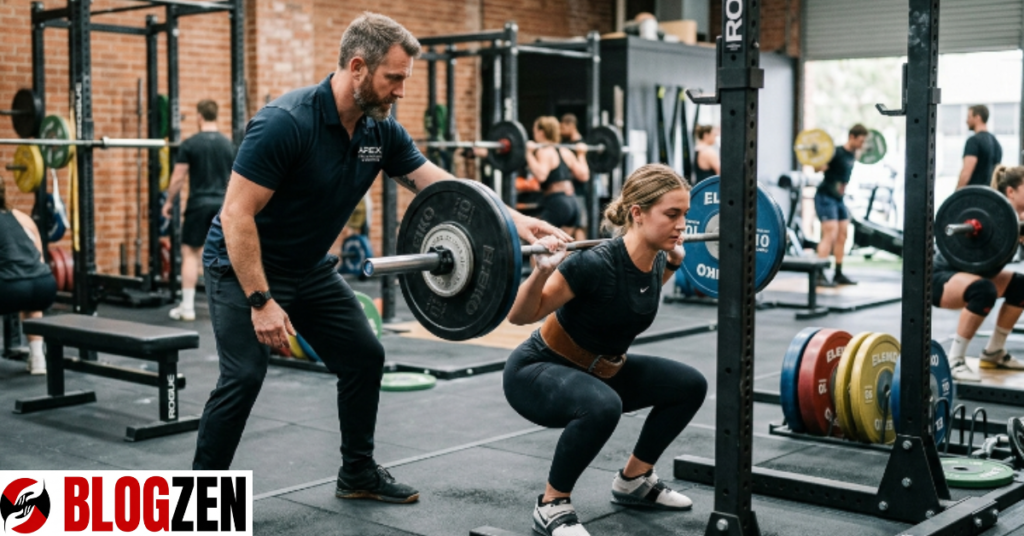
The best muscle gain strategies aren’t secrets — they’re just consistently applied principles that most people lack the patience to follow.
Lead with compound lifts. Coaches like Eric Helms and Mike Israetel — both holding PhDs in exercise science — structure programs around the squat, deadlift, bench press, overhead press, and row. These movements recruit the most muscle mass simultaneously, producing the highest anabolic hormone response. Isolation work comes after, not instead.
Use a split that matches your recovery. Here’s a breakdown of the most effective training splits for muscle gain:
| Training Split | Best For | Weekly Frequency Per Muscle |
|---|---|---|
| Upper/Lower | Beginners–Intermediate | 2x |
| Push/Pull/Legs (PPL) | Intermediate | 2x |
| Full Body | Beginners | 2–3x |
| Bro Split (Chest Day, etc.) | Advanced only | 1x |
The upper/lower split is the most universally effective starting point. It hits every muscle group twice per week, matches the protein synthesis window, and allows enough recovery between sessions.
Don’t neglect mind-muscle connection. A 2018 study published in the European Journal of Applied Physiology found that deliberately focusing on the target muscle during an exercise significantly increased muscle activation compared to focusing on moving the weight. Thinking about your bicep during a curl isn’t “gym bro nonsense” — it’s evidence-based technique.
5. Real-World Example: How a Beginner Gained 18 lbs of Muscle in 12 Months
Here’s a scenario that plays out more often than most fitness media admits.
Marcus, a 28-year-old software developer, had been going to the gym 4 days a week for 18 months with almost nothing to show for it. He was doing a different workout he found online every week, training to failure every session, and eating “whatever felt right.” When he finally committed to a structured program — an upper/lower split with progressive overload, 160g of daily protein, and a consistent 300-calorie surplus — something changed.
In 12 months, Marcus gained 18 lbs on the scale while keeping his body fat roughly stable. His bench press went from 135 lbs to 225 lbs. His back went from flat to visibly developed. The workouts were simpler than anything he’d done before — but they had direction.
The point isn’t the specific numbers. The point is that structure, consistency, and basic nutritional support achieved in one year what two years of random training couldn’t. This is what a real muscle gain workout plan does when it’s followed correctly.
Pro Tip: Beginners can often gain 1–2 lbs of muscle per month in the first year of structured training. After that, the rate slows to 0.5–1 lb per month for intermediates. Set realistic expectations or you’ll quit when you shouldn’t.
6. Your Step-by-Step Muscle Gain Workout Plan (Start This Week)
Here’s a proven upper/lower structure you can implement immediately. Run this 4 days per week — Upper A, Lower A, rest, Upper B, Lower B, rest, rest.
Upper A — Strength Focus
- Barbell Bench Press — 4 sets × 6 reps (heavy)
- Barbell Row — 4 sets × 6 reps
- Incline Dumbbell Press — 3 sets × 10 reps
- Lat Pulldown — 3 sets × 10 reps
- Lateral Raises — 3 sets × 15 reps
- Bicep Curls — 2 sets × 12 reps
Lower A — Strength Focus
- Squat — 4 sets × 6 reps
- Romanian Deadlift — 3 sets × 8 reps
- Leg Press — 3 sets × 12 reps
- Leg Curl — 3 sets × 12 reps
- Calf Raises — 4 sets × 15 reps
Upper B — Hypertrophy Focus — Same movements, drop weight by 10–15%, increase reps to 10–15 per set.
Lower B — Hypertrophy Focus — Same approach as Upper B.
The key rule: every week, add either a rep or a small amount of weight to at least two exercises. That’s progressive overload in practice. It doesn’t sound dramatic, but compounded over 52 weeks, it produces dramatic results.
7. Muscle Gain Workout Myths You Need to Stop Believing Right Now
The fitness industry is full of myths that waste your time and money. Let’s cut through them.
Myth: You need to lift every day to maximize gains. False. Muscles grow during rest, not during the workout. Training a muscle group more than twice per week offers rapidly diminishing returns for most people. Rest days aren’t laziness — they’re part of the program.
Myth: High reps tone, low reps bulk. This is one of the most persistent fitness myths alive. “Toning” is not a physiological process. What people call toned is simply having visible muscle with low body fat. Both low reps (heavy) and high reps (lighter) build muscle. The total volume and the caloric environment determine size.
Myth: Supplements are necessary for muscle gain. Creatine monohydrate is the only supplement with strong, consistent evidence for improving strength and muscle mass — and it costs about $15 for a month’s supply. Protein powder is just food in powder form. Every other supplement is optional at best, a waste of money at worst. Food, sleep, and training are the non-negotiables.
Here’s my personal observation from years of following the fitness industry: the products that promise to transform your physique in 30 days are always selling something. Real muscle building is measured in years, not weeks — but the compound results are extraordinary.
Pro Tip: Before adding any supplement, ask this: “Is my training progressive? Is my protein intake above 0.7g per pound of bodyweight? Am I sleeping 7–9 hours?” If any answer is no, fix that before spending money on supplements.
CONCLUSION
Three things separate people who build real muscle from people who spin their wheels forever: progressive overload applied consistently, sufficient training volume spread across the week, and recovery taken as seriously as the training itself.
Your muscle gain workout doesn’t need to be complicated. It needs to be structured, tracked, and executed with patience. The gym is not a place where effort alone wins — it’s a place where smart, directed effort compounds into results that would genuinely shock the person you were a year ago.
Start with the upper/lower plan above. Track every session. Eat your protein. Sleep your 8 hours. Then do it again next week, slightly heavier or with one more rep.
What’s the biggest thing stopping you from building the physique you want right now — your training, your nutrition, or your consistency? Drop a comment below. And if you want to go deeper, check out our related article on optimizing your diet for muscle growth — because training without nutrition is like building a house with no cement.
The results are waiting. All that’s missing is the right system — and now you have it.
FAQs
How many days a week should I do a muscle gain workout?
Most research points to training each muscle group 2 times per week as the sweet spot for hypertrophy. For most people, that means 4 training days per week using an upper/lower split. Training more frequently is possible for advanced lifters but requires careful programming to avoid overtraining. Beginners can see excellent results with just 3 full-body sessions per week before graduating to a 4-day structure.
How long does it take to see results from a muscle gain workout?
Beginners typically notice visible changes in muscle size and definition within 8–12 weeks of consistent structured training. Strength improvements come faster — often within 2–4 weeks — driven largely by improved neuromuscular efficiency before actual muscle tissue grows. Realistic expectations: 1–2 lbs of actual muscle per month in year one. Progress slows as you advance, but visual impact often increases because you have more muscle to show.
What should I eat around my muscle gain workout?
Nutrition timing matters less than total daily intake, but here’s an effective approach: consume a protein-rich meal 1–2 hours before training and within 2 hours after. Focus on hitting these daily targets:
- Protein: 0.7–1g per pound of bodyweight
- Calorie surplus: 200–400 calories above maintenance
- Carbohydrates: prioritize around training for energy
- Hydration: at least 3 liters of water daily
Total daily nutrition quality outweighs any specific timing strategy by a wide margin.
Can women follow the same muscle gain workout as men?
Yes — and they should. The physiological mechanisms of hypertrophy are identical between men and women. Women won’t “bulk up accidentally” because they have roughly 15–20 times less testosterone than men, making significant mass gain much harder. Women who train for muscle gain typically develop a lean, defined physique. The same progressive overload principles, rep ranges, and split structures apply equally to both sexes.
Is cardio bad for muscle gain workouts?
Cardio isn’t the enemy — excessive cardio without adequate caloric compensation is. Low-to-moderate cardio (2–3 sessions of 20–30 minutes per week) actually supports muscle gain by improving cardiovascular efficiency, heart health, and recovery. The concern is when cardio creates a calorie deficit that undermines muscle protein synthesis. Keep cardio moderate, eat to compensate, and schedule it after resistance training or on separate days.
What’s the difference between a muscle gain workout and a strength training workout?
While they overlap significantly, the goals and programming differ in key ways. Strength training prioritizes your 1-rep max — the maximum weight you can lift once — and uses lower rep ranges (1–5 reps) with longer rest periods (3–5 minutes). Muscle gain workouts prioritize tissue volume and focus on 6–15 reps with moderate rest (60–90 seconds). Strength training makes you better at expressing force; hypertrophy training makes the muscle larger. Most effective programs blend both.
