



QUICK ANSWER
Fever in babies under 1 year requires immediate medical evaluation if temp is 100.4°F (38°C) or higher rectally. Most fevers are the body fighting infection, but newborns can’t regulate temperature well yet. Always call your pediatrician first—don’t rely on home treatment alone for infants this young. A fever itself isn’t dangerous; how you respond is.
INTRODUCTION
Your 4-month-old feels warm. You grab the thermometer with shaking hands. The reading is higher than normal, and panic floods your chest. You’re not alone—more than 60% of parents report feeling anxious when their baby has a fever for the first time.
Here’s what nobody tells you: fever in babies under 1 year is different from older children. The stakes feel higher because they are. A baby’s immune system is still learning how to fight infections, which means a fever could signal something serious that needs immediate attention. But at the same time, not every fever is an emergency.
The difference between knowing what to do and panicking comes down to understanding three critical things: what normal is, what actually requires a doctor’s call, and which home management strategies are actually safe for fragile newborns and young infants.
By the end of this article, you’ll know exactly when to stay calm and when to act fast—so you can protect your baby and avoid both dangerous delays and unnecessary ER visits.
What Is Fever in Babies Under 1 & Why It Matters Today
A fever is your baby’s immune system’s way of fighting infection. When bacteria, viruses, or other invaders enter the body, the brain’s temperature control center raises the thermostat to make the environment less comfortable for germs. It sounds counterintuitive, but fever is actually protective.
Here’s what’s different about babies under 1 year: their immune systems are immature. They don’t have the same fever-fighting reserves that older children do. A virus that causes a 101°F fever in a 3-year-old might manifest differently in a 6-month-old. More importantly, your infant can’t tell you where it hurts or how they feel. You’re flying blind with only a thermometer to guide you.
This is why fever in babies under 1 year is treated more seriously by pediatricians. It’s not because fever itself is inherently dangerous—it’s because your baby can’t communicate, and serious infections can progress quickly without clear early warning signs.
Pro Tip: The age of your baby matters enormously. Babies under 3 months require different protocols than babies 3-12 months. If your baby is under 3 months and has any fever, that’s an automatic call to the pediatrician, no exceptions.
Normal Temperature vs Fever: The Real Numbers
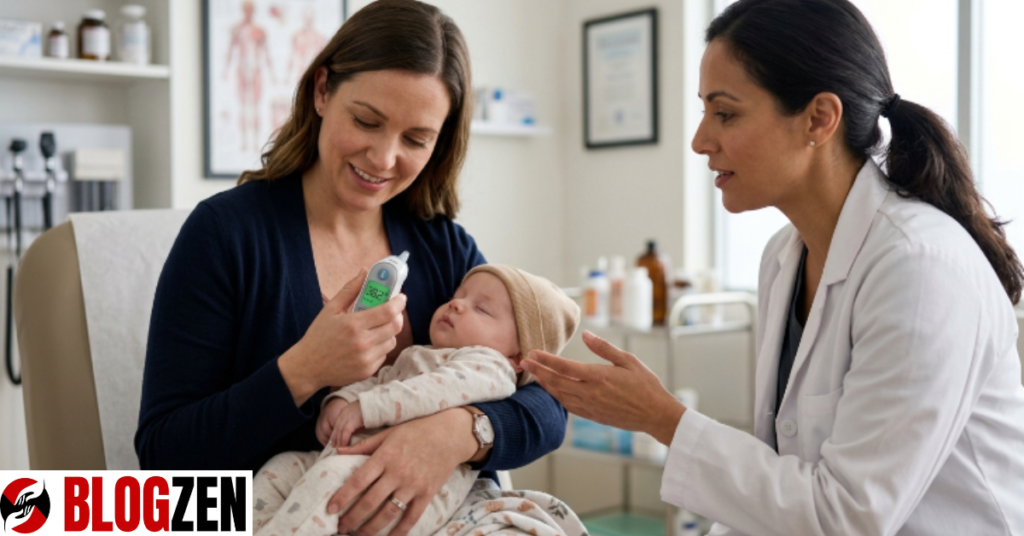
Parents often get confused about what “normal” means for babies. The answer isn’t a single number—it’s a range, and the range changes depending on how you measure temperature.
Rectal temperature (most accurate for babies under 1 year): Normal is 97°F to 100.3°F. Fever is 100.4°F (38°C) or higher.
Axillary temperature (under the arm): Normal is 94.5°F to 99.1°F. A fever reading might be lower and less reliable than rectal.
Temporal artery thermometer (forehead): These are convenient but less accurate in infants under 3 months. They can miss low-grade fevers.
Oral temperature: Don’t use this until your child is at least 4-5 years old. Babies move around too much, and it’s unsafe.
The confusion here is real. A 99.5°F reading under the arm might be normal, or it might indicate a fever if measured rectally (the gold standard for accuracy). Many parents don’t realize this, which leads to either ignoring a real fever or treating a normal temperature as a medical emergency.
The critical distinction: A 99.8°F temperature is not a fever. A 100.4°F temperature is. That 0.6-degree difference matters enormously in infants because pediatricians use it to decide whether to recommend observation or immediate evaluation.
What Causes Fever in Infants (Beyond Teething)
Here’s what every parent hears: “Oh, baby’s teething. That causes fevers.” This is partly true and dangerously misleading. Yes, teething can cause a slight elevation in temperature, but it doesn’t cause a fever of 101°F or higher. If someone tells you teething explains your baby’s high fever, they’re giving you bad information.
Common causes of fever in babies under 1 year:
Viral infections (most common): Cold viruses, RSV, rotavirus. These are usually self-limiting but require monitoring.
Bacterial infections: Urinary tract infections, ear infections, bacterial pneumonia. These require antibiotics.
Immunizations: Babies often develop a mild fever within 24-48 hours of getting vaccinated. This is actually a sign the vaccine is working.
Environmental overheating: A baby in an overheated room or wrapped in too many blankets might develop a low-grade fever. Remove layers and cool down the environment.
Teething: Minor elevation only (99.5°F maximum, according to pediatric literature). If it’s higher, something else is happening.
The problem is that you can’t diagnose the cause just by looking at your baby or taking their temperature. A fever of 102°F could be a harmless cold virus—or it could be a urinary tract infection that needs treatment today. This is why doctors need to evaluate your baby, not just give you home care advice.
Pro Tip: Keep a record of when the fever started, how high it went, and what other symptoms appeared (rash, cough, vomiting, diarrhea). This information helps your pediatrician narrow down the cause during an examination.
4. When to Call the Doctor: The Red Flags Every Parent Must Know
This is where anxiety and knowledge collide. You need to know the exact moment when home monitoring isn’t enough.
Call your pediatrician IMMEDIATELY if:
Your baby is under 3 months old AND has a rectal temperature of 100.4°F or higher. This is automatic. No “wait and see.” No home remedies. Call now.
Your baby is 3-6 months old with a fever above 101°F.
Your baby is any age under 1 year and shows these symptoms alongside fever:
- Difficulty breathing or shortness of breath
- Unusual lethargy or extreme sleepiness (won’t wake up normally)
- Rash that doesn’t blanch (doesn’t turn white when pressed)
- Persistent vomiting or refusal to eat
- Severe diarrhea or signs of dehydration (dry lips, no tears, fewer wet diapers)
- Inconsolable crying or unusual irritability
- Stiff neck or arched back
- Seizures
The fever itself isn’t what makes these emergencies. It’s the combination. A fever plus a purple rash is an emergency. A fever plus extreme sleepiness is an emergency. A fever plus difficulty breathing is an emergency.
If you’re unsure, call anyway. There’s no penalty for being wrong. Pediatricians expect these calls. That’s literally their job. Better to call and be reassured than to miss something serious because you hesitated.
Five Safe Ways to Manage Baby Fever at Home (After Calling the Doctor)
After your pediatrician has evaluated your baby and determined the fever isn’t from a serious infection, you might be told to manage it at home. Here’s what actually works—and what doesn’t.
Method 1: Medication (If Recommended)
Acetaminophen (Tylenol) and ibuprofen (Motrin/Advil) are the only fever-reducing medications recommended for babies. But here’s the critical part: don’t give them unless your doctor says it’s appropriate.
Some pediatricians actually recommend not treating mild fevers, letting the body do its job. Others suggest medication for comfort. The difference depends on your baby’s specific situation.
If you do use medication, follow the dosage chart on the bottle precisely. Dosage is based on weight, not age. A 6-month-old who weighs 20 pounds needs a different dose than a 6-month-old who weighs 16 pounds. Overdosing happens when parents eyeball it or give both medications at once.
Never give aspirin to a baby under 1 year (actually, not under 18 years). The risk of Reye’s syndrome is real, even though it’s rare.
Method 2: Dress Down and Cool the Room
Babies regulate temperature partly through the skin. If your baby is bundled in heavy sleep sacks during a fever, you’re essentially trapping heat. Remove extra blankets. Dress your baby in lightweight clothing. Keep the room temperature comfortable (68-72°F).
Don’t use cold baths or ice packs. This causes shivering, which actually raises core body temperature further. You want gentle cooling, not shocking the system.
Method 3: Keep Hydration Flowing
Fever causes fluid loss through sweating and breathing. Your baby needs extra fluids—breast milk, formula, or if over 6 months, water. If your baby refuses to drink, this is a red flag. Dehydration combined with fever is a real concern.
Watch for signs of dehydration: fewer wet diapers, dry mouth, lack of tears, sunken fontanelle (soft spot on head).
Method 4: Monitor Temperature Trends, Not Single Readings
A single 102°F reading tells you less than the pattern. Is the fever staying around 101-102°F, or is it climbing to 104°F? Is it responding to medication (dropping 1-2 degrees), or staying stubbornly high? Is your baby having fever-free periods?
A fever that shoots up to 104°F and won’t come down suggests a different problem than one that stays at 101°F. Patterns matter more than snapshots.
Method 5: Maintain Normal Contact and Comfort
The worst thing you can do during a fever is isolate your baby. Hold them, comfort them, keep them close. Gentle rocking, skin-to-skin contact (if you’re not sick), and your presence are powerful soothing tools.
Babies with fever often want to sleep more. Let them. Sleep helps the immune system fight infection.
Pro Tip: If your baby has a fever and refuses to eat, don’t force it. Focus on hydration first. Most babies resume eating within a day or two as the fever improves.
Common Mistakes Parents Make with Infant Fever
Understanding what not to do can save you from panic and potentially harmful decisions.
Mistake #1: Trusting Your Hand to Detect Fever
Your hand feels warm when you have a fever. But it’s incredibly unreliable for babies. A stressed baby feels warm. A baby in a warm room feels warm. Only a thermometer gives you accurate information. Don’t guess.
Mistake #2: Using Outdated or Unreliable Temperature Methods
Glass thermometers work but are breakable. Temporal thermometers are convenient but inconsistent. Ear thermometers don’t work well under 3 months. The rectal thermometer is less fun, but it’s the gold standard for accuracy in babies under 1 year.
Mistake #3: Alternating Acetaminophen and Ibuprofen to “Cover All Bases”
This is so common. Parents think that alternating medications every 2 hours will work better. It won’t. It actually increases overdose risk. Pick one medication and use it according to the schedule. If that’s not working, call your doctor—don’t self-adjust.
Mistake #4: Panicking Over the Number Instead of Your Baby
A fever of 103°F sounds terrifying. But a happy, playful baby with a 103°F fever might be fine. Meanwhile, a lethargic baby with a 101°F fever might need urgent evaluation. How your baby behaves matters more than what the thermometer says.
Mistake #5: Delaying the Doctor Call Because “I’ll Check Again in the Morning”
Infections move fast in babies. “I’ll monitor overnight” is a gamble you shouldn’t take. Call your pediatrician even at 2 AM if your baby is under 3 months with a fever. There’s an on-call service for a reason.
Mistake #6: Assuming Fever Means Infection
Teething, overheating, reactions to vaccinations, and inflammatory conditions can cause fever. Not every fever is an infection. Your doctor will determine the cause.
Myths vs Facts: What Parents Get Wrong About Baby Fever
MYTH: “Fever will cause brain damage.”
FACT: Fever itself doesn’t cause brain damage. Temperatures would need to reach 107-108°F to damage brain tissue, which doesn’t happen from normal fever. Febrile seizures (convulsions from fever) happen in 2-5% of children, look terrifying, but don’t cause permanent harm.
MYTH: “You should always bring fever down as quickly as possible.”
FACT: Fever is your baby’s defense mechanism. Bringing it down immediately might actually slow recovery. The goal is comfort, not a “normal” temperature reading.
MYTH: “Bathing in lukewarm water will break the fever.”
FACT: Lukewarm baths don’t actually reduce core body temperature meaningfully. They’re uncomfortable and can cause shivering, which raises temperature further.
MYTH: “Teething always causes high fever.”
FACT: Teething causes minimal temperature elevation (under 99.5°F). A fever above 100.4°F during teething has a different cause.
MYTH: “If fever doesn’t respond to medication, you need antibiotics.”
FACT: Antibiotics kill bacteria, not viruses. Most fevers in babies are viral and resolve on their own in 3-5 days. A doctor has to diagnose the cause first.
MYTH: “All fevers are dangerous.”
FACT: Fever is a symptom, not a disease. It’s your baby’s body working correctly. The danger depends on the underlying cause, not the fever itself.
COMPARISON TABLE: When to Act (Quick Reference)
| Baby Age | Fever Threshold | Action | Urgency |
|---|---|---|---|
| Under 3 months | Any fever 100.4°F+ | Call pediatrician immediately | URGENT |
| 3-6 months | 101°F or higher | Call pediatrician same day | HIGH |
| 6-12 months | 103°F+ without symptoms | Monitor, call if increases | MEDIUM |
| Any age, any temp | + rash, difficulty breathing, lethargy | Emergency room now | CRITICAL |
CONCLUSION
Managing fever in babies under 1 year boils down to three non-negotiable rules: (1) Measure temperature accurately with a rectal thermometer; (2) call your pediatrician immediately if your baby is under 3 months with any fever or if your baby shows warning signs; and (3) focus on comfort and hydration at home, not on bringing the temperature down.
Your instinct to panic when your baby has a fever is normal—it means you care. But panic leads to mistakes. Knowledge leads to the right decisions.
The moment you feel that hot forehead, grab the thermometer, get an accurate reading, and pick up the phone. That simple action—calling instead of guessing—protects your baby better than any home remedy ever could.
Your next step: Save your pediatrician’s phone number in your contacts now. Program the after-hours nurse line too. When fever strikes, you won’t have to search for it.
FAQs
At what temperature is fever dangerous in babies under 1 year?
Fever itself isn’t inherently dangerous—the underlying cause is what matters. However, pediatricians treat any fever above 100.4°F rectally in babies under 3 months as potentially serious and require immediate evaluation. For babies 3-12 months, fever above 101°F warrants same-day contact with your doctor. A fever of 104°F or higher requires urgent evaluation regardless of age. The real danger appears when fever comes with other symptoms like difficulty breathing, unusual lethargy, rash, or vomiting. Temperature alone doesn’t determine urgency—your baby’s overall behavior and other symptoms do.
Can I use a forehead thermometer for babies under 1 year?
Forehead thermometers (temporal artery thermometers) are less accurate in babies under 3 months because of their developing circulation. They’re convenient but can miss low-grade fevers or give false readings. For babies under 1 year, a rectal thermometer remains the gold standard for accuracy. If you prefer not to use rectal, underarm (axillary) thermometers are second-best, though they read about 1 degree lower than rectal. Ear thermometers don’t work well until 6 months. Whatever method you choose, consistency matters—use the same method each time so you can track trends accurately.
Should I give my baby fever medicine before calling the doctor?
No. Call first, get medical advice, then give medication if recommended. Fever-reducing medication masks the symptom, making it harder for your doctor to assess how serious your baby’s condition is. If your pediatrician says the fever is from a virus and recommends medication for comfort, use it then. But don’t self-treat a fever in a baby under 1 year without professional guidance first. That phone call takes 5 minutes and could prevent a serious mistake.
Is there a difference between formula-fed and breastfed babies when they have fever?
Breastfed babies have immune advantages due to antibodies in breast milk, which might help them fight certain infections. However, when fever does occur, the management is identical regardless of feeding method. Both need accurate temperature measurement, immediate evaluation if they meet fever thresholds, and the same home care protocols. If your baby is refusing to breastfeed or bottle-feed due to fever, this is concerning and warrants a call to your pediatrician—possible feeding refusal can lead to dehydration.
Can fever cause seizures in babies under 1 year, and how do I prevent them?
Febrile seizures (convulsions triggered by rapid temperature rise) can happen in babies under 3 years, occurring in about 2-5% of children. They look terrifying but don’t cause brain damage or permanent harm. You can’t prevent them by aggressively treating fever—seizure risk depends on your child’s genetic predisposition, not how quickly you bring the temperature down. If your baby has a seizure, stay calm, keep them on their side, and call 911. Don’t try to put anything in their mouth or restrain them. Most febrile seizures last 1-2 minutes and stop on their own.
How long does fever typically last in babies under 1 year, and when should I worry about it?
Most viral fevers in babies resolve within 3-5 days as the immune system clears the infection. Some last up to a week. A fever lasting longer than 5-7 days without improvement, or one that returns after seeming to resolve, warrants follow-up with your pediatrician—it might indicate a secondary bacterial infection. Bacterial infections (like urinary tract infections) sometimes present as persistent fever without other obvious symptoms in babies, which is why ongoing monitoring matters. Never assume a long-lasting fever is “just a virus”—get it checked if it persists.
