



Introduction
Christopher McDonald has spent more than four decades building one of the most recognisable character-actor careers in American film and television. Ask any cinema fan to name the arrogant, ponytailed golfer from a beloved 1990s comedy, and Christopher McDonald’s face is likely the first thing that comes to mind. Yet reducing his career to a single role would be a disservice to an actor whose range stretches from gritty drama to sharp-witted comedy and prestige television. This article explores who Christopher McDonald is, how his career began, the roles that defined him, and why audiences continue to appreciate his work today.
Who Is Christopher McDonald
Christopher McDonald is an American actor born on 15 February 1955 in New York City. Raised in a household that valued education and the arts, he later trained formally as a performer, honing the craft that would eventually take him from regional stages to some of Hollywood’s biggest productions. Christopher McDonald’s early exposure to New York’s cultural energy shaped a versatile performer capable of moving comfortably between comedy, drama, and everything in between.
Long before Christopher McDonald became a household name, he pursued serious dramatic training. He studied at the Yale School of Drama, one of the most respected acting programmes in the United States, where many of his generation’s most disciplined performers were educated. That foundation gave Christopher McDonald a technical grounding that set him apart from actors who relied purely on natural charisma, and it shows in the consistency of his performances across genres.
Early Career and Breakthrough
Christopher McDonald’s screen career began modestly in the late 1970s and early 1980s with television appearances and smaller film roles. He gradually built a body of work through guest spots on established series, using each opportunity to sharpen his timing and screen presence. This slow, steady climb is a hallmark of many respected character actors, and Christopher McDonald followed that path with patience and consistency.
The turning point came in 1991, when Christopher McDonald appeared in Ridley Scott’s Thelma & Louise, one of the most talked-about films of the decade. Playing a supporting but memorable role in a film that became a cultural touchstone, Christopher McDonald demonstrated his ability to hold his own alongside major stars. That exposure opened doors to bigger and more varied projects throughout the 1990s.
The Role That Defined a Generation
No discussion of Christopher McDonald is complete without mentioning Happy Gilmore. In 1996, he took on the role of Shooter McGavin, a smug, calculating professional golfer who becomes the film’s chief antagonist. The performance became an instant comedy classic, and Christopher McDonald’s portrayal turned what could have been a one-dimensional villain into a genuinely entertaining and quotable character. Decades later, Shooter McGavin remains one of the most referenced comedic characters in modern film, and Christopher McDonald is still closely associated with the role by fans across generations.
The lasting popularity of Happy Gilmore introduced Christopher McDonald to a much wider audience than his earlier dramatic work had reached. It also demonstrated his comedic timing, proving that his talents extended well beyond serious drama and into sharp, character-driven comedy.
Range Across Film and Television
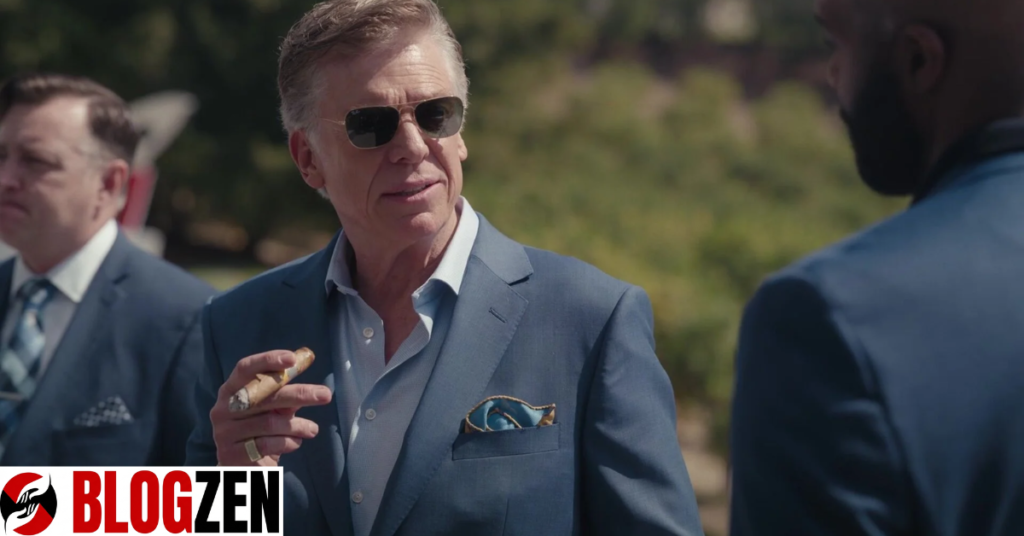
While Happy Gilmore brought mainstream recognition, Christopher McDonald’s filmography reveals an actor unwilling to be typecast. In 1997, he took on the role of Ward Cleaver in the film adaptation of Leave It to Beaver, bringing a classic television father figure to the big screen. That same era saw Christopher McDonald lending his voice to animated projects, including a memorable villain role in The Iron Giant, showcasing yet another dimension of his craft.
Christopher McDonald also proved his dramatic range in Requiem for a Dream, a critically acclaimed film known for its unflinching portrayal of addiction. His performance in that project stood in stark contrast to his comedic work, reinforcing his reputation as a genuinely versatile actor. He continued this trend by playing baseball broadcaster Mel Allen in the HBO film 61*, a project that further highlighted his ability to inhabit real historical figures with authenticity.
Television has been just as important to Christopher McDonald’s career as film. He has appeared in prestige series including Boardwalk Empire, a critically celebrated period drama, as well as The Good Wife and Ballers, where he took on a recurring role connected to professional sports team ownership. Across every one of these projects, Christopher McDonald has shown a consistent ability to adapt his performance style to suit the tone of the production, whether that means restrained drama or heightened comedy.
A Career Built on Consistency
What sets Christopher McDonald apart from many of his peers is sheer longevity. With more than two hundred acting credits spanning film, television, and voice work, Christopher McDonald has maintained a working actor’s career for over four decades. That level of consistency is rare in an industry known for unpredictable cycles of fame, and it speaks to both his professionalism and his adaptability.
Christopher McDonald has also embraced newer forms of media later in his career, taking on a role in a digital series distributed through streaming platforms. This willingness to work across evolving formats, rather than relying solely on traditional film and television, illustrates how Christopher McDonald has stayed relevant as the entertainment industry itself has transformed.
Public Perception and Legacy
Christopher McDonald occupies a distinctive place in popular culture. He is not a leading man in the traditional Hollywood sense, but a defining example of the character actor whose supporting performances often become more memorable than the films’ central plots. Audiences may not always know his name immediately, yet the moment Shooter McGavin’s smirk appears on screen, recognition is instant.
This kind of legacy, built on unforgettable characters rather than tabloid fame, has given Christopher McDonald a level of respect within the industry that many higher-profile actors never achieve. Directors and casting teams have consistently turned to him for roles that require a blend of confidence, comic timing, and dramatic credibility, a combination that is genuinely difficult to find in a single performer.
Why Christopher McDonald Still Matters Today
Even as new generations of actors emerge, Christopher McDonald’s earlier work continues to find fresh audiences through streaming platforms and social media clips, particularly scenes from Happy Gilmore that circulate widely online. This ongoing digital rediscovery has introduced Christopher McDonald to viewers who were not even born when the film was first released, extending his relevance well beyond the era in which he became famous.
His career also serves as a useful case study for aspiring actors. Christopher McDonald’s trajectory shows that a formal training background, combined with a willingness to take varied roles rather than chasing a single type of stardom, can lead to a long and stable career. Rather than fading after one breakout role, Christopher McDonald continued working steadily, proving that versatility often outlasts fleeting fame.
Conclusion
Christopher McDonald’s career is a masterclass in longevity, versatility, and craft. From his classical training and early television appearances to his breakout in Thelma & Louise and his iconic turn as Shooter McGavin in Happy Gilmore, Christopher McDonald has built a body of work that spans comedy, drama, and prestige television. His willingness to embrace diverse roles, rather than settling into a single lane, has kept him relevant across four decades in an industry that rarely rewards consistency. Whether recognised instantly for his most famous role or appreciated by dedicated film fans for his broader body of work, Christopher McDonald remains one of the entertainment industry’s most reliable and respected character actors.
FAQs
Who is Christopher McDonald
Christopher McDonald is an American actor born on 15 February 1955 in New York City, known for his versatile career spanning film, television, and voice acting across more than four decades.
What is Christopher McDonald’s most famous role
Christopher McDonald is best known for playing Shooter McGavin, the villainous professional golfer in the 1996 comedy Happy Gilmore, a role that remains closely associated with his name.
Did Christopher McDonald appear in Thelma and Louise
Yes, Christopher McDonald appeared in Ridley Scott’s 1991 film Thelma & Louise, a role that marked an important early breakthrough in his acting career.
What other notable films has Christopher McDonald been in
Beyond Happy Gilmore, Christopher McDonald has appeared in films including Requiem for a Dream, Leave It to Beaver, and the animated feature The Iron Giant, showcasing his range across drama, comedy, and voice work.
Has Christopher McDonald worked in television
Yes, Christopher McDonald has a substantial television career, including roles in acclaimed series such as Boardwalk Empire, The Good Wife, and Ballers, in addition to numerous guest appearances throughout his career.
Where did Christopher McDonald train as an actor
Christopher McDonald studied at the Yale School of Drama, one of the most respected acting programmes in the United States, which provided a strong technical foundation for his career.
How many acting credits does Christopher McDonald have
Christopher McDonald has accumulated more than two hundred acting credits across film, television, and voice work over the course of his career.
Is Christopher McDonald still acting
Yes, Christopher McDonald has continued working in the industry in recent years, including roles in newer digital and streaming productions alongside his ongoing film and television work.
Why is Christopher McDonald considered a respected character actor
Christopher McDonald is respected for his consistency, versatility, and ability to move seamlessly between comedic and dramatic roles, a combination that has sustained his career for over four decades.
What makes Christopher McDonald’s legacy unique
Christopher McDonald’s legacy is built on memorable supporting performances rather than leading-man fame, with roles like Shooter McGavin continuing to reach new audiences through streaming and social media long after their original release.
