


Quick Answer
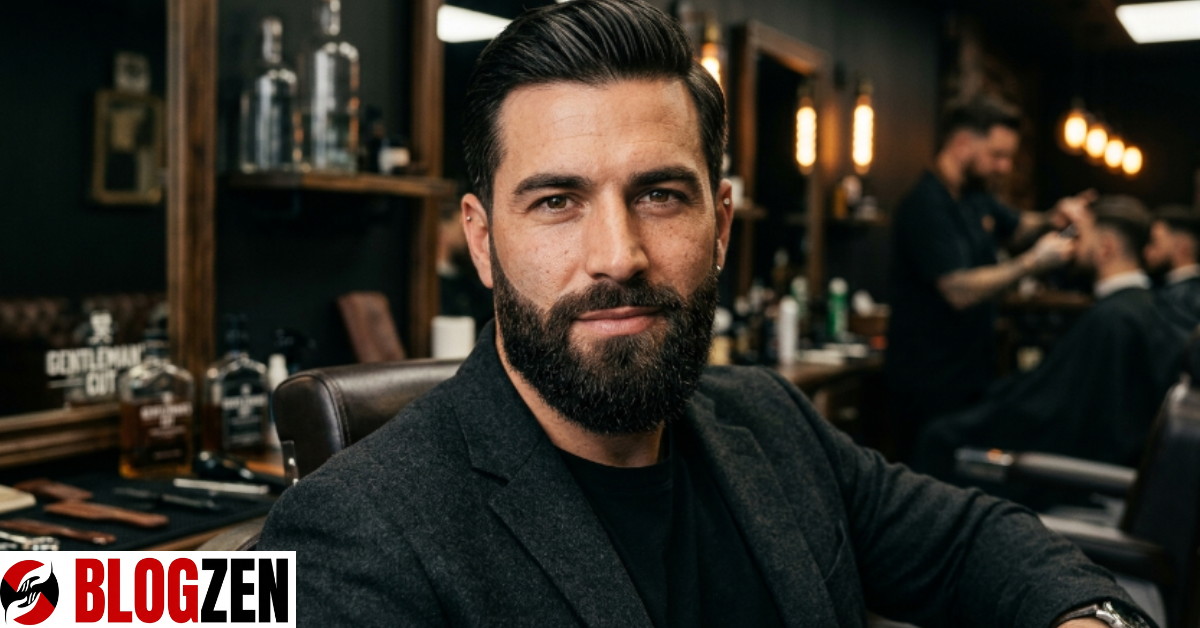
A boxed beard is a full beard style shaped with sharp, defined edges along the cheeks, jawline, and neckline — creating a clean, structured “box” silhouette. It suits most face shapes, adds definition, and looks polished with minimal upkeep once properly shaped. Grooming time: 10–15 minutes per week.
Introduction
Most men grow a beard. Very few wear one with intention. The difference between a beard that commands respect and one that just exists on your face? Sharp structure. That’s exactly what a boxed beard delivers — and it’s why barbers consider it one of the most powerful facial hair styles a man can wear.
The boxed beard has quietly become the go-to style for men who want to look groomed without looking like they tried too hard. It frames your face, sharpens your jawline, and — when done correctly — can genuinely change how people perceive you in a room.
In this article, you’ll learn exactly what a boxed beard is, how it differs from other beard styles, the most common mistakes men make when trying to achieve it, and a step-by-step guide to getting it right at home. Whether you’re starting fresh or cleaning up what you already have, this guide covers everything.
What Is a Boxed Beard — and Why It’s Dominating Men’s Grooming Right Now
A boxed beard is a full beard that has been precisely trimmed and edged to create clean, geometric lines. Think of it as taking a natural, full beard and giving it architectural structure — straight lines on the cheeks, a defined lower boundary on the neckline, and a squared-off shape on the chin rather than a rounded or tapered one.
The name comes from the visual effect it creates. When you look at a man wearing this style correctly, the beard forms a clear rectangular or square shape around the lower portion of the face. It doesn’t taper. It doesn’t fade. It frames.
Why is it so popular right now? Men’s grooming data from the past five years consistently shows a shift toward defined, structured beard styles over natural, unkempt ones. The boxed beard sits at the intersection of “effortless” and “intentional” — which is exactly where modern men want to be seen.
Pro Tip: If you’re unsure whether this style works for your face shape, photograph your face from the front and trace the outline of your jaw with your finger. If your lower face is wider than your forehead, a boxed beard will balance you perfectly. If your face is already square, the style adds power, not awkwardness.
How a Boxed Beard Actually Works — The Geometry Behind the Style
Here’s what nobody tells you: the boxed beard isn’t just about growing hair. It’s about deliberately engineering negative space. The clean skin above your cheek line and below your neckline is just as important as the beard itself. Those bare zones are what make the beard look sharp.
The three defining lines of a boxed beard are:
- The cheek line — a clean, straight horizontal edge running from sideburn to mustache area
- The neckline — set about one to two finger-widths above the Adam’s apple, running parallel to the jaw
- The chin/jaw edge — kept full but shaped to maintain a squared, flat-bottomed silhouette
Each of these lines works together to create the “box” effect. Remove any one of them and you no longer have a boxed beard — you have a shaped beard, which is different.
The depth of the beard itself (length) can vary. Some men wear a short boxed beard at 5–10mm, others grow it to a medium length of 15–25mm. The defining characteristic is always the edge geometry, not the length.
Common Mistakes Men Make With a Boxed Beard
Most people get this completely wrong on the first try — and it’s not because they lack skill. It’s because they don’t understand which mistake they’re making.
Mistake #1: Setting the neckline too high. This is the single most common error. Men instinctively trim the neckline at the jawline because it “feels” right. But that creates a short, compressed beard that looks unnatural and shrinks the visual size of the face. The correct neckline sits 1–2 finger-widths above the Adam’s apple.
Mistake #2: Rounding the chin instead of squaring it. A boxed beard requires a flat or squared bottom edge. If you naturally let the hair grow in a rounded shape and don’t correct it, the “box” silhouette disappears. Use a straight-edge trimmer to deliberately flatten the chin line.
Mistake #3: Uneven cheek lines. One side is almost always your dominant grooming side. Men spend more time on one cheek and rush the other, leaving asymmetrical lines. Always step back from the mirror every 30 seconds and assess both sides simultaneously.
Mistake #4: Skipping moisturizer. Dry skin under a beard causes flaking, itching, and patchy-looking growth — all of which destroy the clean visual of a boxed beard. Beard oil or balm isn’t optional. It’s part of the style.
Pro Tip: Take a photo before you start trimming every single time. Compare it to your target shape. This one habit will prevent 90% of over-trimming disasters.
Expert Tips and Proven Strategies to Get the Perfect Boxed Beard
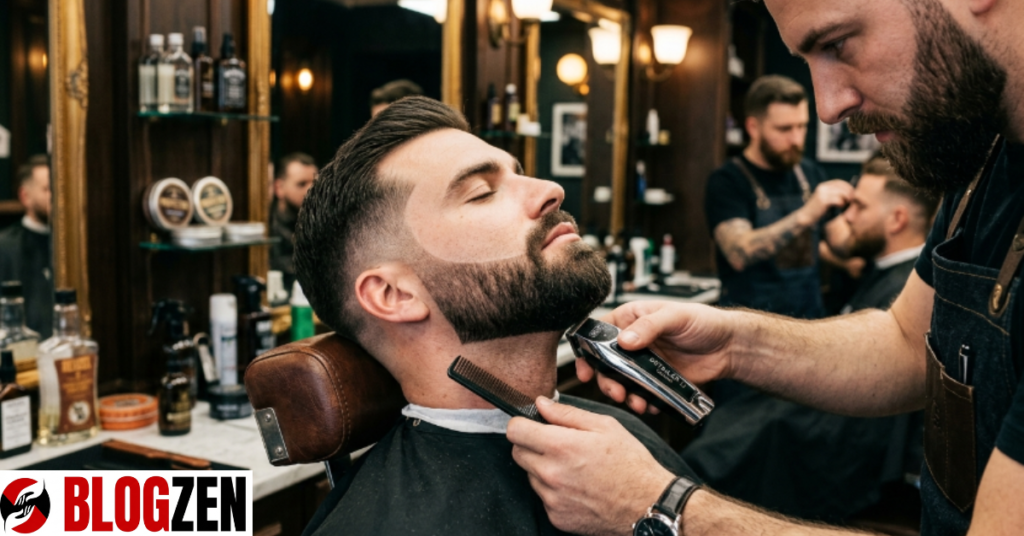
Professional barbers use a few techniques that most men at home never learn. Here are the ones that actually move the needle.
Use a Trimmer With a Fixed Guard First
Never free-hand the length without a guard on your first pass. Set your trimmer to the desired length and run it across the entire beard before doing any detailed edging. This creates a uniform canvas. Edging uneven hair makes clean lines impossible.
The Two-Mirror Rule
One mirror gives you the illusion of symmetry. Two mirrors — or a hand mirror combined with your bathroom mirror — give you the reality. Most barbershops use large mirrors specifically so the barber can see both sides of the face simultaneously. Replicate this at home and your lines will improve immediately.
Dry Trim, Then Check Wet
Beard hair behaves differently when dry versus damp. Trim when dry, then wet your face with water, and check the lines again. Wet hair will reveal any unevenness that wasn’t obvious when dry. This is the step that separates a home job from a professional-looking result.
Real-World Results: How a Boxed Beard Changes Perception
Research in social psychology consistently shows that facial hair affects how men are perceived in terms of dominance, maturity, and attractiveness — but the style of the beard matters almost as much as having one. A 2017 study published in the Journal of Evolutionary Biology found that men with heavy stubble were rated highest for short-term attractiveness, while full beards scored highest for long-term relationship potential.
The boxed beard leverages both. It’s full enough to signal maturity and masculinity. It’s structured enough to signal discipline and self-awareness.
Think of it this way: a wild, ungroomed beard communicates “I don’t care.” A cleanly shaved face communicates “I play it safe.” A perfectly maintained boxed beard communicates “I care about the details.” And in professional, social, and dating contexts, that last message is the most powerful of all.
Men who switch from a natural beard to a boxed beard frequently report unsolicited comments about looking “sharper,” “more professional,” or even appearing to have lost weight — because the defined jawline creates an optical slimming effect.
Pro Tip: If you have a rounder face, a slightly elongated boxed beard — shorter on the sides, slightly longer on the chin — can create the illusion of a more oval face shape. This is a technique professional barbers use constantly.
Step-by-Step Guide to Shaping Your Boxed Beard at Home
You don’t need to visit a barber every week to maintain this style. Once the shape is established, upkeep takes 10–15 minutes.
What you’ll need:
- Beard trimmer with multiple guard lengths
- Detail trimmer or T-blade trimmer
- Beard comb
- Beard oil or balm
- Good lighting (natural light if possible)
The process:
- Comb your beard out completely — this lifts the hair and shows you the true length and direction of growth
- Set your guard to your target length and trim the entire beard for uniform density
- Remove the guard and switch to your detail trimmer
- Define the cheek line — use the highest natural hair on your cheekbone as a guide; draw a clean straight line from sideburn to the corner of your mustache
- Set the neckline — place two fingers horizontally above your Adam’s apple; where your top finger sits is your neckline. Trim everything below it clean
- Square the chin — hold the trimmer vertically along the bottom edge of your chin beard and create a flat line
- Clean up the edges with shaving gel and a razor for maximum precision on the cheek and neck lines
- Apply beard oil — 3–5 drops worked into the beard and down to the skin underneath
- Comb through one final time and check both sides in two mirrors
Repeat steps 4–9 every 5–7 days to maintain crisp lines as the beard grows.
Myths vs. Facts: What You’ve Been Told About Boxed Beards Is Wrong
| Myth | Fact |
|---|---|
| Only works for thick beards | A short boxed beard works on patchy growth too — the defined edges compensate |
| You need a barber to maintain it | Once established, home maintenance is completely achievable |
| It suits only certain face shapes | Works on oval, round, square, and oblong faces — just adjust proportions |
| Beard oil makes it look greasy | Properly applied beard oil absorbs within minutes and adds a clean sheen |
| The neckline should follow the jaw | Neckline set too high is the most common mistake — it should sit lower |
| It takes months of growth to start | You can begin shaping a boxed beard at 2–3 weeks of growth |
Pro Tip: Beard growth rate averages about half an inch per month. If you’re starting from scratch, plan for 4–6 weeks before you have enough material to work with for a proper boxed style. Resist the urge to shape it too early.
Conclusion
Three things make a boxed beard work: precise neckline placement, a squared chin shape, and consistent maintenance. Get those three right and the style does the rest of the work for you.
The truth is, most men give up on this style because they make one of the mistakes covered above, assume they’re doing it wrong, and either shave it off or stop bothering with the edges. Don’t be that guy. The learning curve is only one or two grooming sessions long.
Your face is worth 15 minutes a week. The boxed beard is one of the highest-return grooming investments a man can make — in terms of how he looks, how he’s perceived, and how he feels walking into a room.
Now, here’s your next step: try shaping just the neckline this week using the two-finger technique. That one change alone will transform how your beard looks. Then work up to the full process.
What’s stopping most men from looking their best isn’t genetics — it’s geometry.
FAQs
What face shapes work best with a boxed beard?
A boxed beard works across most face shapes, but the approach shifts slightly depending on your structure. Oval faces can use a standard boxed shape without modification. Round faces benefit from a slightly longer chin to elongate the face. Square faces look powerful with a full, even boxed beard. Oblong faces do better with more width on the sides and a shorter chin length to avoid adding vertical length.
How is a boxed beard different from a full beard?
A full beard simply means all facial hair is present and grown out, with no strict attention to defined edges or geometric shaping. A boxed beard is a specific style of full beard — it has deliberate, clean lines on the cheekbone, neckline, and chin that create a rectangular silhouette. Think of a full beard as the raw material and a boxed beard as the finished product.
How often should I trim my boxed beard to keep the lines sharp?
For most men, trimming and re-edging every 5–7 days keeps the boxed beard looking intentional and clean. If your beard grows faster than average, you may need to edge every 4 days. The body of the beard (the length itself) typically needs a full trim only every 2–3 weeks, but the lines are what define the style and they need more frequent attention.
Can I grow a boxed beard if my facial hair is patchy?
Yes — with a strategic approach. A shorter boxed beard (5–10mm) at a uniform length minimizes the visual impact of patches because the defined edges draw the eye to the shape rather than the density. Growing a boxed beard longer when you have patches tends to exaggerate them. Keep it short, keep it shaped, and the structure compensates for what the density lacks.
What is the best tool for maintaining a boxed beard at home?
The combination that works best is:
- A quality rotary or foil trimmer with adjustable guards for length control
- A T-blade detail trimmer for edge definition
- A single-blade or cartridge razor for the final clean-up on cheek and neck lines
Budget matters less than blade sharpness. A dull trimmer pulls hair and destroys edge precision regardless of brand or price point.
Does a boxed beard make you look older or younger?
It depends on your starting point. For men in their early-to-mid twenties, a boxed beard adds maturity and perceived authority — studies suggest men with well-groomed beards are estimated to be 5–8 years older than clean-shaven counterparts. For men in their forties and beyond, a tightly maintained boxed beard can actually read as more youthful and dynamic than an unkempt or fully grey natural beard. The key variable is always the grooming quality, not the style itself.
