



Quick Answer
The best face wash for oily skin contains salicylic acid, niacinamide, or benzoyl peroxide — not just any “oil-free” label. Wash twice daily with lukewarm water, and never skip moisturizer. Over-cleansing is the #1 mistake that makes oily skin worse.
Your face is oily again by 10 a.m. You washed it an hour ago. Sound familiar? Here’s the thing — that frustrating midday shine might actually be caused by the face wash you’re using to fight it. Choosing the right face wash for oily skin isn’t just about grabbing the first “oil-free” bottle you see at the drugstore. It’s about understanding what’s happening under the surface and giving your skin what it actually needs.
Most people with oily skin are stuck in a cycle: wash aggressively, skin gets drier, skin compensates by producing even more oil. The cycle repeats. This article breaks that loop completely. You’ll learn what makes a face wash genuinely effective for oily skin, which ingredients to seek out, the common mistakes that sabotage results, and a step-by-step morning and night routine that actually works.
What “Oily Skin” Really Means (And Why It Matters)
Oily skin isn’t a character flaw — it’s biology. Your sebaceous glands produce sebum, a natural oil that protects the skin barrier. When those glands go into overdrive — due to genetics, hormones, humidity, or yes, the wrong skincare products — you get excess oil, enlarged pores, and that relentless shine.
According to dermatology research, oily skin types produce up to twice the sebum of dry skin types. That excess creates the perfect environment for clogged pores, blackheads, and acne. The goal of a good face wash isn’t to strip all oil off your face. It’s to regulate sebum without triggering a rebound effect.
Think of it this way: your skin has a built-in oil gauge. Strip too much oil, and it panics, producing even more to compensate. A smart face wash brings that gauge back to equilibrium — not to zero.
Pro Tip: Do a blotting paper test at noon. If the paper is heavily saturated, your sebum production is high. If it picks up just a bit of oil, you may have combination skin — and need a gentler formula than you think.
How a Face Wash for Oily Skin Actually Works
Here’s what nobody tells you: most face washes don’t actually treat oily skin — they just temporarily remove surface oil. The ones that truly work use active ingredients that influence the behavior of your sebaceous glands or unclog the pores where oil gets trapped.
The ingredients that make a real difference
Salicylic acid (BHA) is the gold standard. It’s oil-soluble, which means it penetrates into pores and dissolves the sebum and dead skin cells that cause clogs. Even at a low 0.5–2% concentration, it significantly reduces oiliness over time. Niacinamide regulates sebum production at the gland level — studies show a 16% reduction in sebum production with consistent use. Benzoyl peroxide kills acne-causing bacteria and is especially effective for those with both oily skin and breakouts.
Gel and foam cleansers suit oily skin best. Cream and oil-based cleansers, while popular, can leave a film that feeds the cycle. Micellar waters alone don’t provide deep enough cleansing for high-sebum skin.
The pH of your cleanser matters too. Skin’s natural pH is around 4.5–5.5. Most traditional soaps sit at pH 9–10, which disrupts the skin barrier and — you guessed it — triggers more oil production. Look for pH-balanced formulas, typically labeled “gentle” or “dermatologist-tested.”
The Biggest Mistakes People Make When Washing Oily Skin
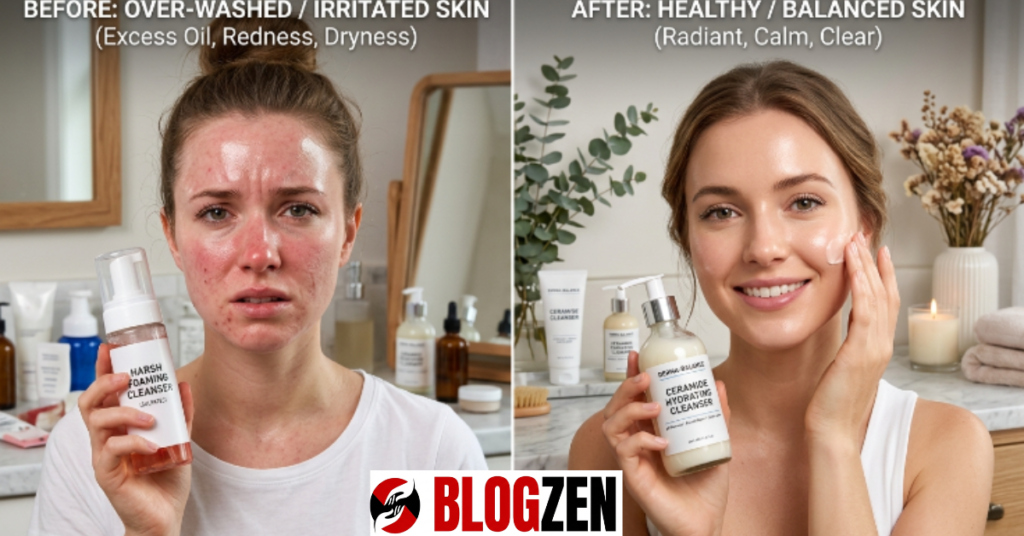
Most people with oily skin are unknowingly making their situation worse. The mistakes aren’t obvious — they feel like the logical thing to do. Let’s fix that.
Washing too often or too aggressively
Washing your face three, four, even five times a day feels productive. It isn’t. Each over-cleanse strips the skin’s lipid barrier, triggering a cortisol-like stress response in the skin cells that signals: make more oil, now. Twice a day — morning and night — is the dermatologist-recommended maximum for oily skin types.
Using hot water
Hot water feels like it’s cutting through grease. What it’s actually doing is dilating your blood vessels and degrading the skin barrier proteins that keep moisture in and irritants out. Lukewarm water is your best friend. It cleans effectively without the damage.
Skipping moisturizer because skin already feels oily
This is the most counterproductive mistake of all. Dehydrated skin produces more oil. When you skip moisturizer, your skin reads dryness as a threat and compensates with extra sebum. A lightweight, oil-free, non-comedogenic moisturizer actually reduces overall oiliness over time — not immediately, but within weeks of consistent use.
Face Wash Ingredients: What to Use vs. What to Avoid
Not all ingredients are created equal for oily skin. Here’s a clear breakdown of what earns a place in your routine — and what quietly makes things worse.
| Ingredient | Effect on Oily Skin | Verdict |
|---|---|---|
| Salicylic Acid (0.5–2%) | Penetrates pores, dissolves sebum and dead cells | Best Choice |
| Niacinamide | Regulates sebum at gland level, reduces pores | Highly Effective |
| Benzoyl Peroxide (2.5–5%) | Kills acne bacteria, controls oiliness | Use If Acne-Prone |
| Glycolic Acid (AHA) | Exfoliates surface but doesn’t penetrate pores | Works for Some |
| Sodium Lauryl Sulfate | Strips everything, triggers rebound oil | Use With Caution |
| Coconut Oil / Shea Butter | Highly comedogenic, clogs pores | Avoid |
| Alcohol (Denat.) | Dries out instantly, damages barrier long-term | Avoid |
Pro Tip: Check the ingredient list (INCI list) before buying. If a product is marketed for oily skin but lists alcohol denat. or sodium lauryl sulfate in the first five ingredients, put it back on the shelf.
Expert Tips That Actually Make a Difference
Dermatologists don’t just recommend specific products — they emphasize technique and timing. These are the details that separate people who see results from those who stay stuck.
First: the two-minute rule. Massaging your cleanser into skin for a full 60–90 seconds allows active ingredients like salicylic acid to begin working during the wash itself. Most people rinse after 10 seconds. That’s not enough contact time for BHA to penetrate pores effectively.
Second: patch-test any new active ingredient for 48–72 hours before adding it to your full routine. Oily skin can still be sensitive, and layering multiple actives too fast causes irritation that — once again — triggers more sebum production. Start with one active cleanser and build from there.
Seasonal switching matters more than you think. Many dermatologists recommend using a BHA cleanser in summer (higher heat and humidity = more sebum) and transitioning to a gentler niacinamide formula in winter when skin is naturally more balanced. Your face wash isn’t a set-it-and-forget-it product.
Your Step-by-Step Daily Routine for Oily Skin
Knowing the right products means nothing without a consistent, correctly sequenced routine. Here’s exactly what to do — morning and night — to see a real difference within 4–6 weeks.
Morning routine
- 1Rinse with lukewarm water. In the morning, your skin doesn’t need a full cleanse — just removal of overnight oils and any product residue.
- 2Apply a gentle, pH-balanced gel cleanser with niacinamide. Massage for 60 seconds, rinse thoroughly.
- 3Pat — don’t rub — dry with a clean towel. Rubbing causes micro-friction that irritates skin and increases oil production.
- 4Apply a lightweight, oil-free moisturizer with SPF 30 or higher. Yes, even oily skin needs sun protection every single morning.
Night routine
- 1Double cleanse if you’ve worn sunscreen or makeup. First pass: micellar water or a gentle oil cleanser (yes, even for oily skin). Second pass: your BHA cleanser.
- 2Apply a salicylic acid cleanser for the second cleanse. Massage for 90 seconds and rinse well.
- 3Use a lightweight serum with niacinamide or hyaluronic acid — this keeps hydration levels up while keeping sebum regulated.
- 4Finish with an oil-free, non-comedogenic night moisturizer. Gel formulas absorb well and won’t clog pores while you sleep.
Pro Tip: Change your pillowcase every 2–3 days. Oily skin deposits sebum, dead cells, and bacteria onto the fabric, which then transfers back to your face. Fresh pillowcases are a free skincare upgrade most people ignore completely.
Myths vs. Facts About Face Washes for Oily Skin
The skincare world is full of confidently stated misinformation. Let’s separate fact from fiction on the topics that confuse oily-skin types most often.
Myth: “Oil-free” on the label means it’s right for oily skin. Fact: “Oil-free” only means no synthetic oils are added. It says nothing about whether the formula will clog pores or disrupt your skin barrier. Always look at the actual ingredients.
Myth: Foaming cleansers are always better for oily skin. Fact: Heavy-foam cleansers often contain sulfates that strip the skin barrier. A gentle gel cleanser with low foam — or even no foam — can be far more effective at regulating oil long-term.
Myth: Natural and “clean” cleansers are safer for oily skin. This one is tricky. Many natural oils — coconut, almond, argan — are highly comedogenic (pore-clogging) regardless of how natural they are. The comedogenic rating of an ingredient matters far more than whether it’s plant-derived.
The Bottom Line
Finding the best face wash for oily skin comes down to three things: the right active ingredient (salicylic acid or niacinamide lead the pack), the right technique (two minutes of contact time, lukewarm water, gentle drying), and the right mindset — oily skin needs balance, not battlefield-level stripping.
Stop chasing squeaky-clean. Start chasing skin that feels calm, clear, and comfortable. That’s the goal, and it’s fully achievable when you stop fighting your skin and start working with its biology instead.
What’s the one thing you’ve been doing wrong with your face wash routine? Drop it in the comments — or better yet, bookmark this guide and revisit after 4 weeks of your new routine. Your skin will tell the story better than any review.
FAQs
What is the best face wash for oily skin with acne?
For oily skin prone to breakouts, look for a face wash containing both salicylic acid and benzoyl peroxide — or alternate between the two. Salicylic acid unclogs pores, while benzoyl peroxide kills acne-causing bacteria (P. acnes). At concentrations of 2.5% benzoyl peroxide, you get strong antibacterial action with less irritation than the 5% or 10% formulas. Use the benzoyl peroxide version at night and salicylic acid in the morning for best results.
How many times a day should I wash my face if I have oily skin?
Twice a day is the maximum recommended by dermatologists — once in the morning and once at night. Washing more frequently strips the skin’s natural lipid barrier, causing a rebound effect where sebaceous glands produce excess oil to compensate. If your face feels oily midday, use blotting papers instead of washing again. They remove surface shine without disrupting your skin barrier or pH balance.
Can I use face wash for oily skin if I also have sensitive skin?
Yes, but approach it carefully. Start with a formula that contains niacinamide rather than strong acids like salicylic acid. Niacinamide is highly tolerable even for reactive skin types and still delivers meaningful oil regulation. Introduce active ingredients one at a time, and always patch-test on the jawline for 48 hours. Fragrance-free formulas are non-negotiable for sensitive-oily combinations, as synthetic fragrance is a leading cause of contact dermatitis.
Is it okay to use a face wash for oily skin every night?
Not only is it okay — it’s essential. Night cleansing removes sebum buildup, environmental pollutants, dead skin cells, and any SPF or makeup you’ve worn during the day. Skipping the evening cleanse allows all of that to sit in your pores for 8 hours overnight, which is one of the most direct causes of blackheads and congestion. If you wore sunscreen or makeup, double cleanse: micellar water first, then your active cleanser second.
What ingredients should I avoid in a face wash for oily skin?
Avoid these specific ingredients:
- Alcohol denat. (denatured alcohol) — dries surface but triggers oil rebound
- Sodium lauryl sulfate — overly harsh, disrupts pH balance
- Coconut oil and coconut-derived emollients — comedogenic rating of 4/5
- Synthetic fragrance — causes irritation and sensitization over time
- Heavy silicones like dimethicone in high concentrations — can trap oil and dead cells
How long does it take to see results from a new face wash for oily skin?
Most people see initial changes — reduced shine, smoother texture — within 2–3 weeks of consistent use. Full results, including reduced pore size and significantly reduced sebum production, typically appear after 6–8 weeks. The skin cell turnover cycle is approximately 28 days, meaning any active ingredient needs at least one full cycle to demonstrate its impact. Give new products a minimum of 4 weeks before deciding they aren’t working — unless you experience irritation, in which case stop immediately.
