



Quick Answer
The best vitamin D supplement in 2026 is D3 (cholecalciferol) paired with K2 (MK-7 form). Look for 1,000–2,000 IU daily unless tested deficient. Top picks include Transparent Labs D3+K2, Sports Research D3+K2, and NOW Foods D-3 & K-2. Always take with a fatty meal for maximum absorption.
Around 1 billion people worldwide are deficient in vitamin D — and most of them have absolutely no idea. They feel tired, catch every cold that goes around, and assume that’s just life. It isn’t. What they’re missing could be sitting on a pharmacy shelf right now for under $20.
Finding the best vitamin D supplement in 2026 isn’t as simple as grabbing the first bottle you see at the checkout counter. The market is flooded with products that differ in form, dosage, formulation, and actual bioavailability. Get this wrong and you could be swallowing a supplement daily for months with almost nothing to show for it.
In this guide, you’ll get the real science behind vitamin D supplementation — which form absorbs best, what dosage actually makes a difference, how to spot low-quality products, and which specific supplements topped the expert rankings this year. No fluff. No filler. Just the information you need to make the right call for your body.
1B+
People worldwide estimated to be vitamin D deficient
41.6%
U.S. adults with insufficient vitamin D levels
3×
D3 is more effective than D2 at raising blood levels
12%
Reduction in respiratory infections with adequate D levels
Why the Best Vitamin D Supplement in 2026 Matters More Than Ever
Here’s a fact most people don’t stop to consider: vitamin D isn’t really a vitamin at all. Your body manufactures it like a hormone when ultraviolet B rays hit your skin. The problem? Modern life — sunscreen, office jobs, urban living, and long winters — has made getting enough sun a near-impossible task for most people on Earth.
Vitamin D deficiency is now one of the most common nutrient deficiencies in the world. It affects bone health, immune resilience, muscle function, mood regulation, and emerging research even ties it to cardiovascular health and cognitive performance. When your levels are low, your body notices — you just might not recognize what’s happening until months later.
The reason supplementation has become so urgent in 2026 is layered. Remote work has pushed people further from sunlight. Skin tone matters too — people with darker complexions require significantly more sun exposure to produce the same vitamin D as lighter-skinned individuals, making deficiency considerably more prevalent in South Asian, Middle Eastern, and African communities. Add aging into the equation — the elderly have a threefold higher deficiency rate than young adults — and it’s clear this is a problem that compounds quietly.
Pro Tip: Don’t wait until you feel “off” to supplement. Vitamin D deficiency develops slowly over months. If you work indoors, live above the 35th parallel (think New York, London, or Istanbul), or have darker skin, you are almost certainly not getting enough from sunlight alone.
A quality supplement closes that gap efficiently. But not just any supplement — and that’s the entire point of this article.
How Vitamin D Supplements Actually Work — And Why D3 Wins Every Time
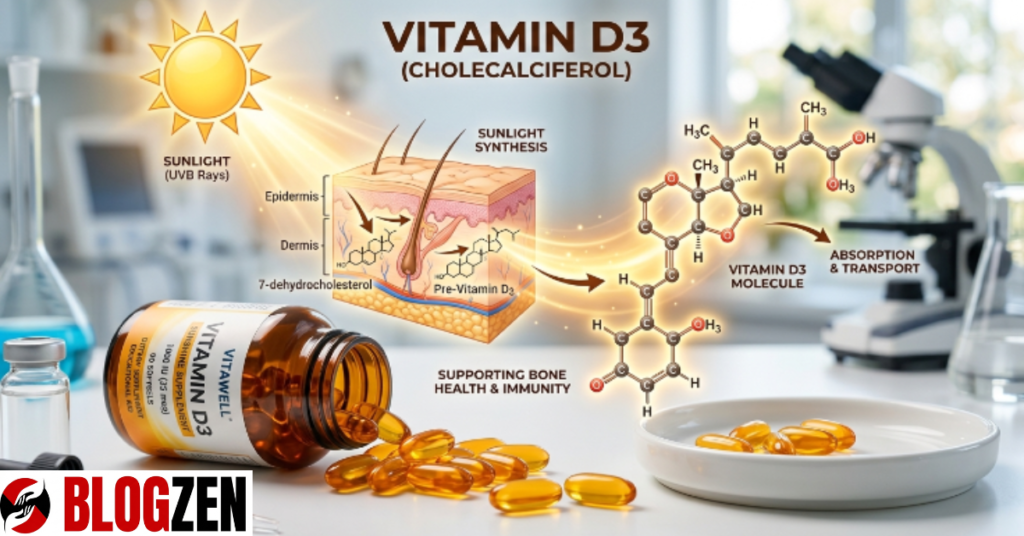
Walk into any pharmacy and you’ll see two forms of vitamin D: D2 and D3. Most people pick one without understanding the difference. That choice matters more than you think.
Vitamin D2 (Ergocalciferol)
D2 comes from plant sources — typically irradiated yeast or fungus. It’s cheaper to produce, which is why it often ends up in fortified foods and prescription-strength supplements. But cheaper doesn’t mean better. Research shows that D2 peaks in your bloodstream around day 3 and then drops rapidly, often falling back to baseline levels within two weeks. Your body simply doesn’t hold on to it.
Vitamin D3 (Cholecalciferol)
D3 is the form your skin naturally produces from sunlight and is found in animal-based foods like salmon, egg yolks, and beef liver. When you take a D3 supplement, blood levels continue rising and peak around day 14 — five times longer than D2. Research suggests D3 is more than three times as effective as D2 at raising and maintaining serum vitamin D levels over time.
Think of it this way: D2 is a spark, while D3 is a slow-burning fire. For long-term supplementation, you want the latter. The science on this is consistent — cholecalciferol (D3) is the preferred form, full stop.
“Best Vitamin K2 Supplements for Bone Health” — pair this read with your D3 guide
Pro Tip: Vitamin D is fat-soluble, which means it absorbs best when taken with a meal containing some dietary fat. Taking it on an empty stomach can reduce absorption by up to 30%. A handful of nuts, avocado, or any meal with olive oil is all you need.
The Best Vitamin D Supplements of 2026 — Top Picks Compared
After reviewing testing data from registered dietitians, pharmacist surveys, and independent third-party lab certifications, these are the products worth your money in 2026.
⭐ Best Overall
Transparent Labs D3 + K2
5,000 IU D3 + MK-7 K2. Third-party Informed Choice certified. Zero fillers, allergens, or artificial ingredients. Vegan D3 sourced from lichen.
Fortune score: 4.5/5 · Ideal for most adults
🥈 Runner Up
Sports Research D3 + K2
2,500 IU D3 in small, easy-to-swallow softgels. Formulated with organic coconut oil for enhanced absorption. Non-GMO, gluten-free.
Best for: Daily convenience & moderate dosing
🌿 Best Whole Food
Garden of Life D3 5,000 IU
Raw D3 delivered in a whole-food lipid base with chlorella. No unnecessary additives. Particularly well-absorbed with natural food co-factors.
Best for: Clean-label purists & food-first buyers
💰 Best Value
NOW Foods D-3 & K-2
1,000 IU D3 at a price that makes daily supplementation genuinely sustainable. Well-studied dosage based on 2006 landmark research.
Best for: Budget-conscious daily maintenance
| Product | Form | Dosage (IU) | K2 Included | 3rd-Party Tested | Best For |
|---|---|---|---|---|---|
| Transparent Labs D3+K2 | D3 (Lichen) | 5,000 | MK-7 ✓ | Informed Choice | Overall best |
| Sports Research D3+K2 | D3 (Lanolin) | 2,500 | MK-7 ✓ | NSF Certified | Daily ease |
| Garden of Life D3 | D3 (Whole Food) | 5,000 | Not included | USP Verified | Whole food users |
| NOW Foods D3+K2 | D3 (Lanolin) | 1,000 | MK-7 ✓ | GMP Certified | Budget pick |
| Metagenics D3 5000+K2 | D3 (Lanolin) | 5,000 | MK-7 ✓ | NSF Certified | Correcting deficiency |
| Legion Vitamin D+K | D3 (Lanolin) | 5,000 | K1+K2 ✓ | Informed Choice | Active lifestyles |
National Institutes of Health — Office of Dietary Supplements: Vitamin D Fact Sheet for Health Professionals
The D3 + K2 Combination: Why It’s Not Optional Anymore
Most people shopping for vitamin D supplements in 2026 don’t know this: taking high-dose D3 without K2 can actually work against you. Here’s what nobody tells you at the pharmacy counter.
Vitamin D3 dramatically increases calcium absorption from the gut. That’s largely the point — it’s critical for bone density and muscle function. But without sufficient vitamin K2, that extra calcium doesn’t reliably end up in your bones. It can accumulate in soft tissues and arterial walls instead. Research on this pairing has accelerated significantly in recent years, and most leading supplement brands have taken notice.
The specific form of K2 matters too. Look for MK-7 (menaquinone-7) rather than MK-4 in your combined supplement. MK-7 has a dramatically longer half-life in the bloodstream and remains active for days, while MK-4 is cleared within hours. The daily-use math strongly favors MK-7. The recommended ratio most nutritionists suggest is roughly 100 mcg of K2 (MK-7) for every 1,000–2,000 IU of D3.
Pro Tip: If you take blood-thinning medications like warfarin, consult your physician before adding vitamin K2 to your regimen. K2 interacts with anticoagulant therapy and may require dosage adjustments.
The good news? You don’t need two separate supplements. Every top-ranked product in our comparison table above includes MK-7 K2 in a sensible ratio alongside the D3. One capsule, two critical nutrients, daily with your breakfast.
Common Mistakes People Make With Vitamin D Supplements
Most people get vitamin D supplementation wrong in at least one of these ways. Check yourself against this list before you spend another dollar.
⚠️ Common Mistake #1 — Taking it on an empty stomach. Vitamin D is fat-soluble. Without dietary fat present, absorption can drop significantly. Always take your supplement with a meal that contains some fat.
The second mistake is guessing your dose. The recommended dietary allowance (RDA) sits at 600 IU for adults under 70 and 800 IU for those over 70. But if you’re already deficient — which many people are — maintenance doses of 1,000–2,000 IU are widely considered safe and effective for most healthy adults. The real problem happens at the other extreme.
⚠️ Common Mistake #2 — Self-prescribing very high doses. The use of supplements above 4,000 IU daily increased 16-fold from 1999 to 2014 in the U.S. While vitamin D toxicity is rare, it is real. Symptoms include nausea, weakness, and hypercalcemia. Unless a physician has tested your levels and instructed high-dose therapy, stay under 4,000 IU unless specifically directed otherwise.
Third: checking your multivitamin first. A surprising number of people double-up on vitamin D without realizing their daily multivitamin already contains 400–1,000 IU. Those amounts add up. Audit what you’re already taking before adding a standalone D3 capsule.
Pro Tip: The single most useful thing you can do before buying a vitamin D supplement is get your blood levels tested. A simple 25(OH)D blood test reveals your actual status. Optimal levels generally range from 40–60 ng/mL. This costs very little and takes all the guesswork out of dosing.
How to Choose and Use the Right Vitamin D Supplement — Step by Step
Stop winging it. Here’s a repeatable process that nutrition professionals actually use when advising patients on vitamin D supplementation.
1 Get a baseline blood test
Ask your doctor for a 25-hydroxyvitamin D [25(OH)D] blood test. This is the gold-standard measure. Anything below 20 ng/mL is deficient. 20–29 is insufficient. 30–60 is the target zone for most adults. Your result drives every decision below.
2 Choose D3, not D2
If your supplement says “ergocalciferol” (D2) on the label, put it back. Look for “cholecalciferol” (D3). Check the Supplement Facts panel — this isn’t a marketing claim, it’s listed right there.
3 Select a D3+K2 (MK-7) combination
If you’re taking more than 1,000 IU of D3 daily, pair it with at least 90–100 mcg of K2 as MK-7. Either buy a combined product (easiest) or add a separate K2 supplement.
4 Verify third-party testing
Look for certification logos from NSF International, USP, Informed Choice, or ConsumerLab. These organizations independently verify that what’s on the label is actually in the bottle — in the right amount, without contaminants.
5 Take it daily with a fatty meal
Consistency matters more than timing. Pick a meal you reliably eat every day — breakfast with eggs, lunch with avocado, dinner with olive oil — and pair your supplement with it permanently. Set a phone reminder for the first 30 days.
6 Retest after 3 months
Get another 25(OH)D test after 90 days of consistent supplementation. This confirms your supplement is working, lets you adjust dosing, and gives you a personalized baseline to maintain going forward.
Vitamin D Myths vs. Facts: Stop Believing These in 2026
The internet is full of vitamin D misinformation — some dangerous, some just wasteful. Here’s the truth behind the most persistent myths.
❌ Myth
“I live in a sunny country, so I don’t need a supplement.”
✅ Fact
Location helps but doesn’t guarantee sufficiency. Sunscreen, indoor time, skin tone, age, and body weight all affect how much D your skin actually makes. Studies in sunny regions still show high deficiency rates.
❌ Myth
“More is always better — I take 10,000 IU daily to be safe.”
✅ Fact
Vitamin D toxicity is rare but real. The tolerable upper limit for most adults is 4,000 IU/day without medical supervision. Excessive intake can cause dangerous hypercalcemia. Test, don’t guess.
❌ Myth
“Any vitamin D supplement is basically the same.”
✅ Fact
Form matters enormously. D3 is more than 3× more effective than D2 at raising blood levels. Delivery vehicle, third-party testing, and co-nutrients like K2 also dramatically affect real-world results.
❌ Myth
“I can get enough vitamin D from food.”
✅ Fact
Vitamin D is genuinely scarce in the food supply. Fatty fish, egg yolks, and fortified dairy contain some, but dietary sources rarely provide more than 200–400 IU per day — well short of most adults’ needs.
ℹ️ Note on specific at-risk groups: Pregnant women, breastfeeding mothers, individuals with celiac disease or Crohn’s, those who have had gastric bypass surgery, children ages 1–18, and adults over 65 are all at significantly elevated risk of vitamin D deficiency and should discuss targeted supplementation with a healthcare provider.
The Bottom Line
Three things matter above everything else when picking the best vitamin D supplement in 2026: choose D3 over D2, pair it with K2 as MK-7, and verify the product has third-party testing certification. Everything else — brand prestige, fancy packaging, minor ingredient differences — is noise.
Get your blood levels tested, pick a quality supplement that fits your dosing needs, and take it every day with a fatty meal. Retest in three months. That’s the entire playbook, and it works.
Which of these steps are you missing right now? Drop a comment below and let us know where you’re starting — whether you’ve never supplemented before or you’re switching from a D2 product that wasn’t working.
Your immune system, your bones, and your energy levels are all waiting on this one decision. Make it today.
FAQs
What is the best vitamin D supplement for adults in 2026?
The best vitamin D supplement for most adults in 2026 is a D3 (cholecalciferol) + K2 (MK-7) combination product with at least 1,000 IU of D3. Transparent Labs D3+K2 tops most expert rankings for its third-party certification, clean formula, and high bioavailability. Sports Research D3+K2 is an excellent runner-up for those who prefer a lower 2,500 IU dose in a small, easy-to-swallow softgel with coconut oil for enhanced fat-based absorption.
How much vitamin D3 should I take daily if I’m deficient?
If a blood test confirms deficiency (below 20 ng/mL), many physicians prescribe short-term high-dose therapy of 4,000–8,000 IU daily for 8–12 weeks to restore levels, followed by a maintenance dose of 1,500–2,000 IU daily. Never self-prescribe doses above 4,000 IU without medical guidance. Retesting after 90 days of supplementation is essential to confirm your levels have normalized and to fine-tune your ongoing dose.
Is it safe to take vitamin D supplements every day?
Yes — daily vitamin D supplementation is safe for most adults at doses up to 4,000 IU. Toxicity from vitamin D supplements is rare and almost always results from prolonged very high doses (above 10,000 IU daily). The risk increases with calcium supplementation taken simultaneously. If you’re taking a multivitamin, add the vitamin D content there to your standalone supplement before calculating total intake. Periodic blood testing every 6–12 months is wise for anyone supplementing long-term.
What should I look for on the label of a vitamin D supplement?
Look for these four things on any vitamin D supplement label:
1. “Cholecalciferol” (D3) — not ergocalciferol (D2)
2. MK-7 form of vitamin K2 (not MK-4, which clears too quickly)
3. A third-party certification seal: NSF, USP, Informed Choice, or ConsumerLab
4. No unnecessary fillers, titanium dioxide, or artificial colorings Softgels in an oil base (coconut or olive oil) typically outperform dry tablets for fat-soluble vitamin absorption.
Can the best vitamin D supplement improve mood and energy?
Vitamin D receptors are found throughout the brain, and low levels have been consistently associated with increased rates of depression, fatigue, and seasonal affective disorder (SAD). Correcting a genuine deficiency through supplementation can produce noticeable improvements in mood, motivation, and energy — particularly during winter months. However, vitamin D is not a treatment for clinical depression, and any mental health concerns should be discussed with a qualified healthcare provider. Think of restoring D levels as removing a drag on your baseline well-being.
Do I need a vitamin D supplement if I take a multivitamin?
It depends on how much vitamin D your multivitamin already contains. Most standard multivitamins include 400–1,000 IU of vitamin D — enough for maintenance if your baseline levels are already adequate, but likely insufficient if you’re deficient. Check the Supplement Facts panel on your multivitamin. If it contains less than 1,000 IU and you spend most of your day indoors, you likely need an additional standalone D3 supplement to reach optimal blood levels. Always calculate combined intake before adding more.
