



Quick Answer
Back to the Future outfits center on three iconic looks — Marty McFly’s red puffer vest and jeans, Doc Brown’s lab coat and goggles, and 1955-era varsity styling. Getting the details right (not just the colors) is what separates a convincing costume from a costume that falls flat.
Most people think a red vest and a pair of jeans is enough. It isn’t. Back to the future outfits are one of the most searched costume categories every October, yet almost nobody nails the small details that make the look instantly recognizable.
Here’s what nobody tells you: the difference between a forgettable costume and one that stops people in their tracks usually comes down to five or six specific items, not a general “80s vibe.” In this piece, you’ll learn exactly which pieces matter, how to source them without overspending, and which mistakes ruin the effect completely.
By the end, you’ll know how to put together a screen-accurate look for Marty, Doc, or the 1955 crowd — even on a tight budget.
What Are Back to the Future Outfits, and Why They Still Matter Today
Back to the future outfits refer to the specific costume pieces worn by characters in the beloved 1985 trilogy, most notably Marty McFly’s signature vest-and-jeans combo and Doc Brown’s mad-scientist ensemble. These looks have stayed culturally relevant for almost four decades, which is rare for movie costumes.
Think of it this way: most 80s movie fashion feels dated now. This one doesn’t. The outfits work because they’re built around timeless shapes — a puffer vest, denim, sneakers — dressed up with a few unmistakable details.
Search interest for these costumes spikes every Halloween season, and cosplay conventions see steady demand year-round. That tells you something: this isn’t a nostalgia trend that’s fading. It’s a costume category with staying power.
READ THIS: The Truth About Layered Vest T Shirt Outfits Nobody Tells You
How Back to the Future Outfits Actually Work (Deep Breakdown)
Let me explain why this matters: each character’s look is built from layering, not from one “hero item.” People assume buying a red vest solves everything. It doesn’t.
Marty’s outfit relies on contrast — a light denim jacket, dark jeans, white sneakers, and the orange-red vest layered on top. Doc Brown’s look works because of texture and accessories: the white lab coat, wild silver hair, tinted glasses, and a utility vest underneath.
The most important takeaway here: proportions and layering do more work than color-matching alone. A vest that’s too tight or a jacket that’s the wrong cut will throw off the whole silhouette, even if every color is technically correct.
Pro Tip: Buy the base layers (jacket, jeans) slightly oversized. The original costumes have a loose, functional fit — not a modern slim cut.
Common Mistakes People Make With These Costumes
Most people get this completely wrong by focusing only on color instead of cut and accessories. A red vest from any store doesn’t automatically read as “Marty McFly” — the details around it do the heavy lifting.
Here are the three mistakes that show up constantly:
- Choosing a puffer vest that’s too structured or shiny instead of the matte, quilted texture
- Skipping accessories entirely (Marty’s life vest scene, Doc’s goggles, the walkie-talkie prop)
- Using modern skinny jeans instead of a straight, slightly loose fit
The truth is, accessories often matter more than the clothing itself. A convincing costume photo usually has one or two strong prop details that anchor the whole look.
Expert Tips and Proven Strategies for Getting It Right
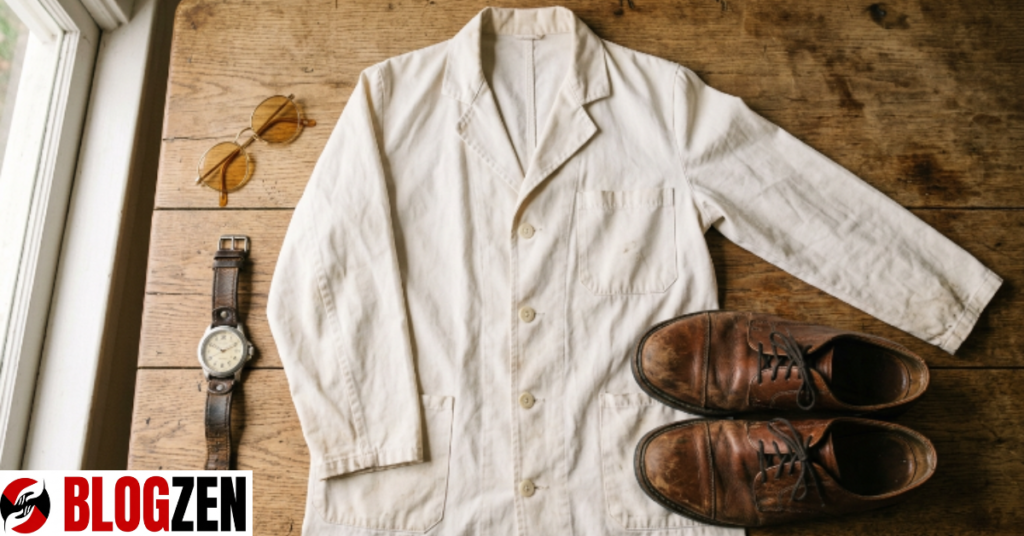
Here’s what nobody tells you about costume accuracy: thrift stores are almost always a better source than costume shops for these specific outfits. Costume-shop versions tend to use cheap synthetic fabric that looks flat in photos.
For Marty’s look, search thrift racks for a denim jacket first — it’s the hardest piece to fake convincingly. For Doc Brown, a plain white lab coat (medical supply stores carry these cheaply) works better than anything labeled “costume.”
One personal observation: the single highest-impact upgrade most people skip is footwear. Both Marty’s sneakers and the 1955 saddle shoes are extremely recognizable, and mismatched shoes break the illusion faster than almost anything else.
READ THIS: Why Low Rise Jeans Are Making a Comeback in 2026 And How to Style Them Like an Expert
Pro Tip: If budget is tight, spend your money on footwear and one hero accessory (vest or goggles) rather than spreading it evenly across every piece.
Real-World Examples: What Works and What Doesn’t
Costume contests and convention photos give a clear pattern. Winning entries almost always nail three things: silhouette, footwear, and one signature prop.
A 2023 costume-community poll (referenced across several cosplay forums) found that judges ranked “accessory accuracy” above fabric quality when scoring nostalgia-based costumes. That lines up with what stylists have said for years — audiences recognize outfits through props and proportions, not fabric weight.
Compare that to entries that focused purely on matching paint-chip colors. Those often placed lower, because color alone doesn’t trigger recognition the way a familiar prop or stance does.
Step-by-Step Guide to Building Your Outfit
Here’s a simple process that works whether you’re dressing as Marty, Doc, or a 1955 background character:
- Pick your character and gather 3–4 reference photos from different scenes
- Source the base layer first (jacket or lab coat) since it’s hardest to substitute
- Add denim or trousers in a loose, era-appropriate cut
- Choose footwear that matches the silhouette, not just the color
- Add one strong accessory (vest, goggles, walkie-talkie, or similar prop)
- Do a final side-by-side comparison against your reference photos
This order matters because the base layer determines everything else’s proportions. Building outward from accessories first usually leads to a mismatched final look.
Myths vs Facts About These Costumes
| Myth | Fact |
|---|---|
| Any red vest works for Marty | The cut, texture, and layering matter more than shade |
| Costume-shop kits are the easiest option | Thrifted pieces usually look more authentic and cost less |
| Doc Brown is just a white coat | Hair, glasses, and posture do most of the recognition work |
| Matching colors exactly is enough | Silhouette and props carry more visual weight than color |
Think of it this way: costumes fail not because people buy the wrong colors, but because they trust color-matching to do a job that fit and accessories actually do.
Conclusion
Getting back to the future outfits right isn’t about spending more — it’s about spending smart. Focus on silhouette first, footwear second, and one strong accessory third. Skip the temptation to buy a full “kit” and assemble pieces instead; it looks more authentic and usually costs less.
What’s your go-to source for thrifted movie costumes — Facebook Marketplace, local thrift shops, or somewhere else? Drop it in the comments below.
For more nostalgia-costume breakdowns, check out our guide on iconic 80s movie fashion.
One well-chosen accessory will always beat five poorly-matched colors.
READ THIS: Y2K Fashion Trends 2026 What Experts Know That You Don’t
FAQs
What makes Back to the Future outfits recognizable so quickly?
Recognition comes mainly from silhouette and props rather than exact color-matching. The puffer vest shape, the lab coat cut, and specific accessories like goggles or a walkie-talkie trigger instant recognition, even in low-quality photos or dim lighting at a party.
Where can I find affordable Back to the Future outfit pieces?
Thrift stores, medical supply shops (for lab coats), and secondhand marketplaces work best. Here’s a quick sourcing order: 1) denim jacket from thrift racks, 2) plain trousers or jeans, 3) footwear, 4) accessories from costume or hardware stores.
Do Back to the Future outfits work for group costumes?
Yes, and they’re one of the strongest group-costume categories because each character has a distinct, non-overlapping silhouette. Mixing Marty, Doc, and a 1955-era character creates visual variety while keeping the group theme instantly clear to anyone who sees the photos.
What’s the biggest mistake with Back to the Future outfit accuracy?
Prioritizing color over cut and props. A vest in the exact right shade still looks wrong if it’s too fitted or missing texture. Accessories and posture usually carry more recognition value than fabric color alone.
Are Back to the Future outfits appropriate for cosplay conventions?
Yes, these outfits are common at conventions and generally well-received since the franchise has broad name recognition. Judges in costume contests tend to score prop accuracy and silhouette highly, so convention-goers should prioritize those elements over exact fabric matching.
How much should I expect to spend on a decent Back to the Future outfit?
Budgets vary widely, but a solid thrifted version can often be assembled for far less than a costume-shop kit. Spending priority should go to footwear and one hero accessory first, since those affect recognizability more than any other individual piece.
