



QUICK ANSWER
Summer layering is about strategic fabric choice, weight distribution, and style—not bulk. Lightweight linen base layers, breathable mid-layers, and loose cardigans let you regulate temperature without looking heavy. The key is knowing which fabrics breathe, how to mix textures, and when to remove vs. keep layers on throughout the day.
INTRODUCTION
You’ve probably thought layering clothes in summer was a contradiction—like wearing winter tactics in June. But here’s what nobody tells you: smart layering in summer isn’t about warmth; it’s about survival. It’s the difference between being comfortable at 72°F indoors and actually bearable when you step into brutal UV heat, aggressive air conditioning, or sudden evening chill.
Most people get this wrong. They either strip down completely (and regret it in freezing offices) or they refuse to layer at all (and suffer). The truth is, summer layering is a climate control system that lives on your body.
In this guide, you’ll discover exactly how to layer clothes in summer without looking bulky, overheated, or out of place. We’re talking practical strategies that fashionistas and climate scientists actually agree on. You’ll learn which fabrics breathe, why thin layers beat thick ones, how to mix patterns without clashing, and what combinations keep you comfortable from sunrise to air-conditioned evening.
By the end, you’ll stop dreading temperature swings and start owning them. Whether you’re traveling, working in brutal offices, or just tired of freezing indoors and melting outdoors, this guide gives you actionable tactics that work right now.
Let’s start with understanding why summer layering matters more than you think.
What Is Summer Layering and Why It Actually Matters Today
Summer layering isn’t the bulky technique your winter self uses. It’s intentional, strategic dressing that gives you control over your body temperature throughout an unpredictable day. Think of it as a thermostat you wear.
The average person experiences 20-30°F temperature swaps between outdoor summer heat (95°F) and aggressive air conditioning (68°F). That’s more brutal than most seasonal changes. Your body struggles to adapt. Summer layering solves this by creating a buffer system—you add or subtract layers as needed without changing your entire outfit.
Here’s why this matters today: modern life means constantly moving between temperature extremes. You’re in a car with full AC, then a sunny parking lot, then an indoor mall with icy air, then back outside. One solid outfit doesn’t cut it anymore. Layering clothes in summer lets you stay comfortable, look intentional, and actually focus on your day instead of fighting temperature discomfort.
This isn’t vanity—studies show temperature stress impacts productivity and mood. When you’re comfortable, you’re more confident, more present, and less likely to make impulse decisions (like leaving a store because you’re shivering in summer).
How Summer Layering Actually Works (The Fabric Science Everybody Ignores)
The secret isn’t number of layers—it’s fabric breathability and weight distribution. Cotton breathes, but it holds moisture. Linen breathes AND dries fast. Synthetics like polyester trap heat. Understanding this changes everything.
Here’s the structure that works:
Layer 1 – The Base (Lightest)
Start with the thinnest, most breathable piece. A sleeveless linen tank, a silk camisole, or a lightweight cotton tee works perfectly. This layer should feel like wearing almost nothing. The goal is moisture-wicking and maximum airflow around your core.
Layer 2 – The Mid-Layer (Optional Insulation)
This is where sophistication happens. A sheer button-up shirt, a lightweight gauze blouse, or a cotton-linen blend cardigan. This layer creates volume without weight. The key is looseness—tight mid-layers trap heat and defeat the purpose.
Layer 3 – The Statement (Texture & Style)
A linen blazer, an open kimono, a denim jacket, or a structured cardigan. This is your removable layer. Wear it when you’re outside or in aggressive AC, then drape it over a chair or tie it around your waist when temperature normalizes.
The science: layering clothes in summer works because loose layers create air pockets that don’t trap heat but do prevent sudden temperature shock. When you move from 95°F to 68°F AC, those air pockets buffer the shift. Your body doesn’t experience a 27°F jolt—it experiences a gradual adjustment.
Weight matters more than material count. Three lightweight pieces weigh less and work better than one thick sweater.
Pro Tip: Fabrics ranked by summer breathability: Linen (best) > Cotton Blends > Rayon > Silk > Polyester > Denim (worst). If it feels heavy against your skin, it’s not a summer layering fabric.
The Most Common Summer Layering Mistakes (That Make You Look Uncomfortable)
Mistake 1: Choosing Tight Layers Fitted mid-layers trap heat between you and the fabric. This defeats the entire purpose. Summer layering requires breathing room. A cardigan should hang loose. A shirt should have space between fabric and skin.
Mistake 2: Using Heavy Fabrics Thick cotton, denim, and structured materials create weight that your body has to carry. Summer means lightweight everything. If you can’t fold a piece into a small ball, it’s probably too heavy for layering.
Mistake 3: Stacking Too Many Colors Without a Plan Three random colors look chaotic. Summer layering works best when you use a color story: pick a base color, add one neutral, and one accent. Cream tank + white linen shirt + denim jacket. Navy camisole + tan cardigan + white blazer. Pattern stacking works only when you separate patterns with solid colors.
Mistake 4: Forgetting to Remove Layers Strategically You look overdressed if you keep all layers on indoors. Summer layering only works if you actually remove pieces when appropriate. Tie that cardigan around your waist. Drape that linen shirt over your arm. Make it a visual statement that you’re adapting to temperature.
Mistake 5: Ignoring Fabric Weight in Combined Pieces Pairing a tissue-weight silk shirt with a heavy wool blend cardigan creates imbalance. Your proportions look off. Match fabric weights across layers so the outfit moves together, not separately.
Most people get uncomfortable and blame the heat. The real problem is their layering strategy.
The Expert Strategy for Layering Clothes in Summer (Step-by-Step)
Step 1 – Start with a Breathable Base
Choose one piece in a color that makes you happy. Avoid white (too see-through) and very dark colors (absorb heat). Cream, tan, pale blue, or soft gray work universally. Make sure it’s moisture-wicking—you shouldn’t feel damp after 10 minutes.
Step 2 – Add a Loose Mid-Layer
This piece should be one size larger than your base. It creates that crucial air-pocket effect. A linen button-up shirt is ideal because you can unbutton it for airflow control. Roll the sleeves to shift focus to your forearms (thinner, more elegant).
Step 3 – Choose Your Statement Layer Based on Time of Day
Morning or late afternoon? Wear a light cardigan or blazer. Peak afternoon heat? Skip this layer or keep it tied around your waist. Air-conditioned evening? Layer heavily.
Step 4 – Coordinate Accessories with Removal in Mind
If you’re removing your cardigan indoors, your base outfit must look complete underneath. Don’t rely on the cardigan to hide proportions or fill empty space. Your outfit should work with or without the outermost layer.
Step 5 – Test Temperature Transitions Before Committing
Before wearing a new layering combination to an important event, wear it through a full day of temperature changes. Notice where you feel uncomfortable. Adjust fabrics or spacing accordingly.
Pro Tip: Keep a lightweight scarf or pashmina in your bag for aggressive AC environments. It’s more elegant than a cardigan and easier to manage in small spaces like offices or cars.
Real-World Summer Layering Scenarios (That Actually Happen)
The Office Worker Dilemma
You arrive in 95°F heat, but your office is set to 67°F (because apparently nobody uses thermostats correctly in summer). Solution: Lightweight linen trousers + thin cream camisole + oversized linen blazer. The blazer stays on your chair until you step outside. Your base outfit looks professional alone, so you’re never underdressed.
The Travel Day Challenge
Airport AC is aggressive. The plane is a freezer. Your destination is brutally hot. Here’s what works: lightweight base layer + flowy shirt you can tie at the waist + thin cardigan that folds into a bag. You look composed through every temperature change, and nothing takes up suitcase space.
The Evening Plans Transition
You’re going from work to dinner to late drinks—all different temperatures. Pick a base that works at 3 PM (sleeveless or short-sleeve in breathable fabric). Add a structured blazer or cardigan you can leave at the restaurant or tie around your waist walking between venues. Choose one piece that transforms from daywear to evening with just an accessory change.
The Date Night Scenario
First-date nerves + temperature anxiety is real. Wear a situation: a flattering sleeveless dress + a delicate cardigan or kimono + a clutch. When conversation heats up (or when you’re in aggressive restaurant AC), you have controlled options. You look intentional, not like you grabbed random clothes.
Let me explain why this matters: layering clothes in summer isn’t just practical—it’s confidence. When you’re physically comfortable, you’re mentally present. You stop worrying about temperature and start focusing on conversations, experiences, and actually enjoying your summer.
Fabric Comparison: Which Materials Actually Work for Summer Layering
| Fabric | Breathability | Moisture Wicking | Wrinkles | Best Use | Summer Rating |
|---|---|---|---|---|---|
| Linen | Excellent | Fast | High | Base, mid-layer, outerwear | ⭐⭐⭐⭐⭐ |
| Cotton | Good | Moderate | High | Base layers, tees | ⭐⭐⭐⭐ |
| Cotton-Linen Blend | Excellent | Fast | Moderate | Mid-layers, shirts | ⭐⭐⭐⭐⭐ |
| Rayon | Good | Moderate | Moderate | Flowy mid-layers | ⭐⭐⭐⭐ |
| Silk | Good | Slow | Low | Statement pieces | ⭐⭐⭐ |
| Polyester Blend | Poor | Poor | Low | Avoid | ⭐ |
| Denim | Poor | Poor | Low | Only as heavy outerwear | ⭐ |
The pattern is clear: natural fibers dominate summer layering. Synthetic blends work only for specific statement pieces. Weight beats everything—a thin polyester that weighs 2 ounces beats heavy cotton.
Pro Tip: Check fabric tags before buying. Aim for pieces under 5 ounces for base layers, under 8 ounces for mid-layers. Weight is listed on most designer pieces; fast-fashion items rarely specify, but you can feel the difference by holding multiple pieces.
Summer Layering Myths vs. Reality (What Fashion Magazines Get Wrong)
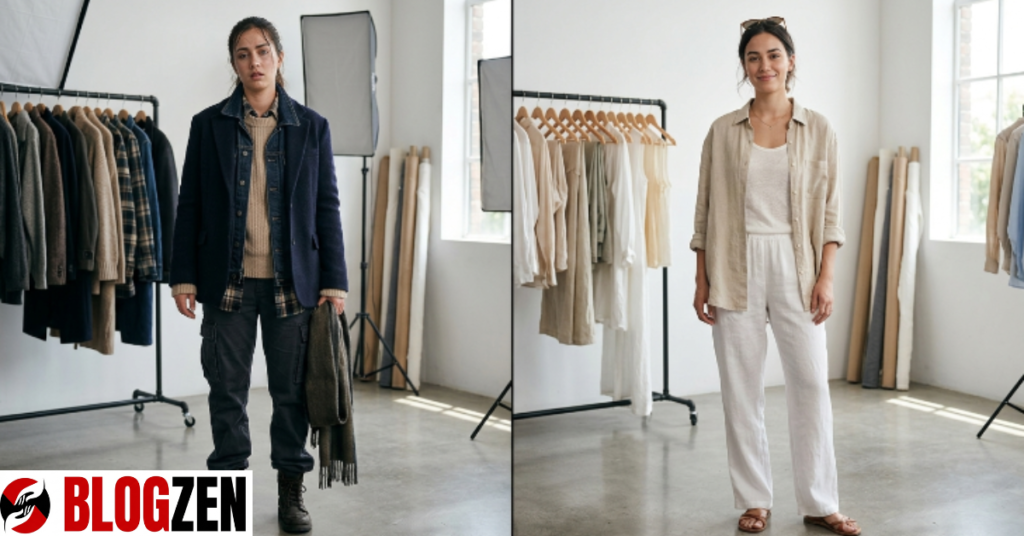
Myth: “Layer only with neutral colors in summer.” Reality: Color layering works beautifully if you follow a rule. Pick a color family (cool or warm), then layer within it. Pale blue + navy + white works. Cream + tan + camel works. Mixing cool and warm tones (blue base + orange cardigan) looks chaotic. Temperature control is science; color coordination is art. Both matter.
Myth: “You should layer long-sleeve over short-sleeve for sun protection.” Reality: UV protection comes from fabric density and composition, not layering order. A lightweight long-sleeve shirt actually protects better than two short-sleeve pieces stacked. Layering for looks is fine; layering for sun protection should prioritize SPF-rated fabrics specifically (check labels—many brands now mark this clearly).
Myth: “Summer layering means you’re disorganized about your temperature.” Reality: Summer layering means you’re smart about unpredictability. Professional women layers more than any other demographic because they navigate multiple environments daily. It’s not confusion; it’s adaptation strategy. Fashion insiders layer constantly in summer.
Myth: “Tie everything around your waist if you remove it.” Reality: That only works for cardigans and lightweight shirts. Blazers and structured pieces should go on a chair or over your arm. Tying them makes you look less polished. Choose your statement layer based on whether you’re comfortable carrying it around.
The biggest myth? That layering clothes in summer means looking overdressed or uncomfortable. When done correctly, it means looking effortlessly put-together while secretly maintaining perfect temperature control.
CONCLUSION
Summer layering isn’t a trend—it’s survival strategy for anyone living in a world of temperature extremes. The three non-negotiable takeaways: (1) Fabric breathability trumps everything—linen and cotton blends beat every alternative, (2) Loose layering creates air pockets that regulate temperature without weight or bulk, and (3) your layers must work independently—each piece should look complete if you remove the others.
Most people suffer through summer because they choose all-or-nothing dressing. They either freeze in AC or overheat outside. You now know better. You understand that three lightweight pieces create climate control that one heavy piece never could. You know which fabrics actually breathe. You know when tight layers sabotage your comfort.
Your next move: Audit your closet this week. Find one breathable base layer, one loose mid-layer, and one removable statement piece. Wear them together to a place with temperature changes. Notice how you feel. That’s your baseline. From there, build a summer layering wardrobe that works as hard as you do.
Temperature control isn’t luck. It’s strategy. You’ve got this.
FAQs
What’s the best fabric for layering clothes in summer?
Linen is the gold standard for summer layering. It breathes exceptionally well, dries faster than cotton, and creates elegant drape even in lightweight versions. Cotton-linen blends offer the comfort of cotton with improved durability and faster drying. For mid-layers, rayon and silk work beautifully, though silk requires more care. Avoid polyester and heavy synthetics entirely—they trap moisture and heat. Check fabric tags: anything over 5 ounces is likely too heavy for true summer layering. The lightest fabrics create the most effective temperature control because they don’t add weight your body must carry.
Can you layer in summer without looking bulky?
Absolutely. The secret is using loose-fitting pieces instead of tight layers. A fitted tank top plus a fitted cardigan looks bulky. A fitted tank plus an oversized linen shirt looks intentional and elegant. Looseness creates air pockets that regulate temperature while maintaining clean silhouettes. Choose pieces one size larger than your typical fit for mid-layers and statement pieces. Also, avoid stacking heavy fabrics—use one lightweight base, one breathable mid-layer, and one structured outerwear piece. This combination creates visual interest without bulk.
How do you layer clothes in summer when it’s extremely hot outside?
In extreme heat, minimize base layers and focus on loose coverage instead. Wear a sleeveless or thin short-sleeve base in breathable fabric, then add a oversized linen shirt you keep unbuttoned. The unbuttoned shirt provides sun protection and shade while maintaining airflow. Keep structured outerwear (blazers, cardigans) for indoors only. Consider a lightweight scarf or pashmina that you can drape loosely for sun protection without the weight. The goal in extreme heat is airflow, not insulation—prioritize pieces with loose fit and high breathability over traditional layer structure.
What colors work best when layering clothes in summer?
Stick to a single color family—either warm tones or cool tones, but not both mixed together. Warm families include cream, tan, camel, rust, gold. Cool families include white, pale blue, navy, gray, silver. Within your chosen family, layer from light to medium to darker shades. This creates visual harmony while maintaining temperature control. Avoid very dark colors (they absorb heat) and very light colors in base layers (they show sweat). Pastels, neutrals, and muted tones work universally. If you want pattern, separate patterns with solid colors—never layer two patterns directly adjacent.
Is it okay to layer heavy items in summer for style?
Heavy items should only be worn as statement pieces in air-conditioned or cool evening environments. A linen blazer is acceptable; a wool blazer is not. A structured cardigan works; a heavy knit sweater doesn’t. If an item doesn’t fold into a bag comfortably, it’s likely too heavy for summer layering. Remember that summer layering’s primary function is temperature regulation—sacrificing comfort entirely for style defeats the purpose. Fashion and function aren’t opposites; the best summer layering combinations do both. If a piece makes you sweat indoors or overheat outside, it’s not a summer layering fabric regardless of how attractive it is.
How often should you change summer layering combinations?
Change combinations daily based on your schedule and temperature predictions. If your day involves staying mostly indoors with aggressive AC, layer heavily and plan to remove pieces immediately. If you’re outside most of the day, keep outerwear minimal and prioritize breathability. Most people benefit from having 2-3 reliable combinations they rotate based on weather patterns. Test new combinations before important events. Watch weather forecasts for high/low temperatures, then choose base layers accordingly. The most effective summer layering approach involves planning: check your schedule, check the forecast, then choose pieces that work for your specific day’s temperature transitions.
