



Quick Answer
One US cup equals 8 fluid ounces when measuring liquids. But dry ingredients don’t follow this rule — a cup of flour weighs about 4.5 ounces by weight, not 8. The number changes depending on whether you’re measuring volume or weight.
Grab a random recipe online right now, and there’s a good chance the measurements will trip you up. How many ounces in a cup? Most people answer “8” without hesitating — and most people are only half right.
Here’s what nobody tells you: that answer only works for liquids. The moment you’re scooping flour, sugar, or shredded cheese, the math changes completely, and that single mix-up ruins more baked goods than bad ovens ever will. This guide breaks down exactly how ounces and cups relate, where the confusion comes from, and how to measure with confidence every single time you cook.
By the end, you’ll know the difference between fluid ounces and weight ounces, how to convert either direction without a calculator, and which mistakes are quietly wrecking your recipes.
What Is a Cup-to-Ounce Conversion — and Why It Actually Matters
A cup-to-ounce conversion sounds simple until you realize “ounce” means two different things in the kitchen. One is a measure of volume (fluid ounces, fl oz). The other is a measure of weight (ounces, oz). They share a name, but they’re not the same unit.
Think of it this way: a fluid ounce tells you how much space something takes up. A weight ounce tells you how heavy it is. Water happens to weigh almost exactly what its volume suggests, which is why 8 fl oz of water weighs close to 8 oz. Flour doesn’t play by the same rules — it’s light and airy, so a cup of it weighs far less than 8 ounces.
This distinction matters because recipe accuracy depends on it. A baker using volume cups instead of a kitchen scale can end up with 20% more or less flour than intended, which throws off texture, rise, and moisture every time.
The most important takeaway: always check whether a recipe means fluid ounces (liquid) or weight ounces (dry) before you measure.
How the Ounce-to-Cup System Actually Works
Let me explain why this gets confusing so fast. The United States uses a customary measurement system where 1 cup = 8 fluid ounces = 16 tablespoons = 48 teaspoons. That part is fixed and never changes, no matter what you’re pouring.
Weight ounces work on a completely separate scale. There are 16 ounces in a pound, period — but how many ounces fit into a cup depends entirely on the ingredient’s density. Honey is heavier than flour. Flour is heavier than popped popcorn. Same cup, wildly different weights.
Here’s a real comparison to make this click:
| Ingredient | Volume (1 cup) | Weight in Ounces |
|---|---|---|
| Water | 8 fl oz | 8.3 oz |
| Milk | 8 fl oz | 8.6 oz |
| All-purpose flour | 8 fl oz (by volume) | ~4.5 oz |
| Granulated sugar | 8 fl oz (by volume) | ~7 oz |
| Butter | 8 fl oz (by volume) | ~8 oz |
| Shredded cheese | 8 fl oz (by volume) | ~4 oz |
Pro Tip: When a recipe lists dry ingredients in weight ounces (like “4 oz flour”), always use a kitchen scale instead of a measuring cup. It’s the single biggest accuracy upgrade you can make in your cooking.
Common Mistakes People Make With Cup-to-Ounce Conversions
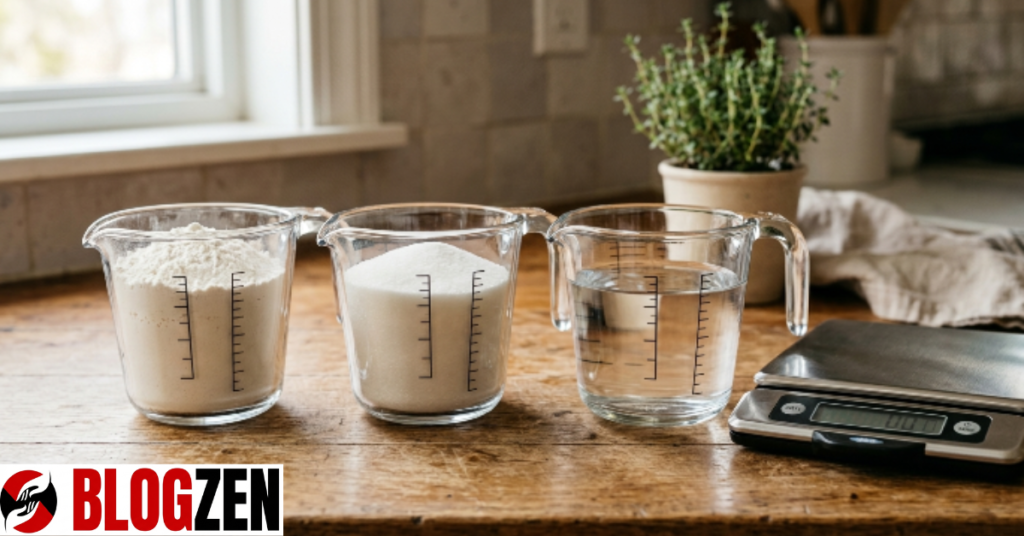
Most people get this completely wrong in the same three ways, over and over.
Mistake #1: Treating all ounces as equal. Someone reads “4 ounces of spinach” and scoops 4 fluid ounces using a liquid measuring cup. Spinach is leafy and full of air pockets, so the weight and volume don’t match at all.
Mistake #2: Using a liquid measuring cup for dry goods. Liquid cups are designed to be filled to a line and read at eye level. Dry measuring cups are meant to be leveled off flat with a knife. Using the wrong one skews your results even when the ounce math is technically correct.
Mistake #3: Ignoring ingredient density. A cup of packed brown sugar weighs noticeably more than a cup of loosely spooned flour. Packing method changes the outcome even within the same ingredient category.
The truth is, these small errors compound. A cake recipe with three or four ingredients measured incorrectly can end up dense, dry, or oddly flat — and most people blame the recipe instead of the measuring method.
Expert Tips for Accurate Ounce Measurements Every Time
Professional bakers rarely eyeball measurements, and there’s a reason for that. Here’s how they stay consistent:
- Weigh dry ingredients whenever possible. A digital kitchen scale removes guesswork entirely and takes seconds to use.
- Use the spoon-and-level method for cups when a scale isn’t available — spoon the ingredient into the cup, then level it with a straight edge instead of scooping and packing it down.
- Measure liquids at eye level in a clear liquid measuring cup placed on a flat surface, not while holding it in the air.
Pro Tip: Keep a small conversion chart taped inside a kitchen cabinet. It sounds old-fashioned, but it saves far more time than searching “how many ounces in a cup” mid-recipe with flour-covered hands.
Restaurants and commercial kitchens weigh almost everything by ounces or grams specifically because volume measurements vary too much from person to person. Two cooks scooping the “same” cup of flour can end up half an ounce apart — and at scale, that adds up fast.
Real-World Examples Where This Conversion Actually Matters
Picture two home bakers making the same banana bread recipe. One measures 2 cups of flour by scooping directly from the bag and packing it down. The other spoons flour lightly into the cup and levels it off. The first baker may end up using nearly an ounce more flour per cup than the second — enough to noticeably dry out the final loaf.
Or consider a coffee shop scaling up a syrup recipe. If a barista converts “8 oz” as weight instead of fluid ounces, an entire batch of simple syrup comes out too thick or too thin, throwing off dozens of drinks before anyone notices.
Even meal-prep enthusiasts run into this. Nutrition labels often list serving sizes in weight ounces, while recipe apps default to cup measurements. Mixing the two without converting properly can quietly throw off calorie tracking by 10–15% per meal.
The most important takeaway: context always determines which “ounce” a recipe means — liquid or weight — and getting it wrong is rarely dramatic, but it’s rarely invisible either.
Step-by-Step Guide: Converting Ounces to Cups Correctly
Follow this process any time a recipe leaves you second-guessing:
- Identify the ingredient type. Is it a liquid (water, milk, oil) or a dry/solid ingredient (flour, sugar, cheese)?
- Check whether the recipe uses fl oz or oz. Fluid ounces mean volume; plain “oz” for dry ingredients usually means weight.
- For liquids: divide the fluid ounce number by 8 to get cups. Example: 16 fl oz ÷ 8 = 2 cups.
- For dry ingredients by weight: use an ingredient-specific conversion (flour ≈ 4.5 oz per cup, sugar ≈ 7 oz per cup) rather than the flat 8 oz rule.
- When unsure, weigh it. A $10–15 digital scale resolves nearly every conversion debate instantly.
This five-step habit takes less than 30 seconds once it becomes routine, and it’s the same method professional recipe developers use before publishing a dish.
Myths vs. Facts: Clearing Up the Ounce-to-Cup Confusion
Myth: “8 ounces always equals 1 cup, no matter what you’re measuring.” Fact: This is only true for fluid ounces measuring liquid volume. Dry ingredients measured by weight rarely hit exactly 8 ounces per cup.
Myth: “Ounces and fluid ounces are interchangeable terms.” Fact: They measure completely different properties — weight versus volume — and only align closely for liquids with a density similar to water.
Myth: “Packing ingredients tighter just means a more accurate measurement.” Fact: Packing changes the actual amount of ingredient in the cup, which is precisely why recipes specify “packed” or “loosely spooned” when it matters.
Most people get this completely wrong because early cooking lessons taught the shortcut (“a cup is 8 ounces”) without ever explaining the exception that swallows half of all baking recipes.
Wrapping It Up
Here’s what actually matters from everything above. First, 1 cup equals 8 fluid ounces for liquids, full stop. Second, dry ingredient weights per cup vary by density, so flour, sugar, and butter each convert differently. Third, a kitchen scale beats a measuring cup for accuracy every time weight is involved.
Next time a recipe calls for ounces, pause for two seconds and ask: liquid or dry? That single question prevents most kitchen measurement disasters before they start.
What’s the measurement mix-up that’s tripped you up in your own kitchen — flour, butter, or something else? Drop it in the comments below, and check out our full guide on dry vs. liquid measuring cups for an even deeper breakdown.
Get this right once, and you’ll never second-guess a recipe’s measurements again.
FAQs
How many ounces in a cup of water?
A cup of water equals 8 fluid ounces, since fluid ounces measure volume and water is the baseline liquid most conversion charts are built around. By weight, that same cup comes to roughly 8.3 ounces because water is slightly denser than the fluid ounce standard assumes. This tiny gap rarely matters in cooking but explains why “fluid ounce” and “weight ounce” aren’t perfectly identical even for water.
How many dry ounces are in a cup of flour?
A cup of all-purpose flour weighs approximately 4.5 ounces, not 8, because flour is light and full of air pockets when scooped. The exact weight shifts depending on measuring technique: spooned-and-leveled flour typically lands around 4.25 ounces, while scooped-and-packed flour can reach 5 ounces or more. For consistent baking results, weighing flour on a scale is far more reliable than relying on cup measurements alone.
Is 8 oz always equal to 1 cup?
Only when measuring liquids. Fluid ounces and cups have a fixed 8-to-1 relationship by definition, so any liquid — water, milk, broth, oil — measures out to 8 fl oz per cup. Dry or solid ingredients measured in weight ounces break this rule entirely, since their density determines how much fits in a cup, not a fixed volume ratio.
How many ounces in a cup of butter?
One cup of butter weighs about 8 ounces, which is one of the few dry ingredients that actually matches the fluid ounce rule. This works out conveniently because standard butter sticks are pre-measured: each stick equals half a cup, or 4 ounces, making it easy to convert without a scale. That’s also why most American butter packaging prints both cup and ounce measurements directly on the wrapper.
Why do recipes list ounces instead of just using cups?
Recipes use ounces, especially weight ounces, when precision matters more than convenience — think professional baking, candy-making, or scaled commercial recipes. Here’s why that precision matters:
- Weight doesn’t change based on packing or scooping technique.
- It stays accurate across humidity and ingredient settling.
- It allows recipes to be scaled up or down without volume measurement errors compounding. Cups remain popular for everyday cooking because they’re fast, but ounces (by weight) win when consistency is critical.
How do I convert ounces to cups without a calculator?
For liquids, simply divide the fluid ounce amount by 8 — 24 fl oz becomes 3 cups instantly. For dry ingredients, memorize a few common conversions instead of dividing: roughly 4.5 oz of flour, 7 oz of sugar, or 8 oz of butter per cup. Keeping a small printed chart in the kitchen removes the need for math altogether during actual cooking. VISIT BLOGZEN
