


Quick Answer
Solar panel cleaning removes dust, pollen, bird droppings, and grime that block sunlight from reaching your cells. Dirty panels can lose 15–25% of their output. Cleaning them 2–4 times a year, using soft water and a non-abrasive tool, restores that lost power without voiding your warranty.
Your solar panels could be losing you hundreds of dollars a year, and you’d never know it just by looking at your electric bill. That’s the uncomfortable part about solar panel cleaning — the damage is invisible until you actually measure your output. Most homeowners assume rain does the job. It doesn’t, not fully, and not in every climate.
Here’s what nobody tells you: a thin film of dust can cut panel efficiency more than a light snowfall. If your panels sit near a busy road, farmland, or a tree line, you’re accumulating grime faster than you think. This article breaks down why that matters, how to clean panels the right way, and which mistakes actually void your warranty. Stick around — the mistakes section alone could save you a costly repair bill.
What Is Solar Panel Cleaning and Why It Matters Today
Solar panel cleaning is the process of removing debris, dust, pollen, and residue from the glass surface of your solar array so sunlight can pass through unobstructed. Sounds simple. But the impact on your energy bill is bigger than most people expect.
Think of it this way: your panels are essentially light-collecting funnels. Anything sitting on that glass — even a layer you can barely see — acts like a filter blocking part of the light. A 2020 Google/MIT-affiliated study found that dust accumulation alone can reduce solar output by up to 25% in dry regions.
The truth is, this isn’t just a “nice to have” maintenance task. Panel efficiency drops directly with surface grime, and that drop shows up on your utility bill month after month. If you’ve noticed your solar savings plateauing even in sunny weeks, dirty panels are a likely culprit.
READ MORE: The Truth About Reducing Electricity Bills With Solar Panels And What Actually Saves You Money
How Solar Panel Cleaning Actually Works
Cleaning isn’t just splashing water on glass. The process depends on your roof angle, panel coating, and local climate, and getting it wrong can scratch the anti-reflective layer that makes panels efficient in the first place.
Most professional cleaners follow a simple three-part method:
- Rinse the surface first with plain water to loosen loose dirt and prevent scratching.
- Use a soft brush or squeegee with deionized or soft water to avoid mineral spots.
- Let panels air-dry naturally rather than wiping with a cloth, which can leave streaks.
Let me explain why the water type matters so much. Hard water leaves behind calcium deposits that build up over time, creating a hazy film that’s harder to remove than the original dirt. That’s why solar farms almost always use deionized water systems for large-scale panel cleaning.
Pro Tip: Clean early morning or late evening when panels are cool. Cleaning hot glass with cold water can cause micro-cracks over years of repeated thermal shock.
Common Mistakes People Make With Solar Panel Cleaning
Most people get this completely wrong on their very first attempt, usually by reaching for whatever’s under the kitchen sink. Dish soap, glass cleaner, and pressure washers are the three biggest offenders.
Here’s the problem with each one:
- Dish soap leaves a soapy film that attracts more dust than it removes.
- Glass cleaners often contain ammonia, which degrades the anti-reflective coating over time.
- Pressure washers can force water under panel seals, damaging electrical connections.
Another mistake is climbing onto a steep roof without proper safety gear just to save a service fee. This single mistake causes more injuries than any other home maintenance task related to solar systems. If your roof pitch is above 20 degrees, hiring a professional isn’t optional — it’s the safer, cheaper choice long-term.
Expert Tips and Proven Strategies for Better Results
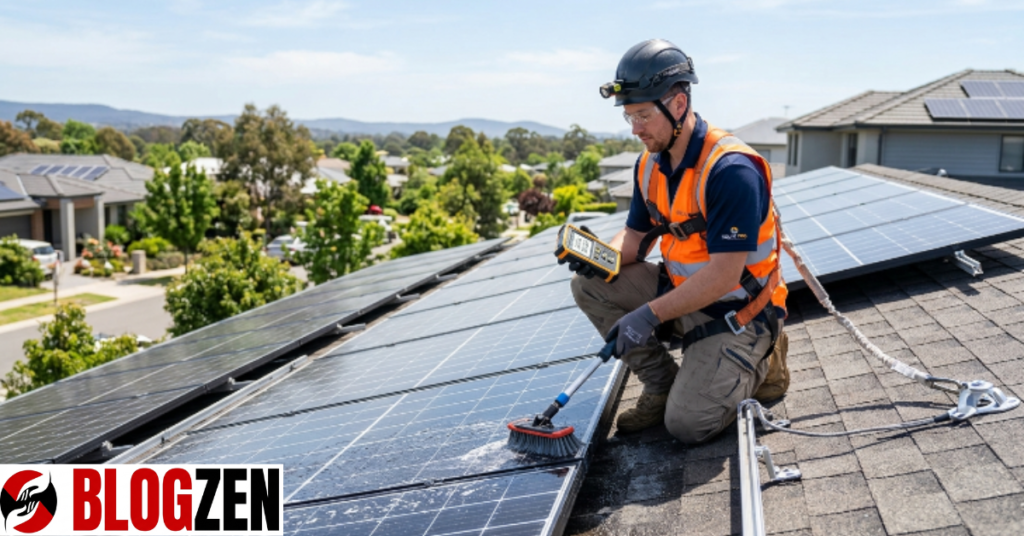
Solar technicians who clean panels for a living rely on a handful of habits that homeowners rarely know about. These aren’t secrets — they’re just not commonly shared.
First, check your inverter’s monitoring app before and after cleaning. Comparing daily output data tells you exactly how much power you recovered, which justifies whether professional cleaning is worth the cost for your specific setup.
Second, angle matters more than frequency. Panels tilted below 10 degrees collect more dust because rain can’t wash them naturally. If your installation is nearly flat, you’ll need cleaning cycles roughly twice as often as steeply angled panels.
Pro Tip: Track your kWh output for one week before cleaning and one week after. That comparison is the most honest way to see if cleaning actually paid for itself.
Real-World Examples of Cleaning Impact
A homeowner in Phoenix, Arizona reported a 19% jump in daily output after a single professional cleaning session following a dry, dusty summer. That’s not unusual for desert climates where rainfall rarely clears fine particulate dust.
Compare that to a homeowner in Seattle, where frequent rain naturally rinses panels. Their post-cleaning output increase was closer to 4%, since rainfall already handled most of the debris. Location and climate change the math on how often you actually need cleaning.
| Climate Type | Recommended Cleaning Frequency | Average Output Recovery |
|---|---|---|
| Dry/Desert | Every 2–3 months | 15–25% |
| Humid/Coastal | Every 4–6 months | 8–12% |
| Rainy/Temperate | Every 6–12 months | 3–6% |
| Agricultural/Dusty | Monthly to quarterly | 20–30% |
Step-by-Step Guide to Cleaning Your Panels Safely
If your panels are ground-mounted or on a low, accessible roof, here’s the safe process most manufacturers approve of:
- Turn off the system or check your manual — some inverters recommend shutdown before cleaning.
- Rinse panels with a garden hose using low pressure, working top to bottom.
- Use a soft, non-abrasive brush with soft water to gently loosen residue.
- Rinse again thoroughly to remove any loosened debris.
- Allow panels to air dry completely before reconnecting power if it was shut off.
Never skip the rinse-before-scrub step — it’s the single biggest factor in avoiding surface scratches.
Myths vs Facts About Solar Panel Cleaning
Myth: Rain keeps panels clean enough on its own. Fact: rain removes loose dust but does nothing for baked-on residue like bird droppings or tree sap.
Myth: Cleaning voids your manufacturer warranty. Fact: most warranties only void if you use abrasive tools, high-pressure washers, or harsh chemicals — gentle cleaning is usually fine.
Myth: More frequent cleaning always means more savings. The truth is, over-cleaning flat, low-dust regions can cost more in labor than the energy recovered actually justifies. Match your cleaning schedule to your actual climate, not a generic calendar.
Final Thoughts
Solar panel cleaning isn’t glamorous, but it’s one of the cheapest ways to protect an investment you already made. The three things to remember: dust silently cuts output, the wrong cleaning method can cause more damage than the dirt itself, and your climate should dictate your schedule — not guesswork.
Check your inverter app today and see how your output compares to installation day. If it’s dropped noticeably, that’s your sign. Have you cleaned your panels this year, or are you due? Drop your climate zone in the comments and see what other readers recommend.
Clean panels don’t just look better — they quietly pay you back every single sunny day.
FAQs
How often should I schedule solar panel cleaning?
Most homeowners need cleaning every 4–6 months, though dry or agricultural areas may require quarterly attention. Coastal and rainy regions often get by with once a year. The real determining factor is your local dust and pollen levels, not a fixed calendar. Check your monitoring app’s output trend to know for sure.
Can I clean solar panels myself without professional help?
Yes, if your roof is low-pitched and accessible with a garden hose and soft brush. Avoid pressure washers, ammonia-based cleaners, and metal tools. For steep roofs above 20 degrees, professional cleaning is strongly recommended for safety and to avoid accidental panel damage.
Does solar panel cleaning really increase energy output?
Yes, though the increase varies by climate. Desert and dusty regions often see 15–25% output recovery, while rainy climates see closer to 3–6%. The only way to know your specific gain is comparing kWh data before and after a cleaning session.
What’s the best time of day for solar panel cleaning?
Early morning or late evening, when panels are cool. Cleaning hot glass with cool water risks thermal shock, which can create micro-cracks over time. Cooler temperatures also mean cleaning solutions and water evaporate more slowly, giving you a more even, streak-free result.
Will solar panel cleaning void my warranty?
Usually not, as long as you avoid abrasive brushes, pressure washers, and harsh chemical cleaners. Most manufacturers permit gentle water-based cleaning. Steps to stay warranty-safe include:
- Using soft water only
- Avoiding high-pressure equipment
- Skipping ammonia-based glass cleaners
Is professional solar panel cleaning worth the cost?
It depends on your roof access, climate, and system size. For steep or hard-to-reach roofs, professional service often pays for itself through safety and proper technique. For flat, easily accessible systems in rainy climates, DIY cleaning with basic tools is usually sufficient and more cost-effective. VISIT BLOGZEN
